
Koudougou
On the last day of 1921, a set of twins was born in Koudougou, and one of them, Maurice Yaméogo, would grow up to become the first president of an independent nation. That nation was the Republic of Upper Volta, later renamed Burkina Faso. Koudougou has carried that weight of national beginnings ever since - a busy market town about a hundred kilometers west of the capital, Ouagadougou, that today ranks as the third-largest city in the country. Two languages braid through its streets, Mooré everywhere and Lyèlè for those who listen, and the rhythm of the place is set by buses arriving every two hours and a grand market that anchors the town's commercial life.
Where the Buses Converge
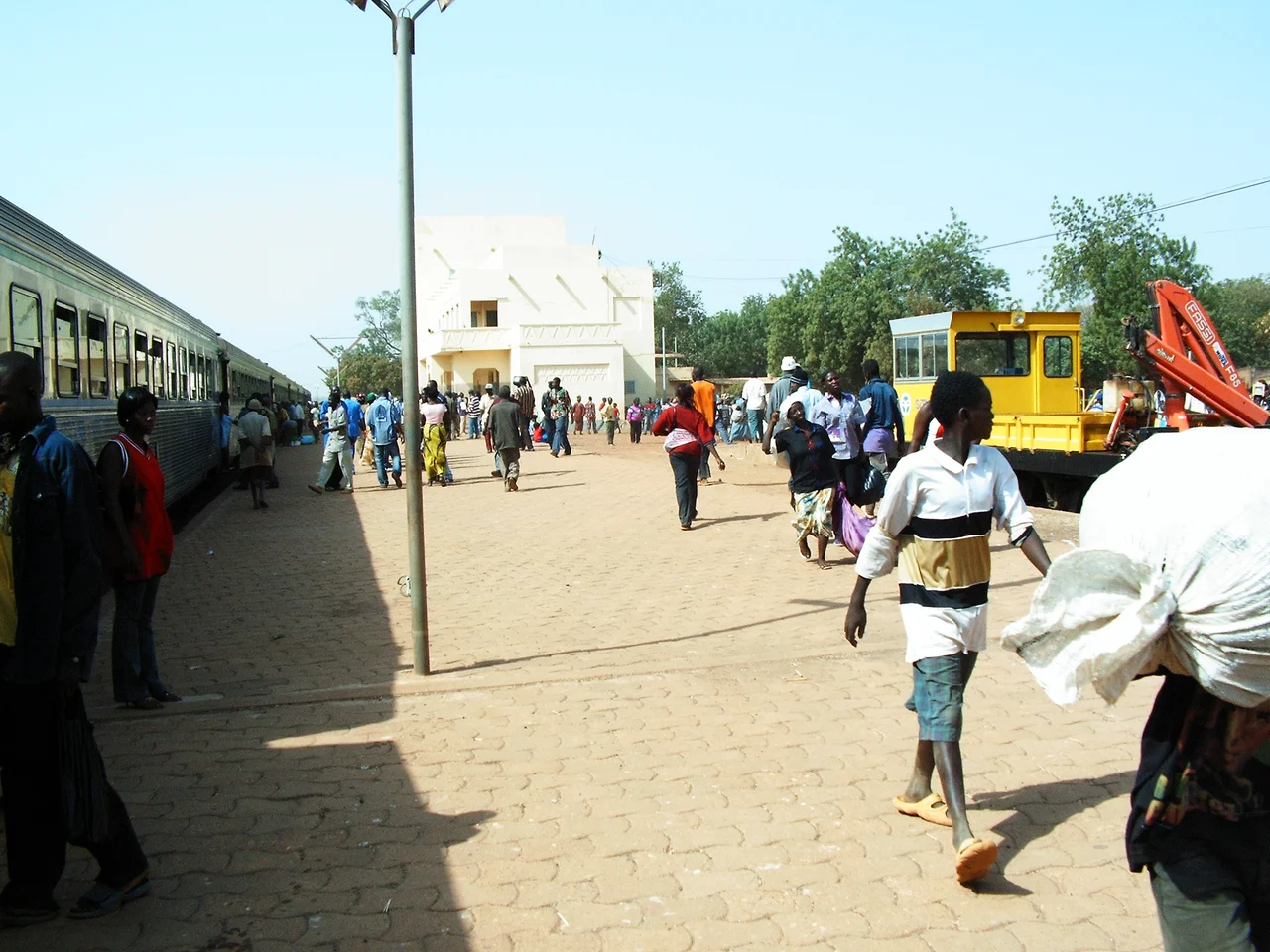
Koudougou is, before anything else, a town you arrive in. Transport unions and bush taxis run a steady shuttle from Ouagadougou throughout the day, and from here roads fan out west to Dédougou and south toward Bobo-Dioulasso. The grand marché meets you at the edge of town if you come from the capital - a wonderful tangle of fruit and vegetables and grain, of patterned pagne cloth and secondhand clothes and the small necessities of a household. A separate fruit street near the post office sells whatever the season offers: bananas, mangoes, papayas, pineapple. This is the engine of daily life, a place where the surrounding countryside comes to trade, eat, and move on.
An Architecture Revolution
Koudougou has quietly become a showcase for one of Africa's most celebrated architects. Francis Kéré, who would later win the Pritzker Prize, the highest honor in his field, designed the Lycée Schorge here, a secondary school completed in 2016. The idea behind it is simple and humane: earlier concrete schools trapped heat so brutally that students struggled to concentrate, so Kéré built instead with heat-absorbing earthen bricks and generous ventilation, letting the building breathe in the Sahelian climate. The town holds more of this contemporary work alongside older landmarks - the earthen Royal Palace of Issouka, and the modernist Palace of Maurice Yaméogo, named for the local son who became head of state.
The Town in Full Voice
Once a year, usually around November, Koudougou throws itself a party. The Nuits Atypiques de Koudougou, the NAK, is a cultural week of music and performance, a smaller cousin of the big festivals in Ouagadougou and Bobo. The town has the bones for it: an open-air, stadium-style theater across from the Lycée Provincial, two cinemas that run films most nights along with sporting events and pageants, and a swimming pool at one of the local clubs. Street food is everywhere and cheap - benga and toh, grilled corn and brochettes of meat near the cinema, deep-red bissap drinks sold on every corner. It is an unpretentious, genuinely lived-in kind of nightlife.
Detours and Crocodiles
A short trip from Koudougou leads to Sabou and its famous sacred crocodiles - and the most honest travel advice about them is that locals will tell you flatly it is a tourist trap. That candor is part of the appeal of this region; nobody is overselling it. For travelers, Koudougou is a comfortable base: a luxury hotel for those who want a retreat, a Catholic mission with simple dormitory beds for those counting francs, tailors who become friends, and patisseries serving pizza and ice cream alongside the local fare. It is not a city of monuments so much as a working West African town that happens to have produced a president, hosted a Pritzker laureate's work, and kept its market square full.
From the Air
Koudougou sits at 12.25°N, 2.37°W in central Burkina Faso, on the plateau roughly 100 km west of the capital. The terrain is flat Sahelian savanna, with the town readable from the air by its grid of roads and dense market core. Nearest major airport is Ouagadougou (DFFD), about 100 km east; the regional rail line linking Ouagadougou toward Abidjan passes through the area. Best visibility is in the dry season (November-February); the harmattan haze can reduce clarity from December into spring.
Nearby Stories
- Republic of Upper Volta 14 km away
- Opera Village Africa 52 km away
- Ancient Ferrous Metallurgy Sites of Burkina Faso 57 km away
- Kirikongo 71 km away
- Nazinga Game Ranch 90 km away
- Gwollu Defence Wall 108 km away
- Yacouba Sawadogo 119 km away
- Mare aux Hippopotames 149 km away