.jpg)
La Redota
They called it the redota - their own word, a worn-down version of derrota, meaning defeat. It was the bitterest name a people could give their own journey, and it was honest. In October 1811, after a hard-won siege of Montevideo was abandoned through an armistice, José Artigas asked the people of the Banda Oriental to do something extraordinary: to leave everything behind rather than live under returning Spanish rule. They said yes. Whole families packed into wagons and walked away from their farms and towns, following one man north toward the Uruguay River. What looked like a retreat became the founding story of a nation.
A Word for Bitter Truth
The name carries the whole emotion of the event. In the everyday Spanish of the River Plate, redota was a deformation of derrota - a word that means at once a defeat, a rout, and a route or path. So the redota was all of those things braided together: the road they walked, the flight they were forced into, and the defeat they refused to call by any softer name. It captured the contradiction the people lived - the sacrifice, the helplessness, and the strange pride of choosing exile over submission. They did not pretend they were marching to victory. They named their journey for the bitterness it was, and walked anyway.
The People on the Road
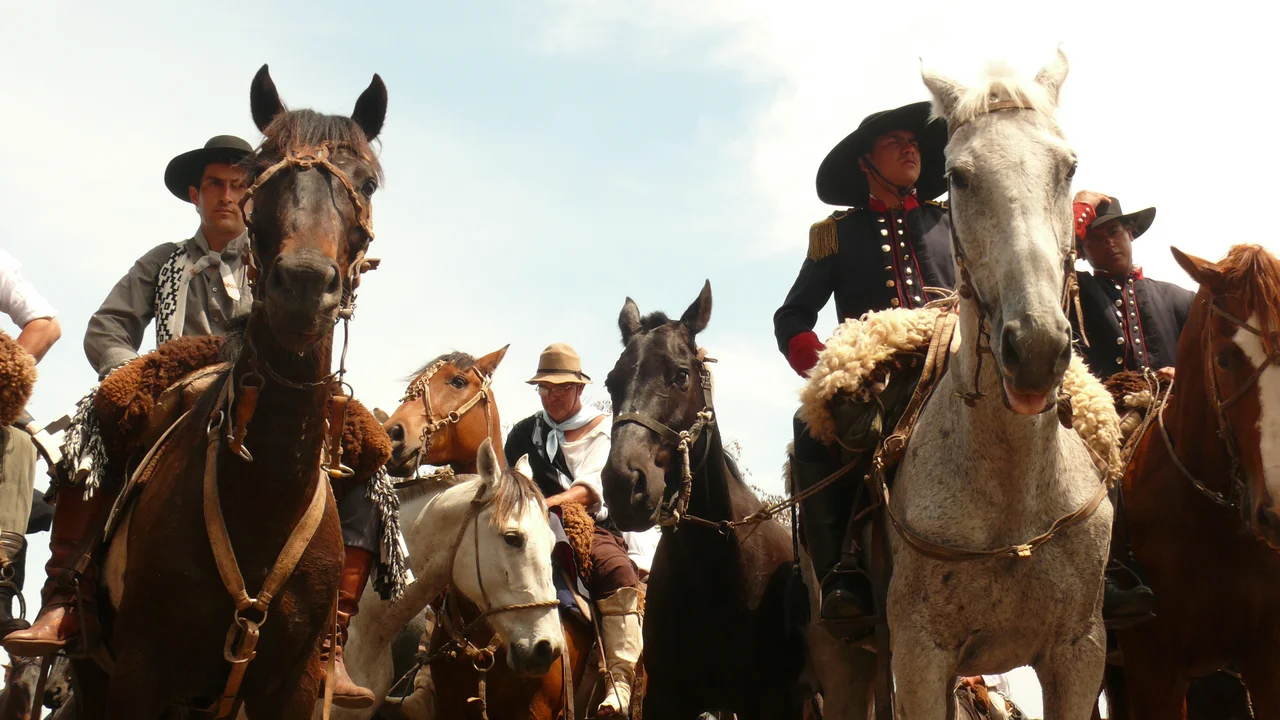
This was not an army on the move so much as an entire society. Contemporary accounts describe an immense caravan: men, women, children, and the elderly, with cattle and horses, household goods, even chickens and dogs, trailing behind the militia columns. The march began on 23 October 1811 and crept north and west across the land, fording one stream after another - Santa Lucía, Arroyo Grande, the Río Negro, the Queguay - through the long, wet spring. A Paraguayan traveler who saw the camp marveled that families living under their wagons and beneath the trees, soaked by bad weather, did so with such good will and contentment that it stirred his admiration.
The Camp at Ayuí
By December the great column reached the Uruguay River and began crossing toward the western bank. There, on the Ayuí stream near Salto, the people made their long encampment - a temporary city in the woods that gathered, by some estimates, around ten thousand souls. They stayed for months, an entire displaced population waiting in the open while Artigas held the cause together. It was here, in the mud and patience of Ayuí, that a scattered rural people began to feel themselves a single nation with a single leader. The federalist ideals Artigas championed - of autonomy and the dignity of common people - were forged as much in this camp as on any battlefield.
The Man They Followed
What made thousands abandon their homes for one leader? José Artigas had been a frontier soldier, a man who knew the land and its gaucho horsemen intimately, and who had broken with Spain to fight for a different kind of country - one of provincial autonomy and the dignity of ordinary people. He did not promise comfort or quick victory. He offered a cause. The redota was the moment that cause became flesh: a whole population voting with their feet, choosing hardship and Artigas over the return of colonial rule. The trust it took to follow him into the wilderness is the reason Uruguayans still call him the father of their nation, and why his stern, bearded face looks out from their money and their monuments today.
The Road Still Runs
The exodus passed into legend, and Artigas became the father of Uruguayan independence, his image now on its coins and in its squares. In 2011, on the two-hundredth anniversary, Uruguayans retraced the redota across their country, turning the old route of defeat into a pilgrimage of pride. The path the travelers can follow today threads from Montevideo through San José, Mercedes, Fray Bentos, Paysandú, and Salto - past abandoned rail stations, thermal springs, and quiet river towns - shadowing the way thousands once walked behind their wagons. The terrain is rough and the route deliberately obscure, but that is fitting. The redota was never meant to be easy.
From the Air
La Redota begins in Montevideo - the starting point sits near 34.907 degrees south, 56.206 degrees west - and the historic route runs north and west across Uruguay toward the Argentine border, generally following the great Uruguay River. From the air, the Uruguay River is the defining feature: a broad waterway forming the country's western edge, with the exodus crossing it near Salto and the Ayuí encampment site on its far bank in Argentine Entre Rios. River towns like Paysandú, Fray Bentos, and Salto mark the trail northward. Over Montevideo itself, Carrasco International Airport (ICAO: SUMU) lies east of the city center and Angel S. Adami Airport (ICAO: SUAA) to the northwest. The flat pampa and the silver thread of the rivers read best in clear, low-humidity air.
Nearby Stories
- Piriápolis 24 km away
- Minas 40 km away
- Tronador (rocket) 67 km away
- Nueva Helvecia 69 km away
- La Plata Museum 122 km away
- Battle of Sarandí 126 km away
- Mundo Marino 145 km away
- South Georgia Island 2584 km away