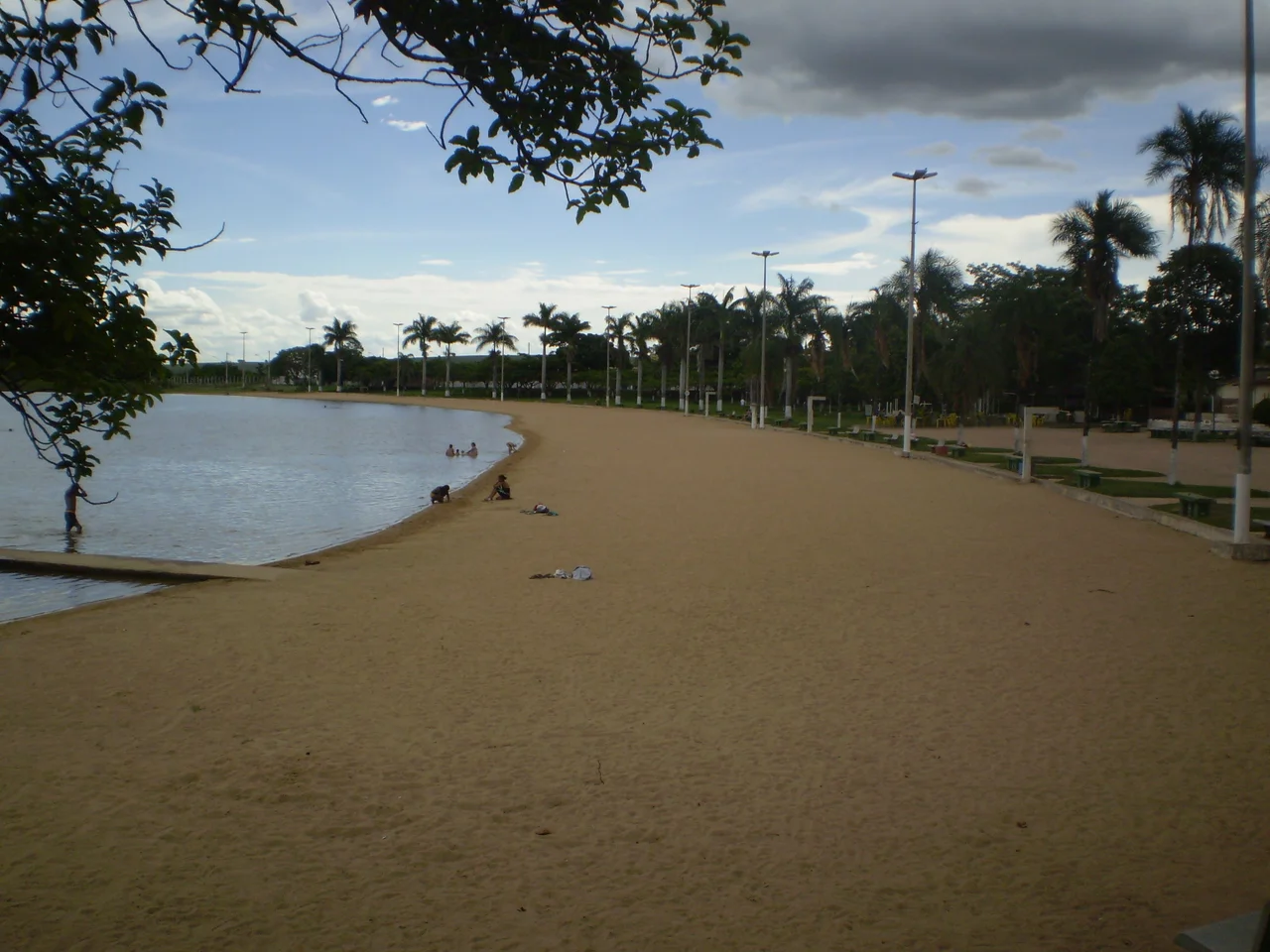

Lagoa da Prata
A Portuguese settler named Novato wanted to grind his corn. Sometime in the eighteenth century, on a low stretch of swampy land in what is now western Minas Gerais, he built a small earthen dam across a stream to power his mill and his water-driven pounders — the rustic contraptions called monjolos in rural Brazil. The swamp behind the dam spread, deepened, and became a lake. Generations later, a group of Franciscan friars were passing through the region on foot, preaching missions, and they stopped at the lake's edge to rest. The sun hit the water just right — wind rippled the surface, light scattered like coins scattering — and one of them said something that stuck. A silver lake. Lagoa da prata. The name attached itself before the city existed, before anyone had built a church, before any of the people who now live in this place had any reason to know what that Portuguese miller had done with his little millpond.
Silver on Water
The story of the name appears, in its fullest form, in Acácio Mendes's História de Lagoa da Prata. The friars repeated their observation on every subsequent visit: they would meet at "the silver lake," and the phrase mutated in conversational shorthand until the plural became singular and the qualifier became a place-name. By the time Colonel Carlos José Bernardes Sobrinho built his mansion nearby in 1875, the lake was already Lagoa da Prata. Bernardes — who had inherited a large São Francisco River property from his uncle Lieutenant Francisco Bernardes — chose this spot to consolidate his holdings. He donated land for a chapel dedicated to São Carlos, around which a village grew up. When Bernardes died suddenly in 1900, Monsignor Otaviano José de Araújo attempted to rename the place São Carlos do Pântano. The locals ignored him. When the railway arrived and opened its station in 1916, the station called itself Lagoa da Prata. The name the friars accidentally invented had won.
From District to Municipality
The administrative history moves slowly. The place was a district of Santo Antônio do Monte for decades, then its own district from 1923, then finally its own municipality in 1938. Industrialization arrived with the Brazilian sugar boom: the land was flat, the soil fertile, and cane grew well across the broad fields west of the São Francisco River. A sugar mill went up. The Usina Luciânia — once a residential neighborhood of mill workers — is now a fully industrial site owned by the Louis Dreyfus Group, one of the four global agricultural commodity traders that move most of the world's sugar, grain, and cotton. The Embaré food industry operates here, along with Pharlab pharmaceuticals and Biosev agricultural processing. Three heavyweight industries anchor the local economy, and around them clusters a dense network of bicycle and motorcycle trade — LM Motos, Athor Bike, the others — that makes Lagoa da Prata disproportionately important in the regional two-wheeled market.
The Beaches That Weren't There
In 1968, the municipality made a counterintuitive move: it built beaches. The lagoon had no natural shoreline worth the name, so the city engineered one. Sand was trucked in, shoreline landscaped, and a stretch of the water's edge transformed into something that looked like a coastal resort a thousand kilometers inland. The beaches became — and remain — Lagoa da Prata's primary tourist attraction. Visitors from Belo Horizonte, 211 kilometers to the east, drive in for weekends. The Lagô Pirô recreation area, the Ponte de Ferro iron bridge across the São Francisco, a waterfall called Cachoeira da Cemiguinha, and a network of painted caves and grottos fill out the local itinerary. The bus station is named the Terminal Rodoviária Pedro Roberto Amorim after the mayor who built it. The details are provincial and specific; the pride is real.
The Man from the Lagoon
Lagoa da Prata's most famous son never needed the beaches to become a tourist draw. Gilberto Silva — the defensive midfielder who anchored Brazil's 2002 World Cup-winning squad and played through 2006 and 2010 — was born here and grew up playing football in the streets and pitches of a town that had no obvious football infrastructure to recommend it. He became a key figure at Arsenal in England, a national team regular across three World Cups, and a role model whose posters still hang in the local school hallways. He remains one of Brazilian football's quieter champions. Also from here: Núbia Soares, a triple jumper who represented Brazil at the 2016 Rio and 2020 Tokyo Summer Olympic Games. Two Olympians from a town of 52,000. The ratio isn't ordinary.
What the Water Remembers
Lagoa da Prata sits at 658 meters of elevation in the Central Mineira mesoregion, with a tropical savanna climate that divides the year into wet summers and cool dry winters. The cerrado that once covered the land has mostly been cleared for pasture and cane, leaving only fragments of native vegetation. The population — formed by Portuguese, African, and Indigenous roots, with later waves of Italian, Lebanese, and East Asian immigrants — reflects the broader demographic story of Minas Gerais. Eighty-two percent are Roman Catholic, fifteen percent Protestant, and the rest practice a variety of faiths. The lagoon itself has lost some of its mystery since the days when sunlight on its ripples convinced Franciscan friars they were seeing silver coins. But the name stuck, and the name still names the place.
From the Air
Coordinates: 20.02°S, 45.54°W. Recommended viewing altitude: 4,000-6,000 feet AGL over the Central Mineira plateau and the meandering São Francisco River. Nearest airports: Belo Horizonte's Confins International (SBCF) approximately 210 km east; regional service from Divinópolis (SNDV) approximately 70 km north. The lagoon itself is a notable landmark — look for the engineered beach strip along the eastern shore.
Nearby Stories
- São Gonçalo do Pará 15 km away
- Piumhi 53 km away
- Paranaíba River 53 km away
- Southeast Brazil 61 km away
- Crucilandia 72 km away
- Paraopeba 78 km away
- Minas Gerais 130 km away
- Guaxupe 139 km away