
Southeast Brazil
The capital of Brazil moved because of what was pulled out of the ground here. In 1763, with gold and diamond wealth pouring out of Minas Gerais, the colonial government transferred its seat from Salvador to Rio de Janeiro to be closer to the mines. That single decision set the trajectory of the Southeast - the region that today holds three of Brazil's four largest cities (São Paulo, Rio de Janeiro, Belo Horizonte) and contains 40% of the national population. From the baroque churches of Ouro Preto to the Copacabana beachfront to the skyscraper skyline of the Paulistana valley, the Southeast is the part of Brazil that most of the world has seen in photographs - and a great deal more that the world has not.
Gold, Then Coffee
The Southeast's economic story starts in the gold rush that filled the colonial Minas Gerais hills in the eighteenth century. The state's name itself - Minas Gerais, "General Mines" - records what the Portuguese came here for. When the gold and diamonds played out, coffee took over and became the country's main export. The coffee barons built mansions and railways across São Paulo state's red-earth plateau. Industrialization followed in the 1930s. Today the Southeast remains Brazil's most populous and economically powerful region - and the epicenter of its cultural industries: publishing, television, film, music, fashion. But the classic colonial and coffee-era tensions persist: extreme wealth next to severe poverty, and metropolitan security concerns that shadow the region's best-known cities.
The Colonial Towns
Ouro Preto is the set piece - a UNESCO World Heritage site whose baroque churches and courthouses record the gold century with paintings, sculpture, and golden altars carved by Aleijadinho and his contemporaries. Tiradentes and Diamantina preserve similar textures at smaller scale, the colonial grid still legible in the cobblestones. Paraty, on the coast between São Paulo and Rio, keeps its whitewashed seventeenth-century core intact within a bay full of islands. The Estrada Real - the Royal Road - is one of the oldest roads in the Americas, cutting from Minas Gerais through to the ports of Paraty and Rio de Janeiro, having thrived during the diamond and gold ages. It linked the mines to the sea, and it still links the towns to each other.
The Marvelous and the Massive
Rio de Janeiro is the cidade maravilhosa - the "marvelous city" - and the reputation is earned: Copacabana and Ipanema beaches, Sugarloaf and the Christ statue on Corcovado, Tijuca's rainforest-clad mountains cutting through the urban fabric. São Paulo is the opposite approach to city-building: the largest city in South America, a concrete sprawl with a vast cultural, culinary, and shopping stack that rewards patient exploration more than tourist checklists. Belo Horizonte, the third-largest city in the country and the Minas Gerais capital, sits between the two temperaments - planned, modern, and the gateway to the colonial mining towns that lie a short drive away. Vitória, Espírito Santo's capital, adds a beautiful bay and the sixteenth-century Convento da Penha on a nearby hilltop.
Wild Country at the Edges
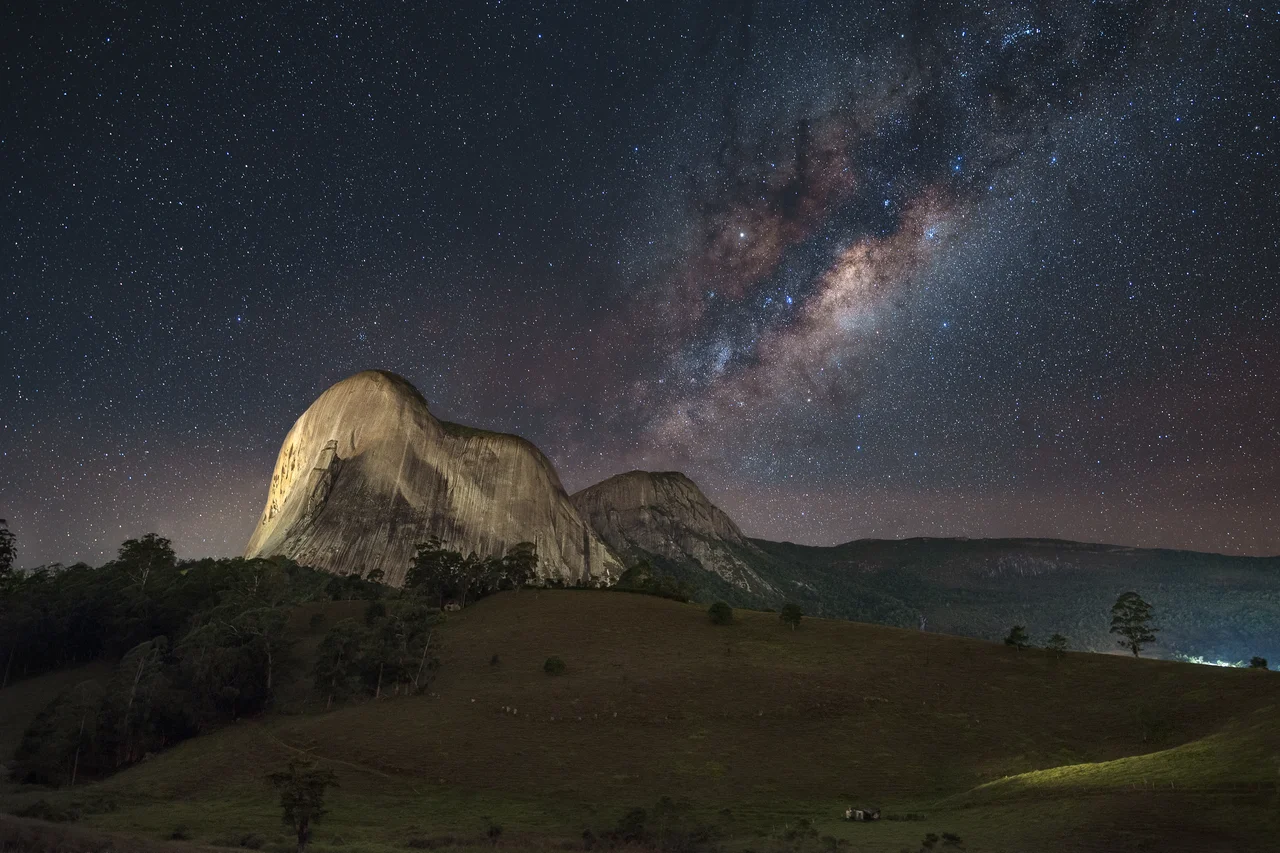
The Southeast's national parks are the quiet counterpoint to its megacity energy. Itatiaia National Park is Brazil's first, established in 1937, straddling the Serra da Mantiqueira between Rio, São Paulo, and Minas Gerais. Its Agulhas Negras ("Black Needles") reach 2,791 meters, one of the highest peaks in southern Brazil. Serra da Canastra National Park in Minas Gerais protects the source of the São Francisco River. Pedra Azul State Park in Espírito Santo centers on a 1,909-meter peak whose stone face turns genuinely blue in certain light. Ilhabela, off the São Paulo coast, runs the two-day Bonete Jungle Trail through waterfalls and Atlantic rainforest to beaches most visitors never reach.
A Climate That Shifts With Altitude
The Southeast's climates split along its topography. The coastline is hot and humid year-round - less so in winter. Northern Minas Gerais is hot but drier. The higher-altitude areas - the city of São Paulo at around 800 meters, southern Minas Gerais, the mountains of Rio state - see cool winters and real seasonal variation. Summer is the wettest season here; winters are generally drier. The contrast makes the Southeast unusually diverse in a small geographic footprint. Travelers can move from the tropical beaches of Guarapari to a brisk June morning in Campos do Jordão inside a single day's drive.
Cachaça and Caipirinha
The Southeast's signature drink is the caipirinha, Brazil's national cocktail: cachaça, sugar, and lime muddled over ice. Cachaça is distilled from fermented sugarcane juice (not molasses, like rum), and the Southeast's countryside hides hundreds of small distilleries producing it at every quality level from rough to remarkable. The drink started simple and rural; it went international in the 1990s and never came back down to local. But the best cachaça is still drunk where it was made - in a backcountry bar, in a Minas Gerais valley, with pork cracklings and farofa on the side. Santos - São Paulo state's port city - deserves its own mention as the container port of Brazil and the stadium where Pelé played most of his career, both of which still shape how the Southeast moves and remembers.
From the Air
Centered at 20.05°S, 46.63°W for the Southeast region. Southeast Brazil covers Minas Gerais, Rio de Janeiro, São Paulo, and Espírito Santo states. The Serra do Mar escarpment forms a dramatic coastal wall separating the coastal lowlands from the interior plateau (800-1,200 meters). Major airports include Guarulhos International (SBGR, São Paulo), Galeão International (SBGL, Rio de Janeiro), Confins International (SBCF, Belo Horizonte), and Vitória (SBVT). The coast runs roughly northeast-southwest with the Atlantic Forest South-East Reserves (UNESCO) hugging the escarpment. Recommended viewing altitude: FL350+ for regional context.
Nearby Stories
- Piumhi 13 km away
- José Chiachiri Municipal Historical Museum 34 km away
- Capitólio 54 km away
- Franca 55 km away
- Paranaíba River 83 km away
- Bom Despacho, Minas Gerais 85 km away
- Uberaba 87 km away
- Guaxupe 103 km away