
Landers
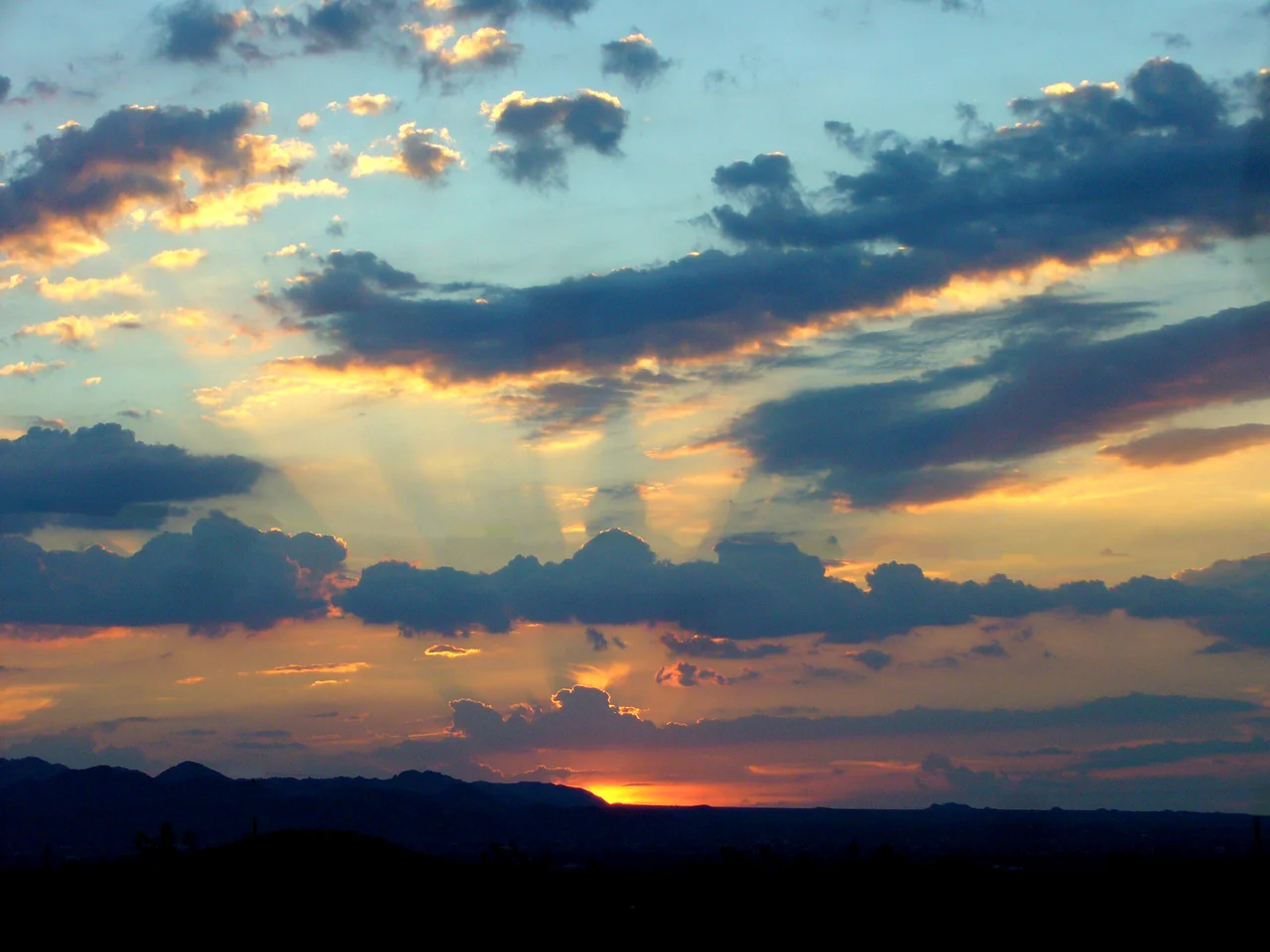
The residents of Landers call themselves Landroids, which suggests a certain self-awareness about living in a community with a slogan — "Beautiful Skies, Miles of Smiles" — and a claim to being "the land of 1000 vistas." At 3,100 feet elevation in the high Mojave Desert, Landers has the dark skies to back up the astronomical half of its marketing, and its human history is strange enough to make the vistas almost secondary.
The Rock and the Machine
The two most remarkable features of the Landers landscape are a boulder and a building. Giant Rock covers approximately 5,800 square feet of desert floor — about the size of a large house — and stands roughly seven stories tall, making it possibly the largest free-standing boulder in the world. It is sacred to indigenous people of the area, who have relationships with the rock that predate the community of Landers by thousands of years. Near the rock, a man named George Van Tassel began construction in 1957 of the Integratron, a wood-and-metal dome he claimed was a time machine and rejuvenation chamber built according to instructions received from extraterrestrial visitors. Van Tassel worked on it until his death in 1978; it was never completed for its stated purpose. It now operates as a venue for sound baths.
Dark Skies, Many Eyes
The high desert elevation and distance from major urban light pollution have made Landers a destination for amateur astronomers. The community hosts two significant astronomical facilities: GMARS, the Goldstone Apple Valley Radio-Optical Observatory, which encompasses more than 23 individual observatories and carries the Minor Planet Center observatory code G79; and CS3, which operates nine robotic observatories that conduct automated sky surveys. The concentration of observatories in and around a community of fewer than 3,000 people is remarkable — a function of the same sky conditions that attracted Van Tassel's more idiosyncratic investigations. Landers is not just a place to look at rocks; it is a place where serious astronomical work happens alongside the UFO tourism.
Landroids in Community
About 2,982 people live in Landers according to recent census counts, spread across the desert terrain in a pattern typical of unincorporated Mojave communities: large lots, few amenities, considerable distance between neighbors. The community has attracted people who want space and solitude without the organizational constraints of a planned development. The nickname Landroids suggests a community that has embraced its own oddness, and the mix of amateur astronomers, desert homesteaders, artists, and the simply eccentric that the Mojave attracts creates a social texture that larger, more organized communities rarely produce. Highway 247 connects Landers to Twentynine Palms to the east and Yucca Valley to the south.
A Place That Generates Stories
The combination of Giant Rock, the Integratron, the observatories, and the Landers Earthquake of 1992 — which measured 7.3 magnitude and caused widespread damage throughout the high desert — gives this small community a remarkably dense history of notable events relative to its size. The earthquake collapsed part of Giant Rock, which had been solid for its entire recorded history. Van Tassel's legacy attracts both true believers and curious skeptics. The amateur astronomers contribute to actual scientific literature. The Landroids continue to describe their landscape with a certain cheerful hyperbole that the actual beauty of the high desert skies partly justifies. Landers is the kind of place that rewards the drive out, which in the Mojave Desert is always longer than it looks on the map.
From the Air
Located at 34.266°N, 116.393°W in the high Mojave Desert, Landers sits northeast of Yucca Valley and north of Joshua Tree National Park. Giant Rock is one of the few individual natural features in this area large enough to be identifiable from a low-altitude flight. The high desert plateau at 3,100 feet elevation appears notably different from the Coachella Valley below — darker vegetation, more open terrain, fewer human structures. Nearest airports: KTNP (Twentynine Palms, approximately 20 miles east), KPSP (Palm Springs International, approximately 38 miles south).
Nearby Stories
- 2016 I-10 tour bus crash 2.5 km away
- Cholla Cactus Garden 7.9 km away
- Wonder Valley, California 13 km away
- Amboy Crater 23 km away
- San Bernardino Train Disaster 26 km away
- Hector Mine 32 km away
- Bell Canyon 47 km away
- Edwards Air Force Base 90 km away