
Large Latin American Millimeter Array
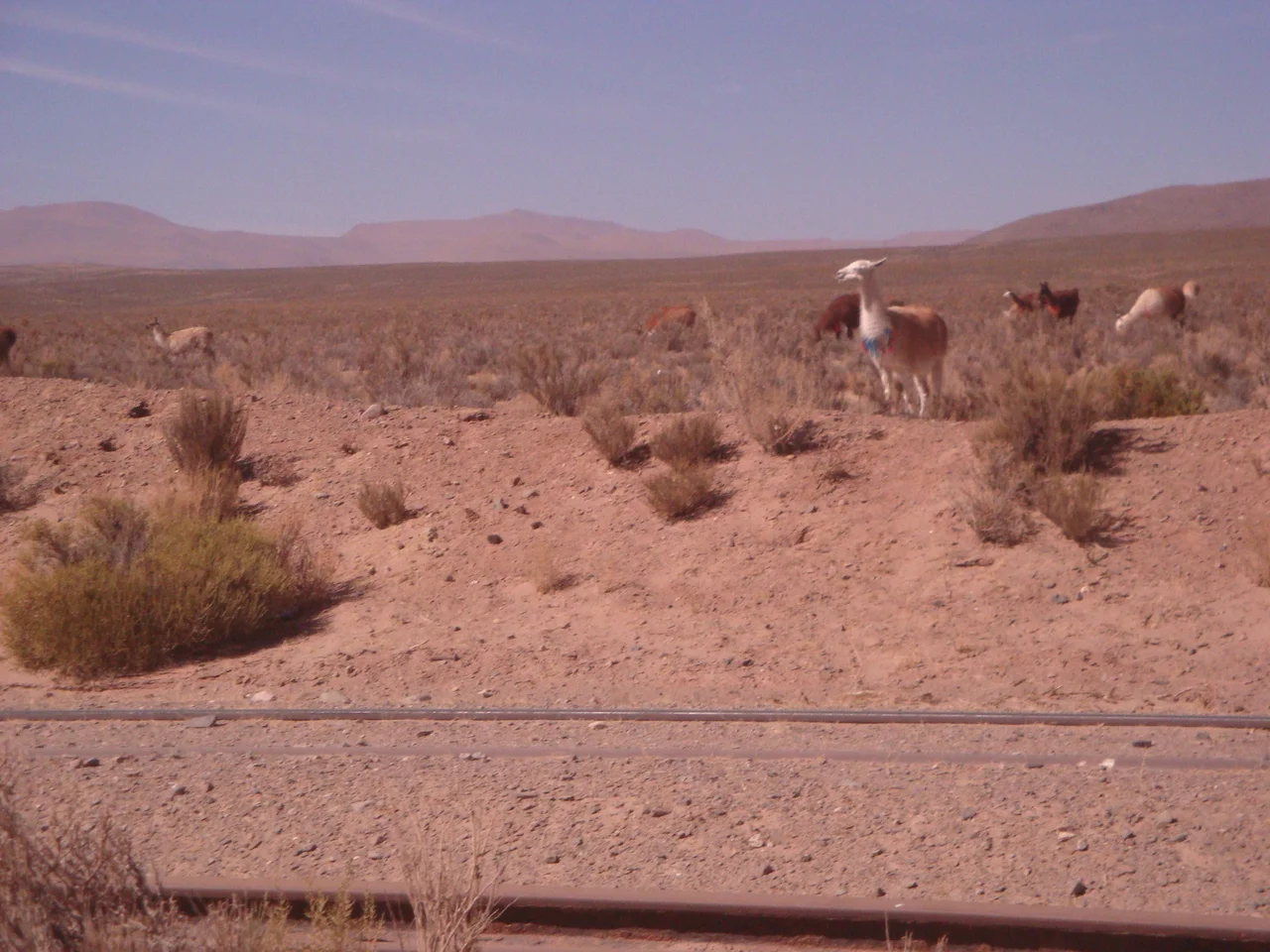
The acronym hides a joke. LLAMA stands for Large Latin American Millimeter Array, yet there is no array here at all, just one twelve-meter dish balanced on a barren ridge of the Puna at Alto Chorrillos. The name borrows from the Quechua word for the woolly camelid that picks its way across these slopes, and the astronomers who chose it knew the contradiction. A single antenna can still join a network. Linked by atomic clocks to telescopes thousands of kilometers away, this lone dish becomes one eye in an array that spans continents.
Why Build Here, of All Places
At 4,850 meters above sea level, the air is too thin to breathe comfortably and almost too thin to hold water. That is precisely the point. Water vapor in the atmosphere swallows the millimeter and submillimeter wavelengths that LLAMA is built to detect, and the Puna of Salta is one of the driest, highest places on Earth where a telescope can reasonably be reached by road. The search for this spot began in Argentina in 2003, when astronomers hauled a small instrument called a tipper from site to site, measuring how transparent the sky was at 210 gigahertz. The numbers here were good enough to justify carving a road to the summit, which crews finally began in December 2016.
A Telescope Built From a Handshake
LLAMA is the product of two nations deciding to split a bill down the middle. Argentina and Brazil share the roughly twenty million dollars of construction cost, the operating budget, and the observing time in equal halves, a rare arrangement in big science. The idea surfaced in 2007 at a meeting of Latin American astronomers on Venezuela's Isla de Margarita, gathered momentum through formal presentations to the Argentine science ministry in 2010 and a Brazilian kickoff in 2011, and was sealed in June 2014 when the partners signed the agreement that turned conversation into concrete. The Argentine Institute of Radio Astronomy and the University of São Paulo carry the work.
Listening to the Cold and the Burning
The same instrument that can stare at the Sun can also strain to hear gas clouds at the edge of the observable universe. LLAMA's German-built dish, modeled on the antennas of the nearby ALMA observatory, will carry up to six cryogenically cooled receivers, each chilled to within a few degrees of absolute zero so that the telescope's own warmth does not drown out the whisper it is trying to catch. With these, astronomers hope to trace the carbon monoxide glowing in galaxies whose light left them billions of years ago, watch jets erupt from the neighborhoods of black holes, and probe the lower atmosphere of our own star during solar flares. One faint signal, then another, patiently gathered from the thin cold air.
The Long Road to First Light
Building anything at this altitude is an exercise in patience. Crews work short shifts against the cold, the wind, and the headaches that come with too little oxygen. The antenna, fabricated by a German firm that also built dishes for ALMA, was slated for assembly in 2022, with the observatory aiming for astronomical first light, the moment a telescope first records real starlight, by the middle of the decade. The town of San Antonio de los Cobres, sixteen kilometers down the mountain, hosts the laboratories, offices, and bunks where the small team lives while coaxing the instrument toward that first signal from the sky.
From the Air
LLAMA sits at roughly 24.19 degrees south, 66.47 degrees west, on the Alto Chorrillos ridge in the Puna de Atacama at about 4,850 meters (15,900 feet). Look for a single white dish on an otherwise bare, reddish-brown highland plateau, with the town of San Antonio de los Cobres and its rail line visible 16 km to the east. The nearest major airport is Martín Miguel de Güemes International (ICAO: SASA) at Salta, roughly 160 km southeast at 1,246 meters elevation; the high desert air is typically clear and dry, offering exceptional long-range visibility, though afternoon summer monsoon clouds can build between December and March.
Nearby Stories
- Santa Rosa de Tastil 15 km away
- Tolar Grande 31 km away
- Salinas Grandes 37 km away
- Laguna Lejia 72 km away
- Cerro de los Siete Colores 76 km away
- Los Cardones National Park 89 km away
- Purmamarca 117 km away
- Salar de Atacama 141 km away