
Eight Acres for a Plant That Exists Almost Nowhere
In 1941, a botanist named Robert Hoover knelt beside a shallow pool in the hills of Lake County, California, and collected a small, mat-forming plant he had not seen before. It would be named for Lincoln Constance, a distinguished Berkeley botanist who collected samples from the same pool thirty-two years later. For more than half a century, this single vernal pool - a seasonal puddle, really, covering a few acres in the community of Loch Lomond - was the only known home of the Loch Lomond button celery on Earth. Not until the late 1990s did anyone find the plant growing elsewhere, at just two other sites in Lake County and one in Sonoma County. The entire global range of an endangered species could, for decades, be crossed on foot in a few minutes.
A Puddle Worth Forty-Six Thousand Dollars
The Loch Lomond Vernal Pool Ecological Reserve covers 8.22 acres - about the size of six football fields. It is one of 119 ecological reserves in California's system, a network authorized by the state legislature in 1968 to protect rare plants, animals, and habitats. The button celery's listing as endangered under the federal Endangered Species Act came in 1985, declared as an emergency measure because someone proposed to dredge and fill the vernal pool. The threat was immediate and existential: destroy this puddle and you destroy the species. The California Department of Fish and Game purchased the land on March 28, 1988, for $46,000, using funds from the State Public Works Board and the California Wildlife Conservation Board. It may be the cheapest insurance policy ever written against extinction.
Mountains, Pines, and Seasonal Water
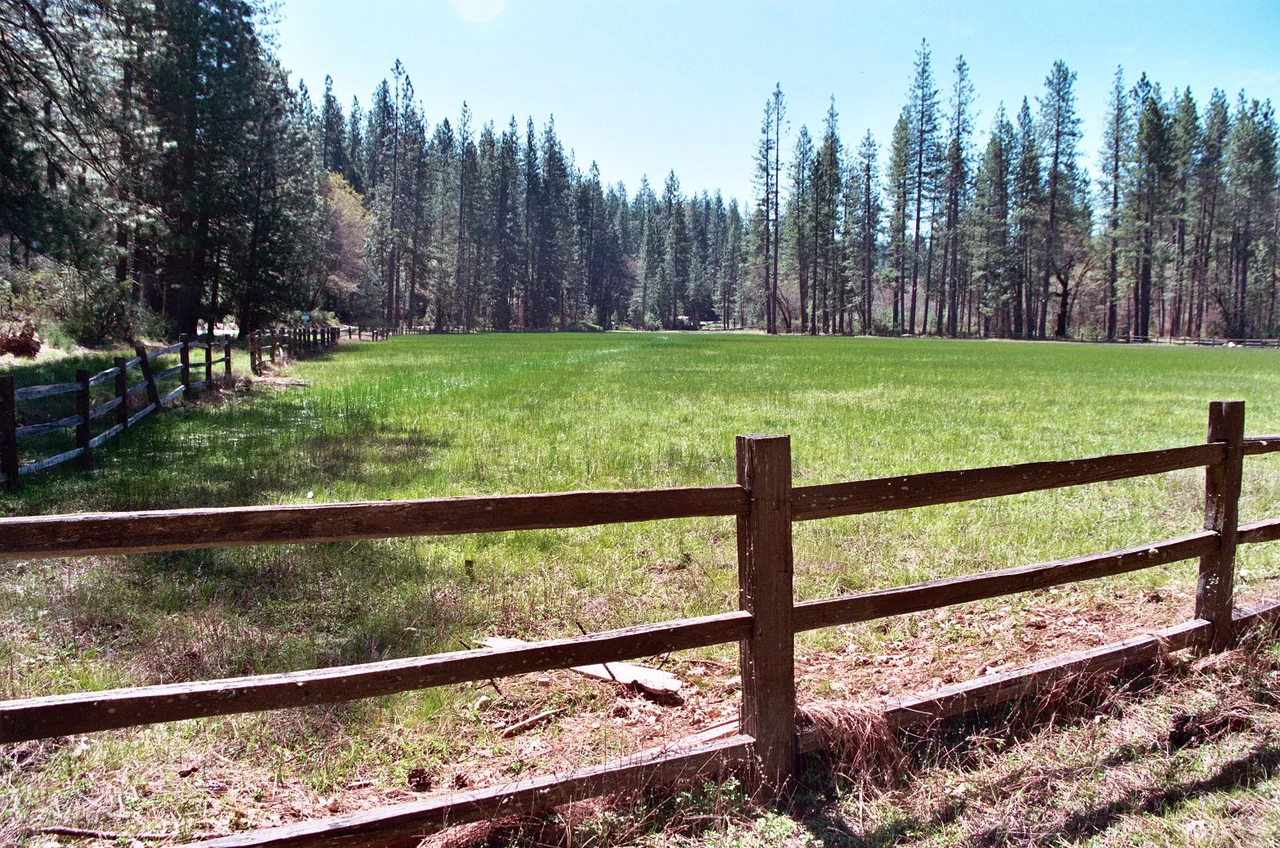
The reserve sits in the southern reaches of Lake County, where the Mayacamas Mountains rise from the California Coast Ranges. Nearby Cobb Mountain, the area's highest peak at 4,722 feet, anchors a landscape of mixed conifer and hardwood forest - ponderosa pine and sugar pine standing alongside Douglas fir, with black oak spreading beneath and an understory of manzanita, ground rose, coffeeberry, and California lilac tangled through the gaps. This is geothermal country, where hot springs and volcanic geology shape the terrain. The vernal pool itself is a product of that geology: a shallow depression where water collects during the rainy season, persists through spring, and dries by summer. It is this cycle - wet, then dry, then wet again - that creates conditions for the specialized plants that grow here. Permanent water would drown them. Permanent drought would kill them. They need the rhythm.
Constance's Coyote-Thistle
The Loch Lomond button celery, also called coyote-thistle or Constance's coyote-thistle, grows as a prostrate mat - low to the ground, hugging the damp soil of the drying pool edge. Its flowers appear in clusters of white or blue between May and June. After Hoover's 1941 collection, Lincoln Constance and his colleague M. Yusuf Sheikh returned in 1973 to gather more samples. Sheikh searched other areas for the plant as part of his doctoral thesis and found nothing. For decades, the scientific literature carried a simple, unsettling note: known from a single location. The late 1990s brought slight relief when the plant turned up at two additional Lake County sites and one in Sonoma County. But slight is the operative word. A species with four known populations is still a species balanced on a knife edge.
The Navarretia Puzzle
The button celery shares its vernal pool habitat with another endangered species: the few-flowered navarretia, a delicate member of the phlox family with white or blue flowers and stems streaked white and purple. Listed as endangered by both California in 1990 and the federal government in 1997, the few-flowered navarretia presents a particular challenge to botanists - it closely resembles the many-flowered navarretia and Baker's navarretia, and will readily hybridize with its few-flowered relative. Telling them apart requires close inspection and considerable expertise. According to the U.S. Fish and Wildlife Service, only Napa County retains a population of few-flowered navarretia today. Historical populations at Loch Lomond, at nearby Boggs Lake Ecological Reserve, and in Sonoma County have either declined or disappeared. Two endangered species sharing one fragile habitat: the mathematics of conservation at its most precarious.
What Eight Acres Means
There is something both inspiring and sobering about a nature reserve this small. Eight acres is barely a rounding error in the vast system of American public lands. Yet without those eight acres, purchased for less than the price of a modest house, an entire species might have vanished before anyone thought to look for it elsewhere. The Loch Lomond reserve is a reminder that conservation does not always mean wilderness on a grand scale - sweeping national parks, vast marine sanctuaries, millions of acres set aside. Sometimes it means a chain-link fence around a seasonal puddle in the hills of Lake County. Sometimes the most important piece of ground on Earth is the one small enough to overlook entirely. The button celery does not know it is rare. It does what it has always done: germinates in shallow water, blooms in the drying mud, and sets seed before the summer heat arrives. The reserve exists to make sure there is still a place for that to happen.
From the Air
Located at approximately 38.87N, 122.72W in the Mayacamas Mountains of southern Lake County, California. The reserve is extremely small (8.22 acres) and will not be individually visible from typical flight altitudes. Look for the community of Loch Lomond and nearby Cobb Mountain (4,722 ft) as landmarks. Clear Lake lies to the north. The neighboring Boggs Lake Ecological Reserve is approximately 5 miles to the northwest. Nearest airports include Middletown Airport (O09) and Lampson Field (1O2) in Lakeport. Best context at 3,000-5,000 ft AGL, where the volcanic terrain and forest patterns of the Mayacamas range are visible.
Nearby Stories
- Rico Harris 4.1 km away
- Berryessa Snow Mountain National Monument 9.2 km away
- Point Arena Air Force Station 14 km away
- The Night the Wind Came for Santa Rosa 14 km away
- Sites Reservoir 17 km away
- The Bauhaus in the Redwoods 17 km away
- Fort Gaston 207 km away
- ʻAkaka Falls State Park 3693 km away