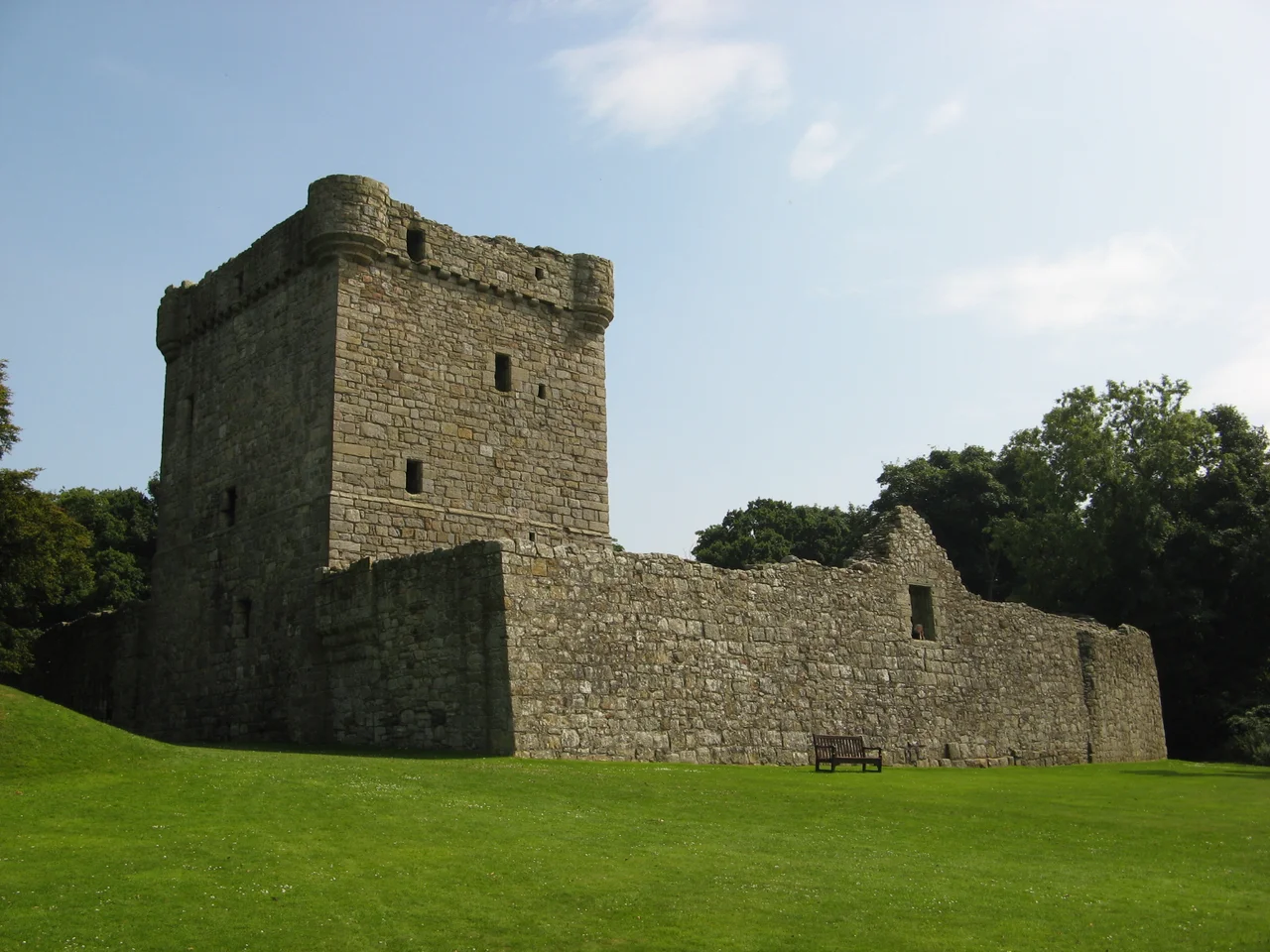

Lochleven Castle
On the night of 2 May 1568, a queen dressed as a servant walked out the gate of a Scottish island castle. Willie Douglas, an orphaned teenager who had stolen the keys, locked the gate behind her. Marie Courcelles, her French chamberer, had let her past. A boat waited on Loch Leven; on the far shore, two hundred horsemen and George Douglas - hopelessly in love with her - waited too. Mary, Queen of Scots, was free after eleven months of captivity. She had already lost her crown, miscarried twins, and signed away her throne in this place. She had ten days of freedom ahead of her before her army was crushed at Langside. Then nineteen years in English prisons. Then the executioner's block at Fotheringhay. But on this one spring night, she got out.
The Island and the Wars
Castle Island sits in Loch Leven, in what is now Perth and Kinross, between Edinburgh, Stirling and Perth. The position was strategic - whoever held the castle commanded the routes between Scotland's three principal towns. A fortification may have stood here as early as 1257, when the sixteen-year-old King Alexander III was forcibly brought to the island by his regents. During the First War of Scottish Independence, English forces held the castle. In 1301 they laid siege to it; the same year, Sir John Comyn broke the siege and relieved the garrison. Part of the present curtain wall may date from this period. In the fourteenth century the castle was fortified with a five-storey tower house. In 1390 Robert II granted it to Sir Henry Douglas, husband of the king's niece Marjory. The Douglases would hold Lochleven for the next three hundred years.
The Queen Arrives
Mary was taken to Lochleven on 17 June 1567, two days after her surrender at the Battle of Carberry Hill. Her noblemen opposed her marriage to the Earl of Bothwell. She was placed in the custody of William Douglas of Lochleven; his daughters slept in her bedchamber for extra security. For most of her captivity Mary lived in Glassin Tower at the south-east corner of the castle - a round tower built around 1550 whose upper chamber served as her bedchamber, its oriel window looking out over the loch. She fell ill almost immediately on arrival. Sometime before 24 July, she miscarried twins conceived with Bothwell. They were buried hastily in the grounds. Mary was probably nursed back to health by Agnes Leslie. Only days later, on 24 July 1567, she was made to sign the demission - the formal renunciation of her crown in favour of her infant son James. Her household, which had been substantial, had been reduced by then to two serving women, a cook, and a doctor.
The Lion and the Mouse
Allies on the outside did not forget her. William Maitland of Lethington and Mary Fleming sent a gold jewel into the castle, worked with a scene from Aesop: the lion caught in the net, the mouse nibbling away the knots. The message was unmistakable. Mary wore the jewel. Through the autumn and winter, she recovered. She won George Douglas, her gaoler's brother, to her cause - a contemporary noted he was 'in fantasy of love wythe hir.' She wrote to her servant Servais de Conde asking for embroidery materials. She also planned escapes. Once she dressed as the laundress Margaret Aitkin and crossed the loch; the boatman recognised her and rowed her back. Another time she planned to scale a seven-foot wall, but her lady-in-waiting Jane Kennedy injured herself in practice. The successful escape came on 2 May 1568. Willie Douglas, the orphan, palmed the keys at dinner. Marie Courcelles let her past. The boat carried her across to the waiting horsemen. She fled to Niddry Castle. Three days later her French cook packed her silk gowns to send after her.
What Remains
Mary's defeat at the Battle of Langside followed within weeks. She crossed into England seeking Elizabeth's protection and instead found imprisonment that would end at Fotheringhay in 1587. But Lochleven Castle kept playing its role as state prison. The English Earl of Northumberland, after offending Elizabeth I, was held here two years before being sent back to execution. Regent Morton retired here in 1578 and spent his time, a contemporary wrote, 'making the alleys of the garden even.' In 1588, William Douglas of Lochleven became the sixth Earl of Morton. In 1675, the estate passed to Sir William Bruce, the royal architect, who built Kinross House on the loch shore and aligned its principal axis on the distant castle, preserving the ruin as a picturesque focus for his garden. Old keys recovered from the loch when its water level was lowered in the nineteenth century are said to be those Willie Douglas threw away. The castle is one of many in Scotland reputed to be haunted by Mary's spirit - waiting, the tradition holds, for her twins to return so they would know their loss was not her fault. Janet Boyman, Marion Nicnevin, and William Stewart of Luthrie were later accused of witchcraft for predicting her escape.
Fly Past
Lochleven Castle sits on Castle Island in Loch Leven at 56.2008 degrees north, 3.3918 degrees west, about 22 nautical miles north of Edinburgh and 25 nautical miles east of Stirling. The castle is a small grey ruin on a small green island in a roughly oval loch - distinctive from the air for its sharp contrast against the surrounding water. The town of Kinross sits on the loch's western shore. Best viewed from 1,500 to 3,000 feet for both castle and the loch's full shape. Nearest ICAO airports: Edinburgh (EGPH) ~22 nm south; Dundee (EGPN) ~22 nm northeast. The M90 motorway runs along the loch's western edge. The Lomond Hills rise to the northeast. Loch Leven is a National Nature Reserve known for its wintering pink-footed geese, and the loch level was deliberately lowered in the nineteenth century, exposing artefacts including the keys.
From the Air
Located at 56.2008°N, 3.3918°W on Castle Island in Loch Leven, Perth and Kinross. Recommended viewing altitude 1,500-3,000 feet. Visual landmarks: small grey castle ruin on small island in oval loch; town of Kinross on western shore; M90 motorway along loch's western edge; Lomond Hills to the northeast. Nearest ICAO airports: Edinburgh (EGPH) ~22 nm south; Dundee (EGPN) ~22 nm northeast. Loch Leven is a National Nature Reserve; ferry access to the castle from Kinross in summer.
Nearby Stories
- Caldercruix 1.2 km away
- Cambuskenneth Abbey 5.3 km away
- Fingask Castle 5.4 km away
- Yester Castle 6.4 km away
- Battle of Rullion Green 7.5 km away
- Carnoustie Golf Links 9.3 km away
- Yellowcraig 11 km away
- Taymouth Castle 20 km away