
Lordship of Argos and Nauplia
In 1388, a young noblewoman named Maria of Enghien found herself in an impossible position. Her husband Pietro Cornaro had just died, leaving her alone as lord of two Greek cities — Argos and Nauplia — surrounded by Ottomans, restless Byzantine despots, and a republic in Venice that had been quietly waiting to acquire her territory for years. Maria was practical. She sold the cities to Venice for an annual subsidy of 700 ducats and retired. It was an unremarkable exit to a lordship that had begun with crusading violence in 1212 and passed through three noble dynasties across 176 years, most of them spending as little time in Greece as they possibly could.
Crusaders in the Argolid
The Fourth Crusade of 1204 rerouted medieval Europe's violence in unexpected directions. Instead of Jerusalem, the Crusaders sacked Constantinople, then carved up the Byzantine Empire among themselves. The Peloponnese — which they called the Morea — became Frankish territory through a combination of military conquest and negotiated submission. Argos and Nauplia held out. A Greek lord named Leo Sgouros had seized both cities in the chaos before the Crusaders arrived, carving out a short-lived independent domain stretching from Nauplia to Corinth. He and his men withstood siege for years after Sgouros himself died in 1208. Acrocorinth fell in 1210; Nauplia followed; Argos was finally taken in 1212. As his reward for capturing them, Otto de la Roche, Lord of Athens, received both cities as a fief from the Prince of Achaea, Geoffrey I of Villehardouin. Despite the Frankish lordship, the Greek population kept their Orthodox faith, their Byzantine-style churches, and their way of life. The conquerors were never numerous enough to truly displace them.
Absentee Lords and Catalans
The de la Roche family held Argos and Nauplia for decades, but the lordship's real drama began in 1311, when the Catalan Company — a mercenary force that had outlived its contract in Byzantine service — destroyed the Frankish army at the Battle of Halmyros and seized the Duchy of Athens. The Brienne family, heirs to the de la Roche claim, found themselves holding just Argos and Nauplia as an isolated enclave while Catalans controlled the duchy around them. Walter II of Brienne spent his life in Italy and France, repeatedly announcing plans to reconquer Athens, twice launching actual campaigns, and failing both times. A Catalan raid in 1332, coinciding with a famine so severe that food had to be imported from Italy, devastated the region. Pope after pope excommunicated the Catalans; Venice refused to help. Walter was killed at the Battle of Poitiers in 1356, having spent more of his life fighting in France and Italy than in his Greek inheritance.
The Enghien Interlude
Guy of Enghien, who inherited the lordship from his cousin's estate in 1356, was different. He actually came to Greece and stayed. He settled in Nauplia, married into the local Greek aristocracy, became a Venetian citizen in 1362, and governed with enough competence that his subjects mostly tolerated him — except in 1360, when his appointed administrators from a branch of the Medici family raised taxes on figs and raisins and the population revolted. Guy resolved the crisis by coming in person, issuing conciliatory acts, and replacing the unpopular officials. He launched one more failed attempt to reclaim Athens in 1370–1371, then retreated to managing his actual territory. When Guy died in 1376, his daughter Maria was underage. Her guardian uncle arranged her marriage to Pietro Cornaro, the son of the man described as the richest person in Venice in 1379. The lordship was by then essentially a Venetian dependency in all but name.
The Republic Takes Possession
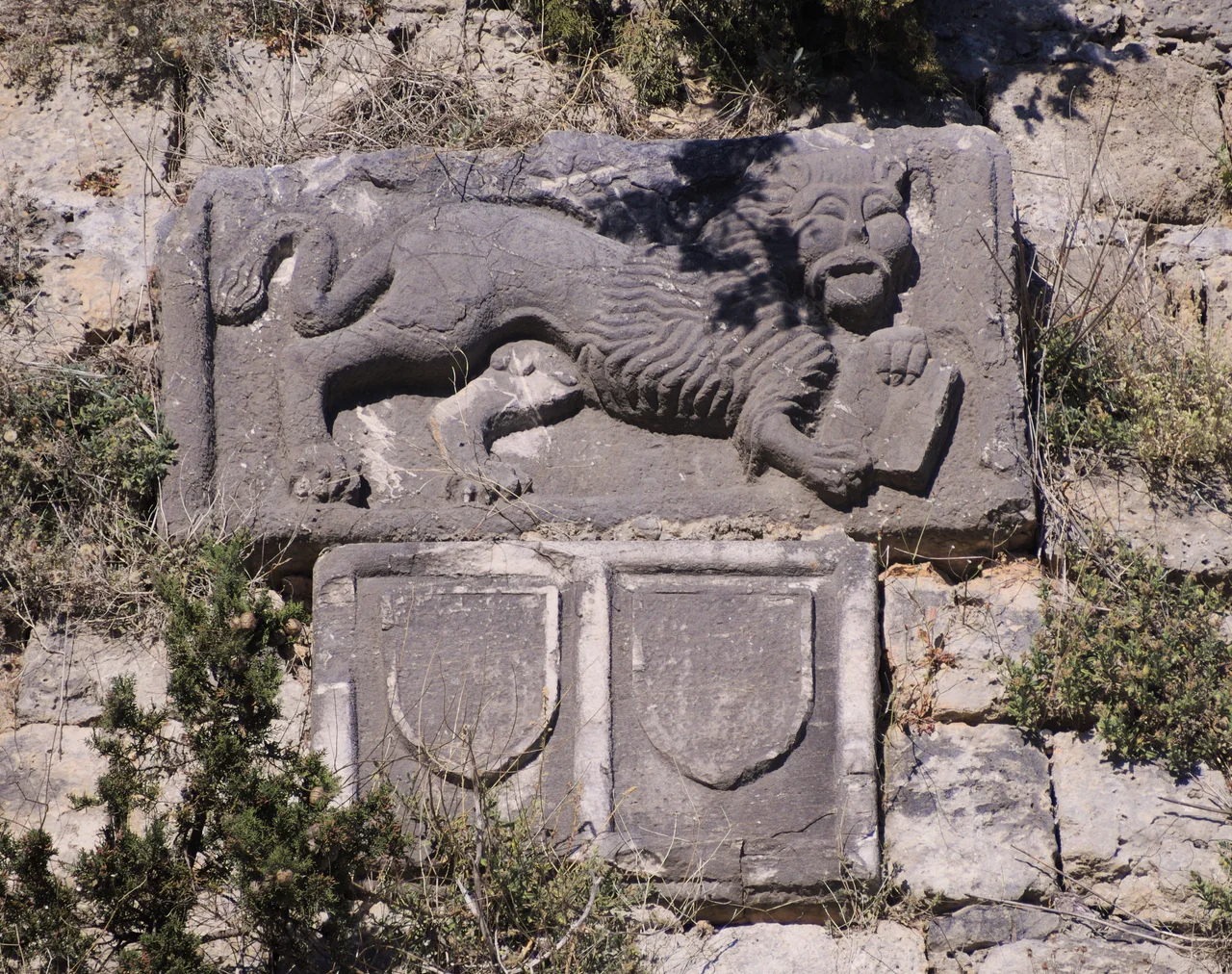
Venice's acquisition of Argos and Nauplia in 1388 completed a strategic puzzle. Nauplia controlled the sea routes from the Adriatic to the eastern Mediterranean and served as a stopping point on the Black Sea commercial lanes. It was too valuable to leave in private hands. Before Venice could formally take possession, however, the Byzantine Despot Theodore I Palaiologos and his ally Nerio I Acciaioli moved fast, seizing the cities with Ottoman military assistance. The Venetians recovered Nauplia quickly, but Argos stayed in Byzantine hands until 1394, when Theodore finally ceded it. Venice held Argos until the outbreak of the First Ottoman-Venetian War in 1463, then lost it. Nauplia proved harder to take: it remained Venetian until 1540, the last of Venice's Morea territories to fall. By then the Frankish world that had created the lordship had been gone for over a century, its language and architecture absorbed into the Greek landscape, its records preserved mainly in French chronicles and Venetian administrative files.
From the Air
The Lordship of Argos and Nauplia centered on the Argolid plain at approximately 37.56°N, 22.80°E. From altitude, the two key sites are legible: Argos lies inland on the plain, while Nauplia (modern Nafplio) occupies a distinctive peninsula jutting into the Argolic Gulf — one of the most recognizable geographic features of the southern Peloponnese when viewed from the air. The citadel of Larissa above Argos and the massive Palamidi fortress above Nafplio are both visible from several thousand feet. Nearest major airport is LGAV (Athens International), approximately 110 km northeast. The entire Argolid is best viewed at 2,000–5,000 feet AGL; clear conditions prevail for most of the year.
Nearby Stories
- Kastanitsa 2.3 km away
- Heroon at Nemea 3.4 km away
- Psari, Trikolonoi, Arcadia 4.2 km away
- Siege of Gardiki-Arcadia 8 km away
- Cleitor 12 km away
- Troezen 15 km away
- Cave of Euripides 24 km away
- SS Heraklion 94 km away