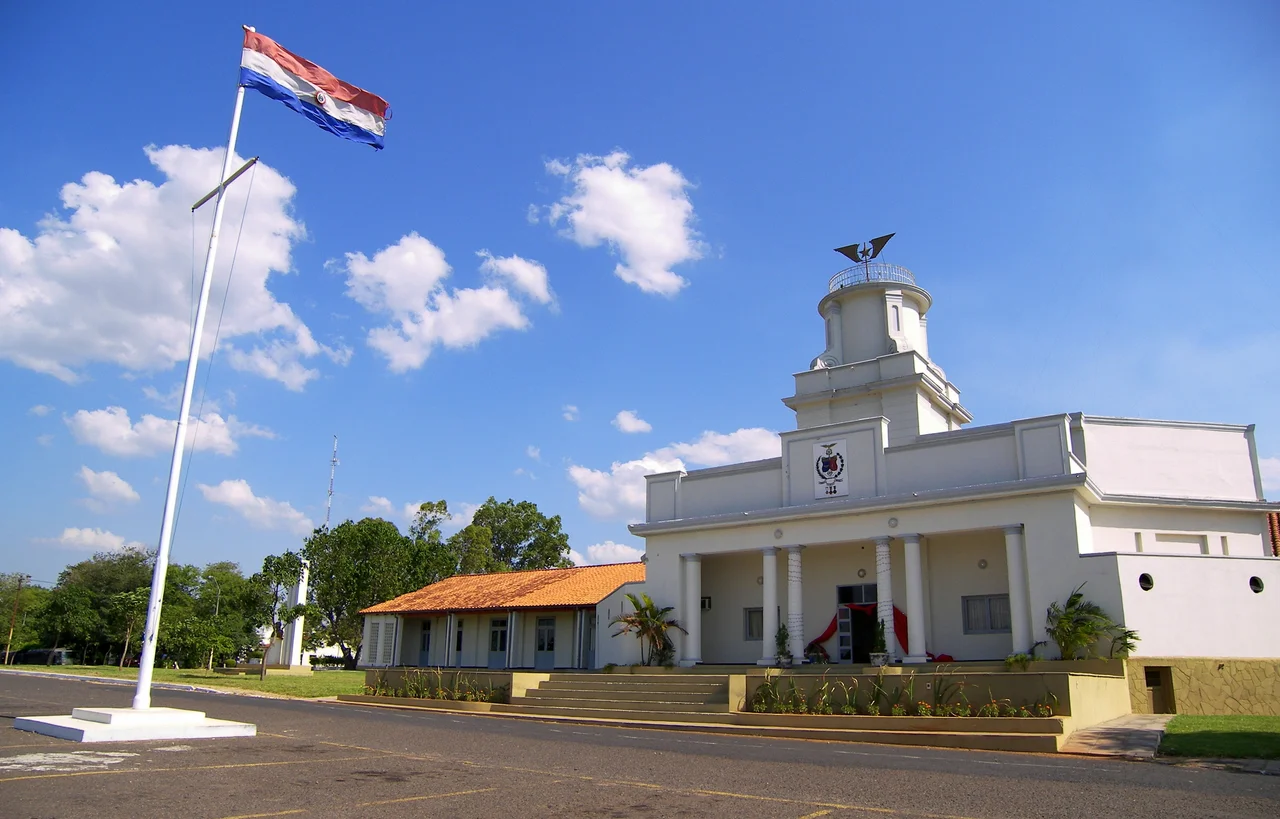

Luque
Walk past an open doorway in Luque and you might hear it before you see it: the bright cascade of a harp being tuned, or the soft tap of a chisel against rosewood. This is the workshop town of Paraguay, the place artisans call the cradle of the nation's lutería, the hand-built craft of stringed instruments. The Paraguayan harp, the diatonic instrument that carries the country's music, is born in family shops here, often passed down across generations. So are guitars, and so is something smaller and stranger: jewelry woven from threads of gold.
Threads of Gold
The jewelers of Luque practice filigree, an exacting craft of twisting fine metal wire into lace. The work is called filigrana, and its most famous form is a ring of seven interwoven bands known as the Carretón de Siete Ramales. Picture seven thin hoops braided into one, so that the ring seems to ripple as it turns in the light. Goldsmiths and silversmiths build these pieces by hand, weaving wire so fine it looks spun rather than forged. It is patient, almost meditative work, the kind that resists shortcuts. A harp fills a room with sound; a filigree ring fills a fingertip with detail. Both come out of the same town, and both demand the same thing of their makers: years of practice and a tolerance for the slow.
The Year the Capital Moved Here
Luque's quiet streets once held the weight of a nation. During the War of the Triple Alliance, the catastrophic conflict that pitted Paraguay against Argentina, Brazil, and Uruguay from 1864 to 1870, the war turned against President Francisco Solano López. After the fortress of Humaitá fell, Asunción could no longer be defended. In late 1868, López evacuated the capital and moved the government to Luque, a railway town a few miles east. For a brief, harrowing season, the affairs of a country fighting for its survival were managed from these streets before the seat of power moved on again, to Piribebuy. The war would eventually devastate Paraguay's population. Luque remembers it as the town that held the government when the capital itself had to be abandoned.
The Name in the Salt Flats
Long before the harps and the war, there were the salt flats. The name Luque first appears in 1635, in an act of the Cabildo of Asunción, when the colonial governor granted two leagues of land near a place called las Salinas to a Spanish captain, Miguel Antón de Luque. He had been working the land under the encomienda system for more than twenty years. A century later, in 1743, a descendant willed part of those lands to the Franciscans, who built a chapel to the Virgin of the Rosary in the 1750s. From then on, Salinas became the Valle de Luque. The two founding dates that historians record, 1635 and 1750, mark these two moments: the first grant of land, and the chapel that gave the valley its enduring name.
Football's Continental Capital
Modern Luque carries a different kind of power. CONMEBOL, the body that governs South American football and stages the Copa Libertadores and Copa América, has its headquarters here, only a few minutes from the airport. Inside is the South American Football Museum, a shrine to a continent's obsession. Luque has its own footballing pedigree, too: it is the home town of José Luis Chilavert, the fearsome goalkeeper who scored goals himself, and other internationals. The city stretches from the shores of Ypacaraí Lake toward the Paraguay River, the third-largest city in the country and the most populous in the Central Department. Within its bounds sit Paraguay's main airport and the green expanse of Ñu Guasú Park, where the Paraguayan Olympic Committee makes its home.
From the Air
Luque lies at approximately 25.27°S, 57.49°W, immediately east of central Asunción within the Gran Asunción metropolitan area. It is dominated visually by Silvio Pettirossi International Airport (IATA: ASU, ICAO: SGAS), Paraguay's main international gateway, whose single runway is the clearest landmark from the air. The airport sits at low elevation, around 90 m (300 ft) above sea level, and shares facilities with the Ñu-Guazú Air Force Base. From 3,000–5,000 ft AGL, look for the airport, the green block of Ñu Guasú Park, and Ypacaraí Lake glinting to the east; the city fills the ground between the lake and the Paraguay River to the west. The angular CONMEBOL headquarters building sits near the airport. Conditions are usually clear except during summer afternoon thunderstorms.
Nearby Stories
- Yaguarón 21 km away
- Río Pilcomayo National Park 22 km away
- New Australia 45 km away
- La Colmena, Paraguay 46 km away
- Nueva Germania 120 km away
- Pilar, Paraguay 155 km away
- Concepción 174 km away
- First Battle of Nanawa 241 km away