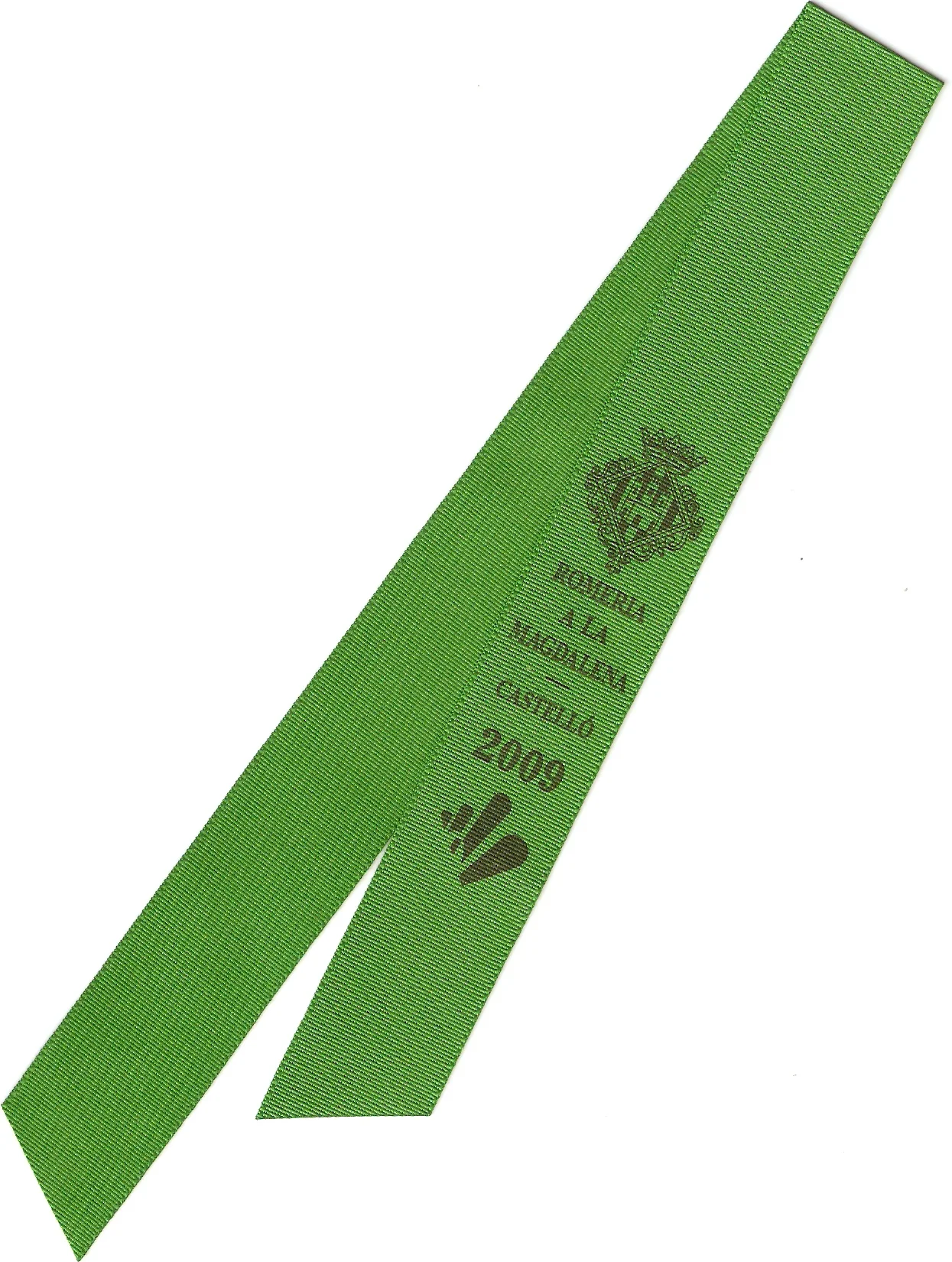

Magdalena Festival
Once a year, an entire city walks back to the hill it left almost eight centuries ago. In 1251, on the order of King James I of Aragon, the people of Castellón came down from the slopes of the Hill of Mary Magdalene to build a new town on the fertile plain below. Every spring since, they retrace that journey in reverse - thousands of pilgrims climbing back up to the old hilltop, each carrying a cane, in a nine-day festival that turns the founding of a city into a celebration of light, gunpowder, and enormous shared meals.
The Pilgrimage of the Canes
The heart of the festival is the romeria, held on the first Sunday. It begins early, the pilgrims setting out from the centre and threading north through the streets before the route turns onto rural paths climbing toward the Mary Magdalene chapel. Everyone carries a cane, a reminder of the walking staffs their ancestors once needed to cross this ground. Halfway up, tradition demands a pause at the Sant Roc de Canet chapel for a snack and a prayer. When the pilgrims finally reach the hilltop, bells ring, a thunderous mascletà announces their arrival, ring-shaped pretzels called rotllos are handed round, and an enormous paella is shared out after Mass beside the ruins of the old Castle of Fadrell.
Monuments Made of Light
The strangest and most beautiful symbols of the Magdalena are the gaiatas - tall festive monuments, some nearly twenty feet high, that one of the festival's founders defined perfectly as "a burst of light, with no fire or smoke." They are not floats or effigies but sculptures of pure illumination, and their shape is no accident: they recall the lanterns the early townspeople carried to find their way across the marshy plain at night. The city divides into nineteen districts for the festival, each fielding its own gaiata, and when they are all lit at once and judged in competition, the connection becomes clear. A town that once needed lanterns to cross the dark now builds monuments out of light to remember it.
Nine Days of Noise and Smoke
Between its solemn moments, the Magdalena is gloriously loud. It opens at noon with fireworks whose number counts the years since the festival began, followed by a mascletà - a coordinated firecracker barrage, ten to fifteen deafening minutes of rhythm you feel in your chest more than hear. The great opening parade sends costumed companies through the streets reenacting the city's past as Moors, Christians, Jews, and pirates. After dark, El Fadrí bell tower blazes with pyrotechnics, the Nit Màgica fire show lights up the night, and daily mascletàs and firework runs keep the smoke drifting over the plain for more than a week.
Magdalena! Vítol!
The festival winds toward its close with the Offering of Flowers to Our Lady of Lledó, the city's patron, when carnations brought by thousands of residents are woven into a floral tapestry. Then comes the grand finale on Laetare Sunday: a final pyrotechnic run through the centre, the boldest onlookers sprinting just ahead of the fireworks. At the end, from the balcony of City Hall, the festival queens cry out to the crowd below in old Valencian - "Magdalena!" - and the square roars back "Vítol!" With that exchange the year's festivities formally end and the countdown to the next begins. It is little wonder Spain declared the Magdalena a Fiesta of International Tourist Interest in 2010.
A Festival That Counts the Years
There is a bookkeeping quality to the Magdalena that reveals how seriously Castellón takes its own history. The opening fireworks are counted out to match the number of years since the modern festival began in 1945; the pilgrimage retraces a move dated precisely to 1251; a floral wreath is laid each year at the monument to King James I, honoured as the grandfather of the city. Because the whole celebration is pinned to the third Saturday of Lent, its dates drift across March from one year to the next, chased annually by calendars and almanacs that calculate exactly when it will fall. For nine days the town becomes a living memory of its own founding - and then, with a single shouted word from a balcony, it resets the clock and begins the wait for next spring.
From the Air
The festival unfolds across Castellón de la Plana, centred near 39.99°N, 0.04°W, and up on the Hill of Mary Magdalene inland to the northeast, where the pilgrimage chapel and the ruins of the Castle of Fadrell overlook the city. From the air, El Fadrí tower marks the old centre and the wooded rise of the Magdalena hill stands apart from the flat grid of the plain. The festival falls in March, on the third Saturday of Lent. Castellón-Costa Azahar (LECN) is the nearest field; Valencia's LEVC lies about 65 km south, and Alicante-Elche LEAL is farther south. A viewing altitude of 2,500-4,000 ft AGL frames city and hill together; spring visibility over the coast is usually excellent.
Nearby Stories
- Vía Verde de Ojos Negros 3.9 km away
- Battle of Saguntum 9.1 km away
- Peniscola Castle 13 km away
- Catí 29 km away
- Illa Grossa 30 km away
- Teruel 33 km away
- La Tomatina 35 km away
- Illa Conillera 111 km away