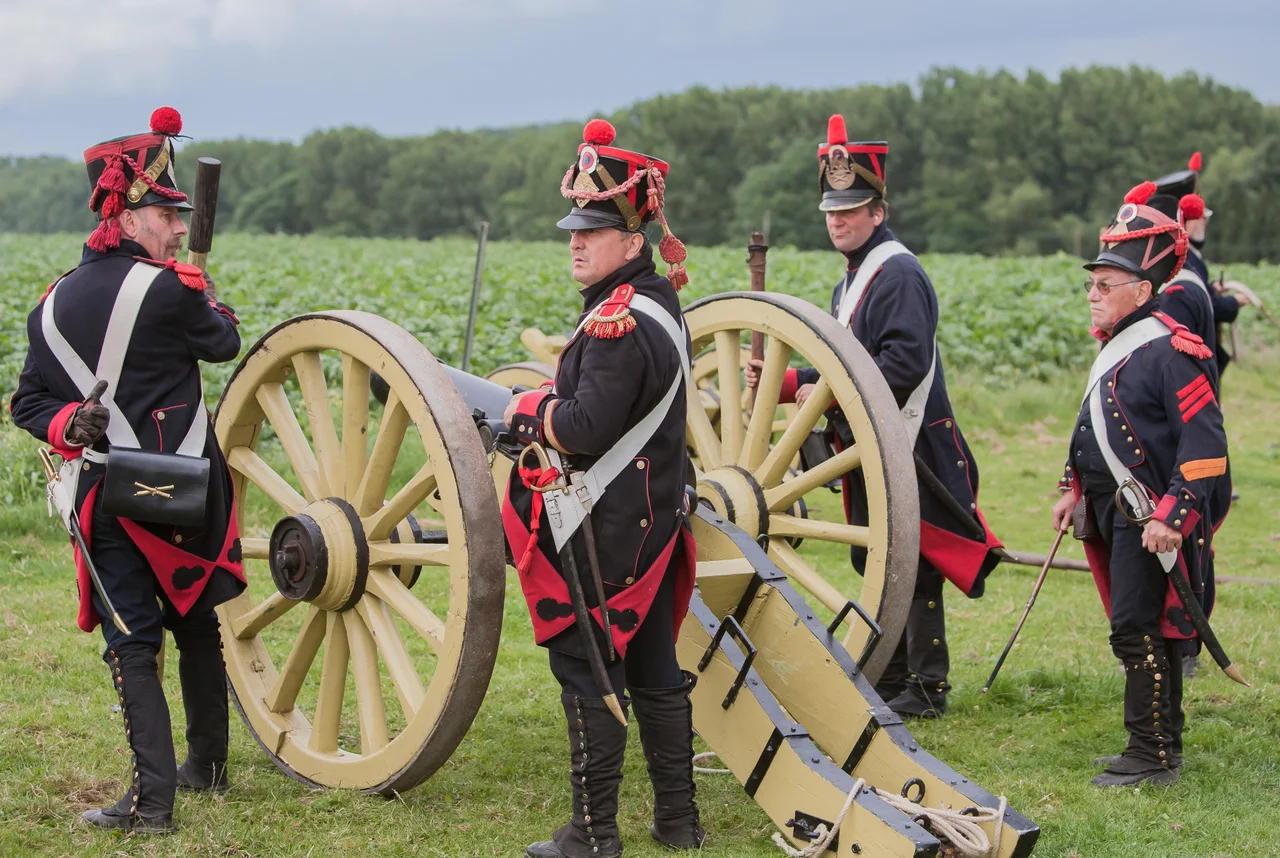

Battle of Saguntum
To hold the hill, they tore down the theatre. In 1811, as a French army marched on the Valencian coast, Spanish workers scrambled to turn the crumbling old fortress atop Sagunto into a defensible stronghold. They needed stone, and the readiest supply lay at their feet: the Roman theatre on the slope below, still remarkably intact after seventeen centuries. On the advice of a British officer, they quarried the ancient monument for building blocks and patched the fortress walls with the bones of antiquity. The work was still unfinished when Marshal Suchet's soldiers appeared beneath the hill - and the Battle of Saguntum, fought on 25 October 1811, would decide who held the gateway to Valencia.
A Rock Fought Over Across the Ages
This hill had heard war before. In 219 BC the ancient city of Saguntum, an ally of Rome, was besieged and destroyed by Hannibal - an act that ignited the Second Punic War and set Carthage and Rome at each other's throats. Rome rebuilt the city and, generations later, carved the great theatre into the mountainside. The Moors held the height after them; medieval Christians took it back. By the Napoleonic era the town at the base was called Murviedro, and its castle hill still commanded the coast road north of Valencia. When Napoleon ordered Suchet to seize the province in 1811, this ancient rock once again became the thing worth killing for.
The Siege
Suchet hoped to take the castle in a rush. He could not. The garrison of some 2,600 men under Colonel Andriani threw back his first assaults, and a daring midnight escalade at the end of September ended in slaughter - the storming parties climbed their ladders into a wall of alert defenders, and nearly every Frenchman who reached the top was killed or hurled back down. For the cost of a few hundred casualties, the defenders lost fewer than fifty. Forced into a formal siege, Suchet dragged heavy guns up the rocky slope while Spanish guerrilla bands harried his supply lines across Aragon. The walls, half-finished though they were, held longer than anyone had expected.
The Relief That Failed
The Spanish commander, Captain General Joaquín Blake, distrusted his own army and had hoped to avoid open battle altogether. But the people of Valencia would not stand for a general who let their fortress fall without a fight, and to keep his command he had to march. On 25 October he advanced against Suchet with nearly twice the French numbers. It went wrong on the hills. There the raw Valencian recruits of the Spanish left, thrown against seasoned French, Italian, and Polish troops under the Polish general Chłopicki, broke and fled almost at first contact, ridden down by Italian dragoons. On the right, the veteran divisions of Zayas and Lardizabal - hardened at the Battle of Albuera - fought with real skill, and a Spanish cavalry charge briefly overran French guns. It was not enough. Suchet loosed his cuirassiers, the Spanish horsemen were scattered, and the flank collapsed.
The Cost
Blake had placed himself too far to the rear to steer the battle; by one account he gave the order to advance and then simply let events run. When they ran against him, the retreat became a rout. A single battalion of the Walloon Guard turned to hold a village so the rest could escape, and four hundred of them were captured for their sacrifice. By nightfall the Spanish had lost roughly six thousand men, most of them taken prisoner. The next day, with the relief army shattered before their eyes, the exhausted garrison surrendered the castle. Its 2,500 survivors marched into captivity, two hundred too sick or wounded to be moved at all. In Paris, the name Saguntum was carved onto the Arc de Triomphe as a French victory. On the Valencian plain it was something simpler and sadder - thousands of ordinary men, many of them barely trained, buried far from home beneath a hill that had been swallowing armies for two thousand years.
From the Air
The battlefield and Sagunto Castle lie at roughly 39.683°N, 0.267°W, about 30 km north of Valencia near the coast - the long fortified ridge of the castle crowning the hill above the town is the unmistakable landmark, with the restored Roman theatre on the slope below it. Best viewed from 1,500-3,500 ft AGL in clear conditions; the coastal plain where the armies clashed spreads south toward Valencia. Valencia Airport (LEVC) sits about 30 km southwest; Alicante (LEAL) is roughly 150 km south. The castle ridge and theatre are visible together from the air.
Nearby Stories
- Sanctuary of St. Paschal Baylon 7.8 km away
- Vía Verde de Ojos Negros 14 km away
- Albufera Natural Park 16 km away
- Cova de les Dones 23 km away
- La Tomatina 25 km away
- Illa Grossa 41 km away
- Peniscola Castle 51 km away
- Illa Conillera 86 km away