
Sanctuary of St. Paschal Baylon
The largest swinging bell in the world hangs in a tower in Villarreal, an orange-growing town on the Castellón plain. It is part of a set of twelve, and together with a carillon of seventy-two more it accounts for over twenty-three tonnes of bronze suspended above the tomb of a barefoot friar named Paschal Baylón. He was a shepherd before he was a saint, and for four centuries he has drawn pilgrims - and Spanish kings - to this spot. What almost no visitor realizes is that the sanctuary they walk through is, in large part, a reconstruction.
The Shepherd of Villarreal
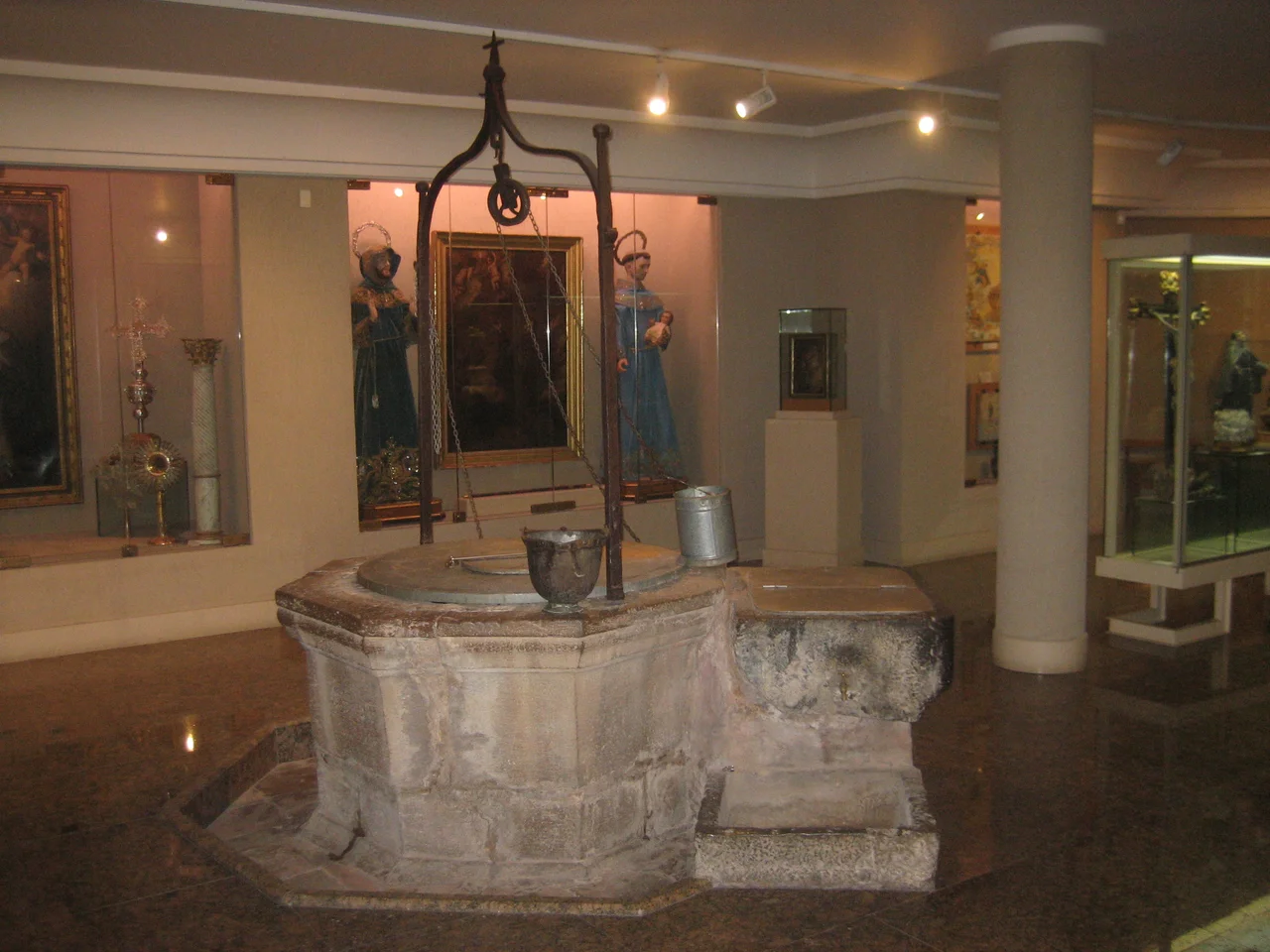
Paschal Baylón kept sheep before he took a habit, joining the Alcantarine friars, the barefoot reformed branch of the Franciscans. He was assigned to Villarreal (Vila-real in Valencian) in 1589 and lived there until his death in 1592. It was his presence - his life, death, and burial in the convent - that lifted an ordinary religious house into a place of pilgrimage. In the year he died, a well of water said to bring benefit to the sick appeared on the grounds; locals still call it the Pouet del Sant, the little well of the saint. A humble man became, for the town, its holiest inhabitant.
A Jewel of Valencian Baroque
The convent itself was born of a sea battle. Its founding chapel, dedicated to Our Lady of the Rosary, was raised in 1571 to give thanks for the Christian victory over the Ottoman fleet at Lepanto that October. A century later, a Royal Chapel went up to house the saint's remains, and it became renowned as the first great monument of Valencian Baroque - its walls worked in sgraffito, panelled in ceramic, hung with eight canvases by Domingo Saura depicting the saint's miracles, and centred on a gilded altarpiece with a glass urn displaying his incorrupt body. For generations it was one of the artistic treasures of the region.
Burned to Rubble
On 13 August 1936, in the opening months of the Spanish Civil War, an armed group from outside the city desecrated the sanctuary and set it ablaze. The Baroque jewel was reduced to rubble; the artistic labour of centuries was lost in a day. What stands today is the answer the town gave. Rebuilding began in earnest in 1949, funded largely by anonymous donations from the faithful, stone by patient stone. The new Royal Chapel was inaugurated in 1992 by King Juan Carlos I, and the great new temple - proclaimed a minor basilica by Pope John Paul II - remains unfinished even now, though open for worship. It is a shrine that wears its own destruction and stubborn recovery in its walls.
Twenty-Three Tonnes of Bronze
The sanctuary's crowning marvel is its bells. Two towers carry a carillon of seventy-two bells, cast by the Dutch foundry Royal Eijsbouts and installed by a Belgian firm, alongside twelve great swinging bells from Paccard of Haute-Savoie - among them the largest swinging bell anywhere on Earth. The carillon's bronze alone weighs some 23,500 kilograms, and the twelve swinging bells add several tonnes more on top of that. The instrument has drawn musicians from far beyond Spain; on one anniversary a Japanese carillonist based in Frankfurt came to play a memorial concert here. When the full set sounds out over the orange groves, it completes an unlikely arc - from a shepherd's grave to the biggest swinging bell in the world, ringing above the town that never stopped rebuilding his shrine.
A Shrine of Kings
For four centuries the sanctuary drew the powerful as well as the pious. The Habsburg kings came - Philip III and Philip IV among them - and so did the Bourbons who followed: Charles III, Charles IV, Ferdinand VII, Isabella II, Amadeo I, Alfonso XIII, a near-unbroken procession of Spanish monarchs paying their respects at a shepherd's tomb. In the twentieth century the visitors ranged from heads of state to papal envoys, and in 1960 the saint's relics themselves travelled abroad, carried to Munich for a Eucharistic congress. That a barefoot friar who owned nothing should command such attention across so many reigns says something about the hold he took on the Spanish imagination - and about a town that chose to make his memory its own, and to rebuild that memory from ashes when it was taken away.
From the Air
The sanctuary stands in Villarreal (Vila-real) at 39.94°N, 0.10°W, just south of Castellón de la Plana on the coastal plain near the Mijares river. From the air its twin bell towers are the marker, rising above a flat sea of orange groves on the edge of town. Castellón-Costa Azahar (LECN) is the nearest field, a short distance north; Valencia's LEVC lies roughly 60 km south, with Alicante-Elche LEAL farther down the coast. A viewing altitude of 2,500-4,000 ft AGL frames the basilica against the plain. Weather here is typically mild and clear, with only occasional coastal haze in high summer.
Nearby Stories
- Vía Verde de Ojos Negros 3.9 km away
- Battle of Saguntum 9.1 km away
- Peniscola Castle 13 km away
- Catí 29 km away
- Illa Grossa 30 km away
- Teruel 33 km away
- La Tomatina 35 km away
- Illa Conillera 111 km away