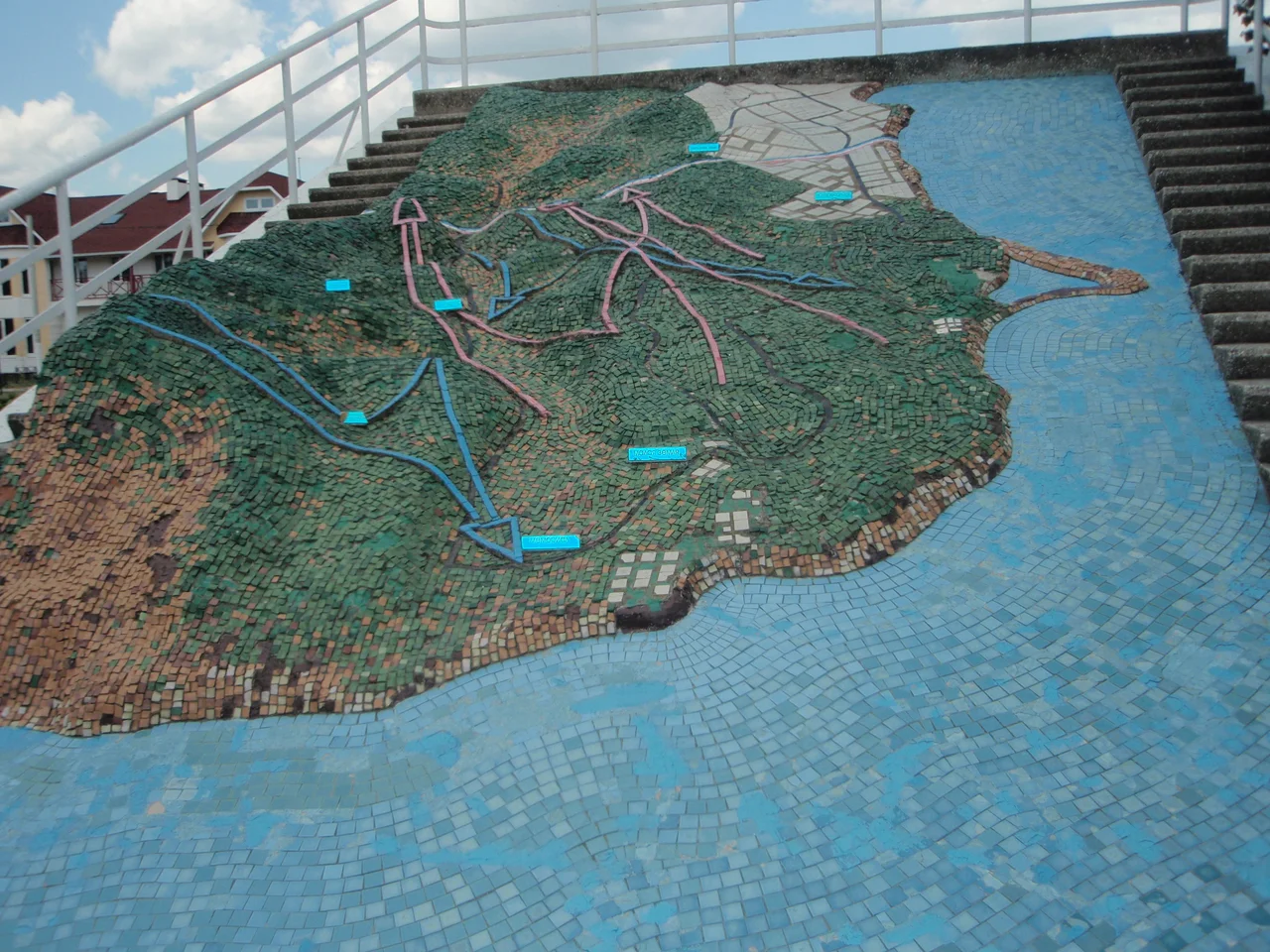

Malaya Zemlya
The plan called for them to be a distraction. On the storm-lashed night of 4 February 1943, some 800 Soviet naval infantrymen were meant to draw German attention to Cape Myskhako while the main assault went in elsewhere along the Black Sea coast. Then the main landing collapsed in ambush, and the decoy became the whole battle. The marines who waded ashore in the winter surf found themselves not creating a diversion but holding a beachhead - a sliver of shore below Novorossiysk they would come to call Malaya Zemlya, the 'Small Land.' It was small indeed. Holding it would cost far more than its size.
The Wrong Landing Becomes the Right One
The operation began badly. A landing at Ozereyevka, meant to be the primary blow, was lost - a second attempt cut down in ambush. What had been conceived as a feint at Cape Myskhako was hastily promoted to the main effort, and the Black Sea Fleet put its men ashore through high winter storms onto ground the Germans were determined to hold. There is a grim irony in it: the soldiers sent to be sacrificed as a ruse became the ones who mattered most. As they scrambled to secure the beachhead, the Germans answered with a counter-offensive backed by air power, hammering the thin Soviet foothold from land and sky. The marines had expected to make noise and withdraw. Instead they were told, in effect, to stay - and they stayed.
The Major Who Would Not Yield
At the head of the landing was Major Tsezar Kunikov, and the stand at Malaya Zemlya is inseparable from his name. Under his command the small force held its ground against odds that should have swept it into the sea. Kunikov did not survive the achievement. He was mortally wounded in the fighting and died on 14 February 1943, just ten days after the landing. For leading the seizure and defense of the beachhead, he was posthumously named a Hero of the Soviet Union, the country's highest honor. His men held on. Among the hundreds who held that narrow beachhead were men who would otherwise have spent their lives as teachers, laborers, and athletes - ordinary futures cut short, a reminder that the dead here were people before they were casualties.
A Hinge of the Caucasus
For all its modest size, Malaya Zemlya mattered strategically. Won during the wider Battle of the Caucasus, the beachhead on Cape Myskhako pinned German forces and opened the door to the eventual Soviet assault on Novorossiysk itself - the port whose capture would help pry loose the German grip on the region. To stand on the cape today, looking across Tsemes Bay toward the city, is to see the geography that made this scrap of coast worth so much blood: a foothold from which an army could threaten a port, and a port from which a coast could be reclaimed. Small Land was small. Its consequences were not.
Memory and Myth
Malaya Zemlya carries a strange double legacy. It is a place of genuine sacrifice - and it later became a place of political embellishment. The battle formed the subject of the first volume of Leonid Brezhnev's memoir trilogy, which inflated the future Soviet leader's own wartime role at Malaya Zemlya far beyond its reality, turning an honest struggle into propaganda. The men who actually held the beachhead deserved better than to have their stand conscripted into one man's legend. Today a memorial rises on the cape to honor them, and the challenge for anyone who visits is to look past the myth to the truth beneath it: ordinary sailors and soldiers, dropped onto a storm-swept shore to be a diversion, who chose instead to hold, and paid for the holding with their lives.
From the Air
Malaya Zemlya lies on Cape Myskhako at 44.69°N, 37.80°E, on the western side of Tsemes Bay just south of Novorossiysk on the Black Sea. From altitude the bay, the sprawling port of Novorossiysk, and the ridgeline of Cape Myskhako frame the site; the angular sail-like Malaya Zemlya memorial marks the shore. Nearest airports are Anapa (Vityazevo) Airport (ICAO URKA) and Gelendzhik (URKG).
Nearby Stories
- Taman Peninsula 23 km away
- Battle of Kerch Strait (1790) 28 km away
- Temryuk 44 km away
- Soviet Hospital Ship Armenia 238 km away
- Battle of the Tanais River 241 km away
- Abkhazia 269 km away
- Beriev 277 km away
- Livadia Palace 290 km away