
Massacre of Monzievaird
Twenty men hid in a small parish church near the hamlet of Hosh on 21 October 1490, listening to the Drummonds gather brushwood against the outside walls. The church was roofed with thatch and heather. One Murray had already loosed an arrow from a window and killed a Drummond outside, which both gave away the hiding place and ended any chance of mercy. The wood went up. According to the chronicles, a piper played as the fire took hold. Only one man got out alive, by jumping from a window into the arms of a cousin who took pity on him and spirited him away. The Massacre of Monzievaird was a familiar kind of Highland horror in its century, but its scale and its setting inside a consecrated building made it notorious even by the standards of the 1490s.
A Feud Over Stewardship
William Murray of Tullibardine had held the stewardship of Strathearn for over fifty years when Lord Drummond took it from him. The two families were linked by marriage, which mattered nothing once the political ground shifted. The Drummonds evicted Murray tenants and went after George Murray, the abbot of nearby Inchaffray Abbey, putting him in such financial straits that he had to assess the teinds of Drummond lands at Monzievaird. The abbot gave the unpleasant work to his Murray kinsmen of Ochtertyre, who carried it out with the kind of brutality that turns a tax dispute into a war. The Drummonds rode out to evict the Murrays from Ochtertyre. Word reached the Murrays. They were waiting.
The Battle at Knock Mary
Lord Drummond's second son David led the retainers. The fighting went badly at first for the Drummonds until McRobbies from Balloch and Faichneys from Argyllshire joined them mid-battle. The Murrays were pushed north and made their final stand at the hill of Knock Mary, across Rottenreoch from the Monzievaird kirk. Many died there, and the survivors fled back toward Ochtertyre. The Drummonds turned for home, victorious. Along the road they met Duncan Campbell of Dunstaffnage with a body of his own clansmen. Campbell had his own quarrel with the Murrays: they had killed his father-in-law and two of his sons some years before. He persuaded the Drummonds to turn around and finish the job. About twenty Murray men, exhausted and outnumbered, took refuge in the church at Monzievaird near Hosh.
Fire and Mercy
Trapped inside a thatched and heather-roofed building, the Murrays' only hope was that the sanctuary of a church might shield them. That hope ended when one of them shot the arrow that killed a Drummond outside. The brushwood went up against the walls. Inside, men died from smoke or from the blades of those waiting at the doors. The detail that survived the centuries is that a piper played throughout, an act that has been interpreted as mockery, as ritual, or simply as what Highlanders did when something terrible was happening. One Murray jumped from a window and survived. Thomas Drummond recognised him as a cousin and chose family over feud, sneaking him away. The choice cost Thomas his place at Crieff and forced him into many years of exile in Ireland. When he eventually came home, the Murrays gave him a small estate in gratitude. It is still called Drummonderinoch, a mile southeast of Comrie.
Hangings at Stirling
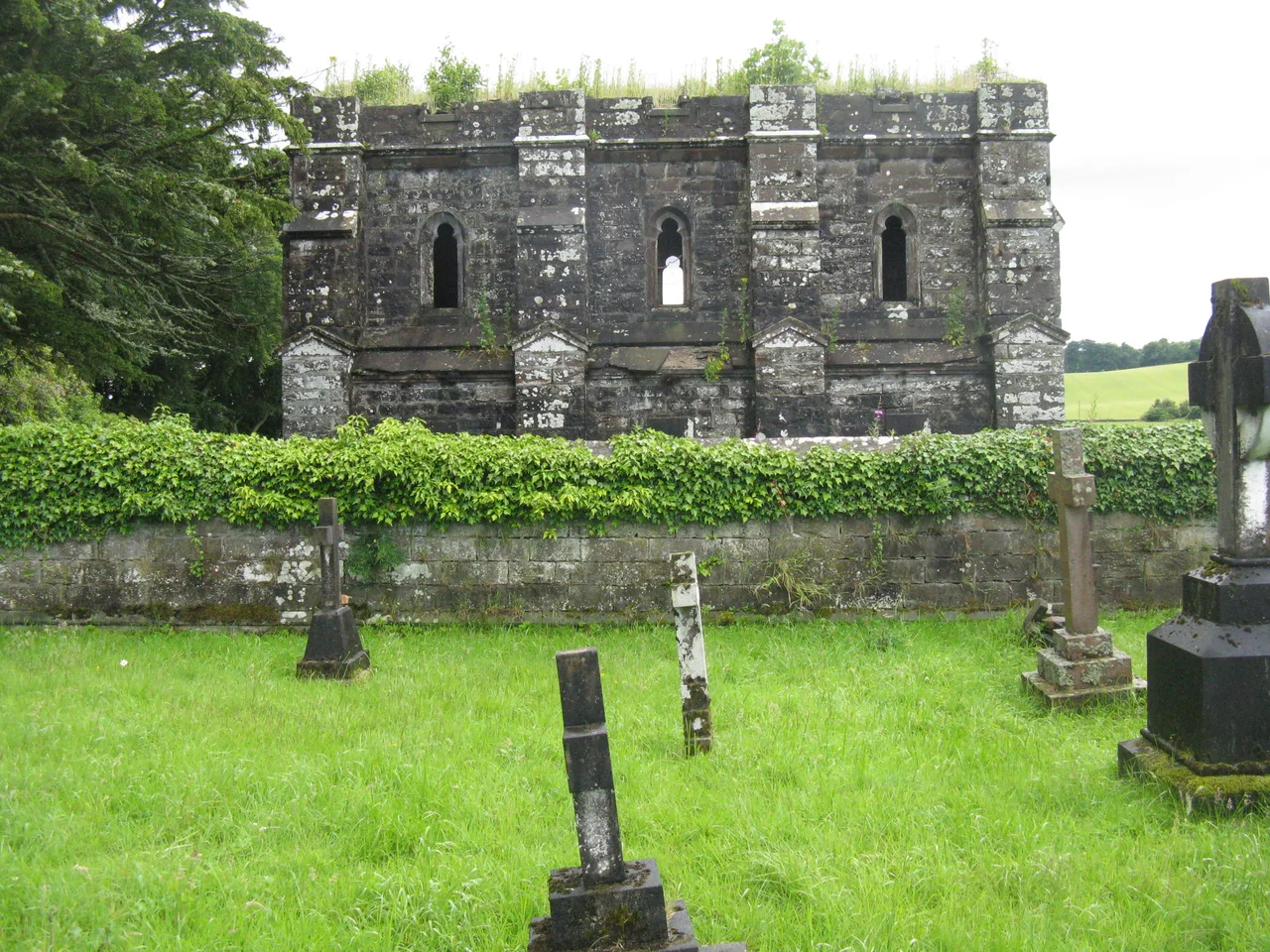
King James IV had inherited a kingdom where blood feuds were threatening the basic functioning of political life. He ordered the arrest of David Drummond and Duncan Campbell of Dunstaffnage. Both were hanged at Stirling. The point was not justice for the Murrays specifically. It was a warning to every Highland family that a church full of dead kinsmen would be punished by the crown even when the killings were the ordinary outcome of an ordinary feud. The old parish church was demolished in 1809, when the Murrays of Ochtertyre built their family mausoleum on the site. As the foundations were being dug, the workmen turned up a quantity of charred wood and many calcined bones. The Mausoleum still stands by the drive to Ochtertyre House from the A85, on the Buildings at Risk Register, its roof still intact more than five hundred years after the fire that consecrated this ground in the worst possible way.
From the Air
The site of the massacre lies at 56.39 degrees N, 3.86 degrees W, near the hamlet of Hosh by the drive to Ochtertyre House off the A85. Recommended viewing altitude 2,000 to 3,500 feet AGL. The Mausoleum of 1809 marks the spot where the old church stood. Knock Mary, the hill where the Murrays made their stand, rises just to the north across Rottenreoch. Nearest airport is Perth/Scone (EGPT) approximately 18 nm to the east. Dundee (EGPN) lies about 32 nm east. Crieff sits a mile and a half to the east. The Strathearn valley spreads east-west; the Highlands rise to the north.
Nearby Stories
- Culross Abbey 4.5 km away
- Inner Tay Estuary 5.8 km away
- Airlie Castle 6.1 km away
- Lochearnhead 6.8 km away
- Pitlochry Festival Theatre 11 km away
- Union Canal (Scotland) 12 km away
- Mugdock Castle 14 km away
- Rannoch Railway Station 24 km away