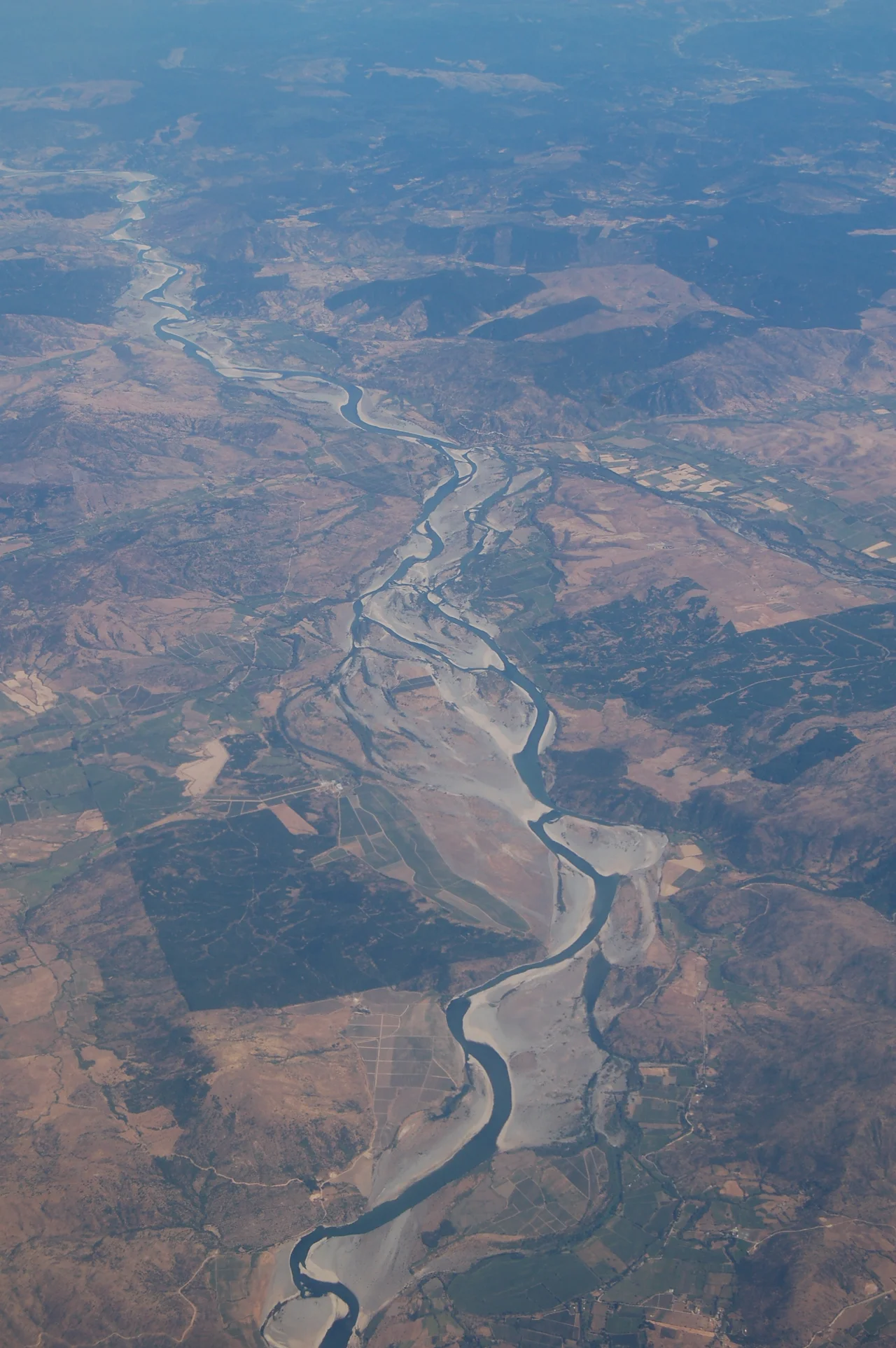

Maule Valley
An earthquake planted these vineyards. Not directly, of course - but the dry-farmed Carignan vines that have made the Maule Valley famous owe their existence to the catastrophe of January 1939, when one of the deadliest earthquakes in Chilean history flattened the towns and wineries of the central south. In the rebuilding, the government urged farmers to plant a tough French grape that could survive on the rainless interior slopes. Eighty years later, those same head-trained old bushes - knotted, untrellised, watered by nothing but winter rain - are turning out wines of unexpected depth. Maule is Chile's oldest wine country, and lately it has become one of its most interesting.
The Oldest Vines in the South
Vines came to the Maule almost as soon as Europeans did, planted near the start of colonization, which makes this one of the longest continuously cultivated wine landscapes in South America. For centuries the valley's everyday red was Pais, a hardy grape brought by Spanish settlers to fill local cups. The Maule built a reputation for quantity rather than refinement - vast plantings of serviceable wine, little of it celebrated. That reputation lingered for generations. What changed was not the abandonment of the old vines but a sudden recognition of what they had quietly become.
What the Earthquake Left Behind
When the Chillan earthquake of 1939 devastated the vineyards of the Maule, Bio Bio, and Itata, the Chilean government encouraged growers to plant Carignan among the surviving Pais, hoping to add color and freshness to the regional blend. The grape took to the dry interior - the secano - and quietly aged into something remarkable. Today some of those bush vines are seventy years old or more, dry-farmed and unirrigated, their deep roots forcing out small, concentrated berries. In 2011 a group of producers formalized this heritage as VIGNO, a collective that requires its wines to come from old, dry-farmed, head-trained vines. The result: soft, earthy reds with rich plum and black-fruit flavors, drawn from vines almost no one valued a generation ago.
A River and Many Soils
Maule sits at the southern end of the Central Valley and is among the coolest of Chile's wine regions, which suits its bright-acid reds. The Maule River, flowing east to west out of the Andes, tempers the climate and over millennia laid down a patchwork of soils: granite, red clay, loam, and gravel along its alluvial reach. Climb into the Coastal Range to the pocket called Empedrado and the ground changes entirely, dominated by black slate that gives its wines a mineral edge found almost nowhere else in Chile. This diversity is the valley's quiet advantage - within a single appellation, dozens of distinct microclimates and terroirs sit side by side.
The Dry Interior
Much of this old-vine treasure lies in the secano interior, the unirrigated belt of rolling hills between the valley floor and the coast, around towns like Cauquenes and Sauzal. It is the heart of Chile's old-vine viticulture - the great majority of the country's Carignan grows here - and it has long been a land of small growers rather than grand estates. Here the Pais grape, brought by Spanish missionaries centuries ago, still survives in ancient head-trained bushes, some of the oldest continuously cultivated vines on the continent. For decades these vineyards were considered relics, their fruit sold cheaply for bulk wine. Their rediscovery has turned the region's poorest, most traditional corner into the source of its most distinctive bottles.
Old World Methods, New Attention
Power still defines the valley's flagship wines - bold Cabernet Sauvignon and the aromatic, spicy Carmenere that Chile has made its signature grape. But the story drawing wine lovers south is the survival of old, low-intervention methods. Many hectares here have been farmed organically for decades, certified long before it was fashionable. Among the gnarled, dry-farmed bush vineyards, growers harvest naturally balanced field blends - Carignan, Cabernet, Malbec, and varieties no one has fully identified - alongside newer plantings of Merlot and Cabernet Franc. The Maule produces honest, good-value everyday wine and, increasingly, bottles that connoisseurs seek out by name. Its renaissance is built not on reinvention but on rediscovery.
From the Air
The Maule Valley wine region centers on roughly 35.53 degrees south, 71.69 degrees west, spreading across the southern Central Valley of Chile in the Maule Region, about 250 km south of Santiago. From the air the defining feature is the Maule River cutting east to west across the valley floor between the Andes and the Coastal Range, with the geometry of vineyards quilting the plain and climbing the secano interior toward the coastal hills. The nearest airfield is Talca's Panguilemo (ICAO SCTL), just north of the core vineyards; Concepcion's Carriel Sur (ICAO SCIE) lies to the southwest. A viewing altitude of 4,000-6,000 feet shows the river corridor and the contrast between irrigated valley floor and dry-farmed slopes. The region has a Mediterranean climate with about 735 mm of rain a year, almost all in winter; the dry, clear summer (December-March) coincides with the harvest and offers the best visibility.
Nearby Stories
- Altos de Lircay National Reserve 7.1 km away
- Santa Olga 25 km away
- Battle of Mataquito 31 km away
- LAN-Chile Flight 621 35 km away
- Ninhue 67 km away
- Las Leñas 87 km away
- Reserva Provincial La Payunia 175 km away
- 1687 Peru Earthquake 2269 km away