
Maymont
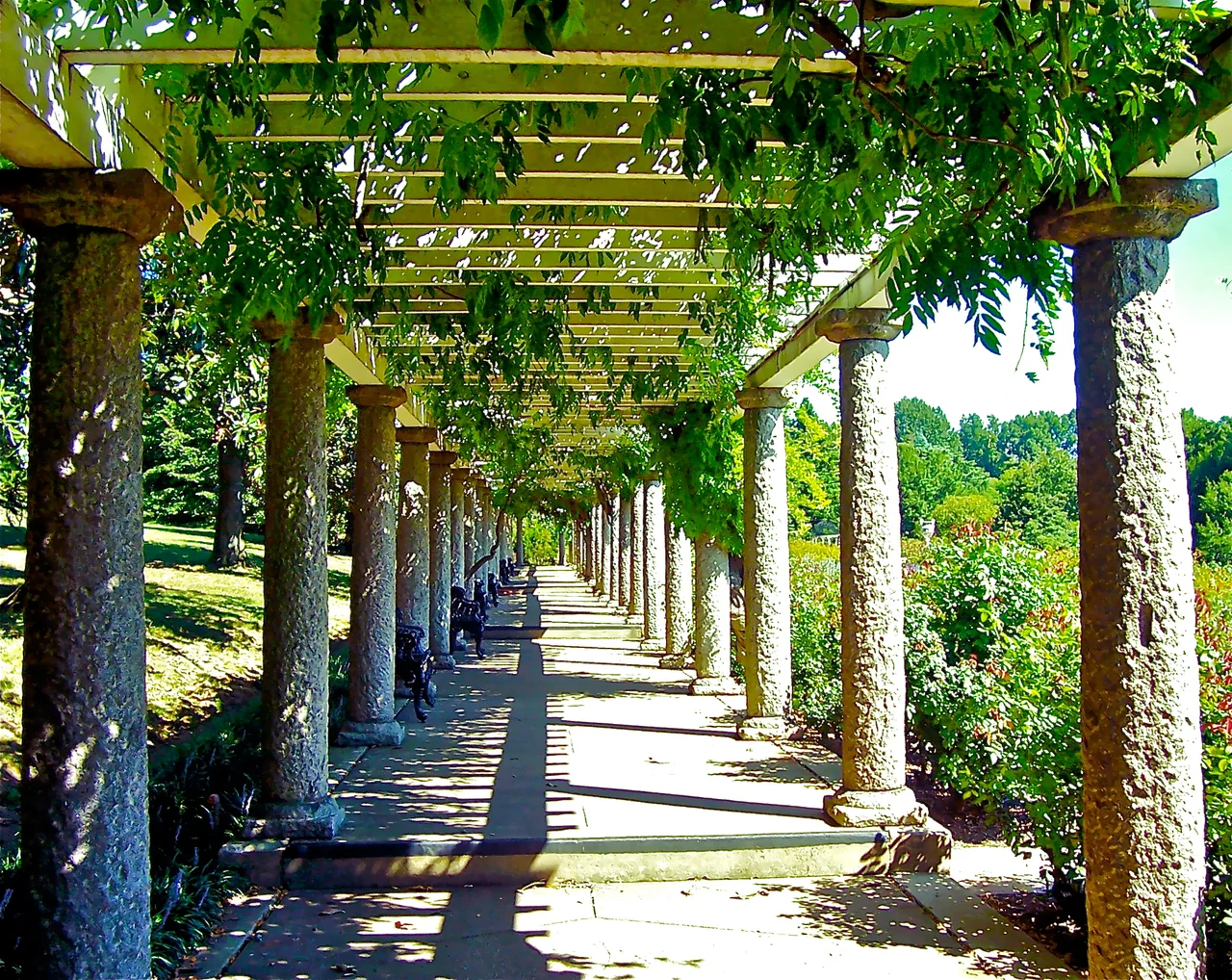
James Henry Dooley made his money in railroads and steel and Richmond reconstruction, and when he and Sallie May died, they left their hundred-acre estate to the people of the city - no foundation, no admission fee, just a will and a hilltop. That was 1925. A century later, Maymont is still doing what they asked. Children press their faces against the otter tank. Couples get married under the wisteria pergola in the Italian Garden. Bald eagles, here because they cannot survive on their own, watch the visitors back. The mansion the Dooleys built in 1893, lit by gas and wired with one of Richmond's earliest electrical systems, is now a house museum, but it is the grounds that pull people back season after season.
The Dooleys' Hilltop
James H. Dooley was a Richmond lawyer who came home from the Civil War with a permanently injured arm and rebuilt himself, and a piece of the South, in the decades after. By 1893, he and Sallie had finished their Romanesque revival mansion on a bluff above the James, with sweeping views west and south over the river valley. The estate was named for Sallie May Dooley - May for her middle name, Mont for the hilltop. The Dooleys filled the house with what wealth in the Gilded Age made possible: Tiffany glass, hand-carved interiors, a silver swan-shaped centerpiece for the dining table. They had no children. Their gift was the house itself, and the gardens, and the bluff. When they died within months of each other, the city of Richmond inherited the entire estate.
Two Gardens, Two Centuries
The Italian Garden, completed in 1910, was designed by Henry E. Baskervill of the Richmond firm Noland and Baskervill - now simply Baskervill - and modeled on 15th- and 16th-century classical Italian gardens. It steps down the slope on multiple levels, the Cascade and Fountain Court patterned after the Villa Torlonia near Rome. The Petersburg granite stonework still holds. Below it, the Japanese Garden was added a year later, in 1911, with a section of the old Kanawha Canal incorporated into its watercourse. A torii arch frames the path; a koi pond catches reflections under red maples; a large waterfall drops into the lower pond. After Sallie Dooley's death the Japanese Garden slowly lost its design integrity - until Earth Design renovated it in 1978, reimagining it as a stroll garden where the changing seasons themselves are the exhibit.
Animals Who Cannot Go Home
Maymont keeps a permanent collection of native Virginia wildlife - and almost every animal there is there because it cannot survive in the wild. A bald eagle that lost flight, a bobcat raised by humans, two black bears with histories that ended their wild lives. Elk and American bison live in larger pastures. The Robins Nature Center holds aquatic Virginia species: river otters, alligators, sharks. The Children's Farm offers horses, sheep, and goats for small hands to touch. Throughout the park, Canada geese settle on the ponds; snapping turtles and bullfrogs and snakes go about their business in the creek that crosses the property. The arboretum holds more than 200 species of trees and woody plants, including exotic champions: a Cedrus atlantica, a Cryptomeria japonica, a Parrotia persica.
The Servants the House Forgot
Like nearly every Gilded Age American mansion, Maymont ran on labor that the public tour long left out. The Dooleys employed Black domestic workers - cooks, footmen, gardeners, maids - who lived in the basement service wing and made the life upstairs possible. For decades, Maymont presented the house as the Dooleys' alone, as if the silver polished itself. That has changed. The museum now includes the below-stairs domestic service exhibit in its main tour, telling the story of the kitchen, the laundry, the staff quarters, and the people who worked there. Their names were not always written down - the historical record is thin in the way records of Black labor often are - but their work is visible again, where for a long time it was not.
The People's Park
Maymont charges no admission. The Dooleys' will was specific: the estate was a gift, not a venue. Today the gardens host weddings - the wisteria-covered pergola in the Italian Garden is the photograph everyone in Richmond has seen at least once - and the carriage house holds one of the largest historic carriage collections in the country. In 2011 the American Planning Association named Maymont one of the top ten public spaces in America. School groups arrive by the busload. Couples stroll the bluff at dusk. The mansion lights up in winter, the gardens fill with butterflies in summer. The hill the Dooleys chose for the view has, more than a century later, become the place Richmond goes to remember how to slow down.
From the Air
Maymont sits at 37.5353 N, 77.4778 W, on a bluff above the James River in Richmond's near west end. From the air, look for the dense canopy of the 100-acre estate just south of the Carillon and west of the Robert E. Lee Memorial Bridge, with the river curving below. The nearest major airport is Richmond International (KRIC), about 9 nm to the east. Recommended viewing altitude is 1,500-3,000 ft AGL to take in the mansion, the formal gardens, and the river valley together.
Nearby Stories
- Kings Dominion 8.4 km away
- Battle of Hatcher's Run 9.7 km away
- Francisco's Fight 14 km away
- Piney Grove at Southall's Plantation 17 km away
- Jamestown Settlement 19 km away
- Battle of Amelia Springs 22 km away
- Menokin 29 km away
- Highland (James Monroe House) 42 km away