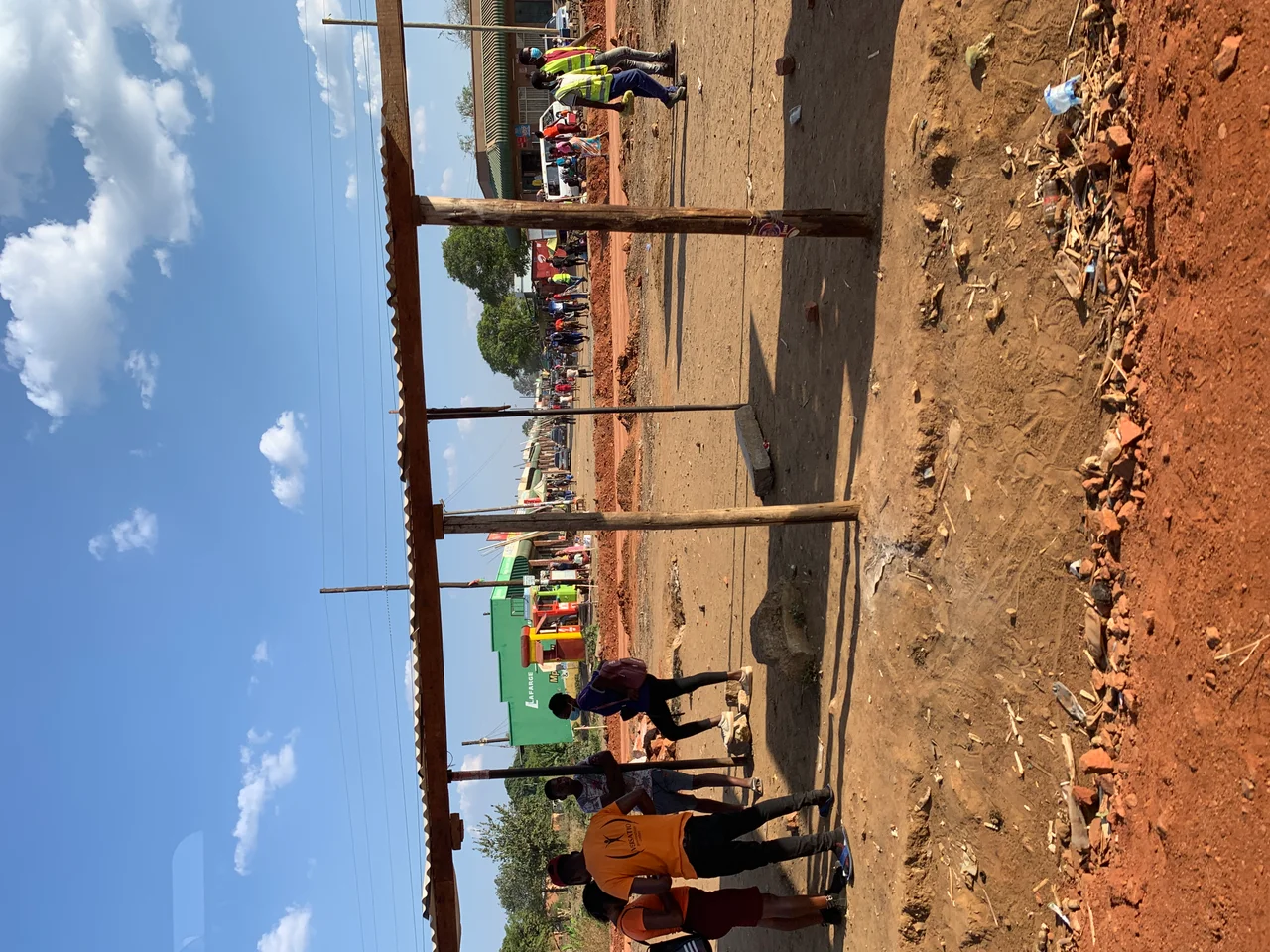

Mazabuka
The name is the story. Mazabuka, in the Tonga language, means "you have crossed." The correct form would be mwazabuka, from kuzabuka, to cross over a river; assimilation smoothed it to Mazabuka, which still carries the same meaning. The crossing in question was the Kafue River, near a place called Nanga, made by Tonga migrants who were settling the plateau long before colonial surveyors drew any map. The town that grew at that site eventually became a sugar town. It is now the headquarters of Zambia Sugar, producing more than 318,000 tonnes of crystalline sugar a year, and it sits on the southeastern edge of the Kafue Flats wetland at 1,067 metres above sea level.
A Town on the Flats
Mazabuka is the capital of Mazabuka District, one of thirteen administrative units in Zambia's Southern Province. It lies about 135 kilometres southwest of Lusaka by road, along the Lusaka–Livingstone Highway, the T1. The geographical coordinates place it at 15°50'48"S, 27°44'51"E. The Kafue Flats, a vast seasonal wetland fed by the Kafue River, stretch out to the north and west. In the wet season the flats flood; cattle move to higher ground; fish spawn in the rising shallows. In the dry season the waters retreat, leaving rich grazing that has sustained Tonga cattle herders for centuries. Sugarcane thrives in that same alluvial country, which is why the town's modern economy grew the way it did. Zambia Sugar's operations around Mazabuka are the largest sugar manufacturing complex in the country, and cane fields now stretch to the horizon on approach from any direction.
Refugees, 1941
In 1941, as German and Soviet occupations reshaped Eastern Europe, 50 Polish refugees were admitted to Mazabuka. It was a small local chapter of a much larger story: Polish civilians who had survived Soviet deportation and internment in Central Asia were, from 1942 onward, resettled in British colonies across East and Southern Africa. Camps at Abercorn in northern Zambia eventually held thousands; smaller groups ended up in towns across the territory. The Polish community in Mazabuka was modest, but it left marks, Catholic parish records, loanwords, cane-field memories that sat alongside the Tonga and Ila and Ngoni stories the town had been telling about itself. Most of the refugees moved on after the war. A few stayed. The episode is one reason that the population curve of the town bends unexpectedly in the 1940s.
Growing Fast
Mazabuka's recorded population in 1990 was 24,596. By 2000 it was 47,148. By the 2010 census it stood at 71,700, having nearly tripled in 20 years. The town hosts two well-known Roman Catholic grant-aided day schools, St Edmunds Secondary and Mazabuka Girls Secondary, which together draw the largest grade-eight enrolments in the province. Musikili Primary is a private boarding school for children aged 5 to 13. Flamboyant School, on the outskirts, serves children with disabilities and is run by the Mazabuka Association for the Disabled. Healthcare is divided between the Mazabuka Sugar Hospital, for Zambia Sugar staff, and Mazabuka General Hospital, for the public. Two notable Zambians were born in this town. Mizinga Melu, a prominent businesswoman who serves as managing director and CEO of Absa Bank Zambia Plc, is from here. So is Stanley Fischer, the economist born on October 15, 1943 who went on to serve as Governor of the Central Bank of Israel and, later, as Vice Chair of the United States Federal Reserve.
The Munali Mine
A nickel mine 60 kilometres outside town has run through a complicated succession of owners over two decades. Albidon Limited of Australia obtained the permits in 2006 and began production at Munali in April 2008. The Chinese JINCHUAN mining group took over briefly from 2010, pledging US$37 million and employing about 350 workers. A joint venture called Mabiza Resources, between the UK's Consolidated Nickel Mines Plc and CE Mining, took ownership in 2014, but delays in capital injection led the Zambian government to threaten repossession. From 2015, a US$50 million investment reactivated operations, and the mine restarted production in 2019. Today Munali is managed by an all-Zambian team, employing about 380 people, of whom 10 percent are women, and exporting high-grade nickel concentrate alongside small quantities of copper, cobalt, and platinum group metals. The workers who staff the mine live in communities affected by every ownership change, every capital delay, every global price shift. A town whose name records an act of crossing has kept crossing into new versions of itself: herding country, sugar country, Polish refuge, mining hinterland, still the same place at the river.
From the Air
Mazabuka sits at roughly 15.87°S, 27.75°E on the southeastern edge of the Kafue Flats in Zambia's Southern Province, at 1,067 m elevation. From altitude the cane fields around the town are unmistakable: a deep green patchwork that stretches kilometres in every direction, contrasting sharply with the seasonal wetlands of the Kafue Flats to the north and west. Kenneth Kaunda International Airport (FLKK / FLLS) in Lusaka is about 135 km northeast; Livingstone Harry Mwaanga Nkumbula International (FLLI) lies further southwest. Best viewing altitude is 6,000–10,000 feet AGL; visibility is excellent in the dry season (May–October).
Nearby Stories
- Kafue Flats 1.3 km away
- Rhodesia (region) 27 km away
- Lusaka 31 km away
- Southern Province, Zambia 37 km away
- Lusaka–Livingstone Road 58 km away
- Macha Mission 66 km away
- Siavonga 76 km away
- Great East Road 80 km away