.jpg)
Military Assistance Command, Vietnam – Studies and Observations Group
The name was designed to obscure. "Studies and Observations Group" sounds like a think tank, not a combat unit — which was the point. Established on 24 January 1964 as a subsidiary command of Military Assistance Command, Vietnam, MACV-SOG was a top-secret, multi-service special operations force that conducted covert unconventional warfare across Vietnam, Laos, and Cambodia for nearly a decade. Its missions included reconnaissance behind enemy lines, prisoner capture, rescue of downed pilots and prisoners of war, psychological operations, and maritime raids against North Vietnam's coast. By the end of its operational life in 1972, the unit had participated in some of the most consequential — and, in several cases, most controversial — events of the Vietnam War.
Born from Failure
MACV-SOG was created partly because the CIA's earlier covert programs in North Vietnam had failed so thoroughly. Agent teams parachuted into the north were captured almost immediately. Maritime operations fell short. Under pressure from Secretary of Defense Robert McNamara, these missions were transferred from the CIA to the military after the Bay of Pigs disaster in Cuba demonstrated the dangers of agency-led paramilitary operations. SOG's first commander, Colonel Clyde Russell, discovered that U.S. Special Forces at that point were doctrinally and organizationally unprepared for the intelligence, maritime, and psychological operations they'd inherited. Starting from a shaky foundation, the unit was built primarily from Army Special Forces, Navy SEALs, Marine Force Reconnaissance, Air Force personnel, and CIA operatives. Tight control was maintained through the Special Assistant for Counterinsurgency and Special Activities at the Pentagon — an arrangement that allowed oversight up to the presidential level and kept the unit out of the MACV chain of command for sensitive decisions.
The Gulf of Tonkin and the Fishermen Who Didn't Know Where They Were
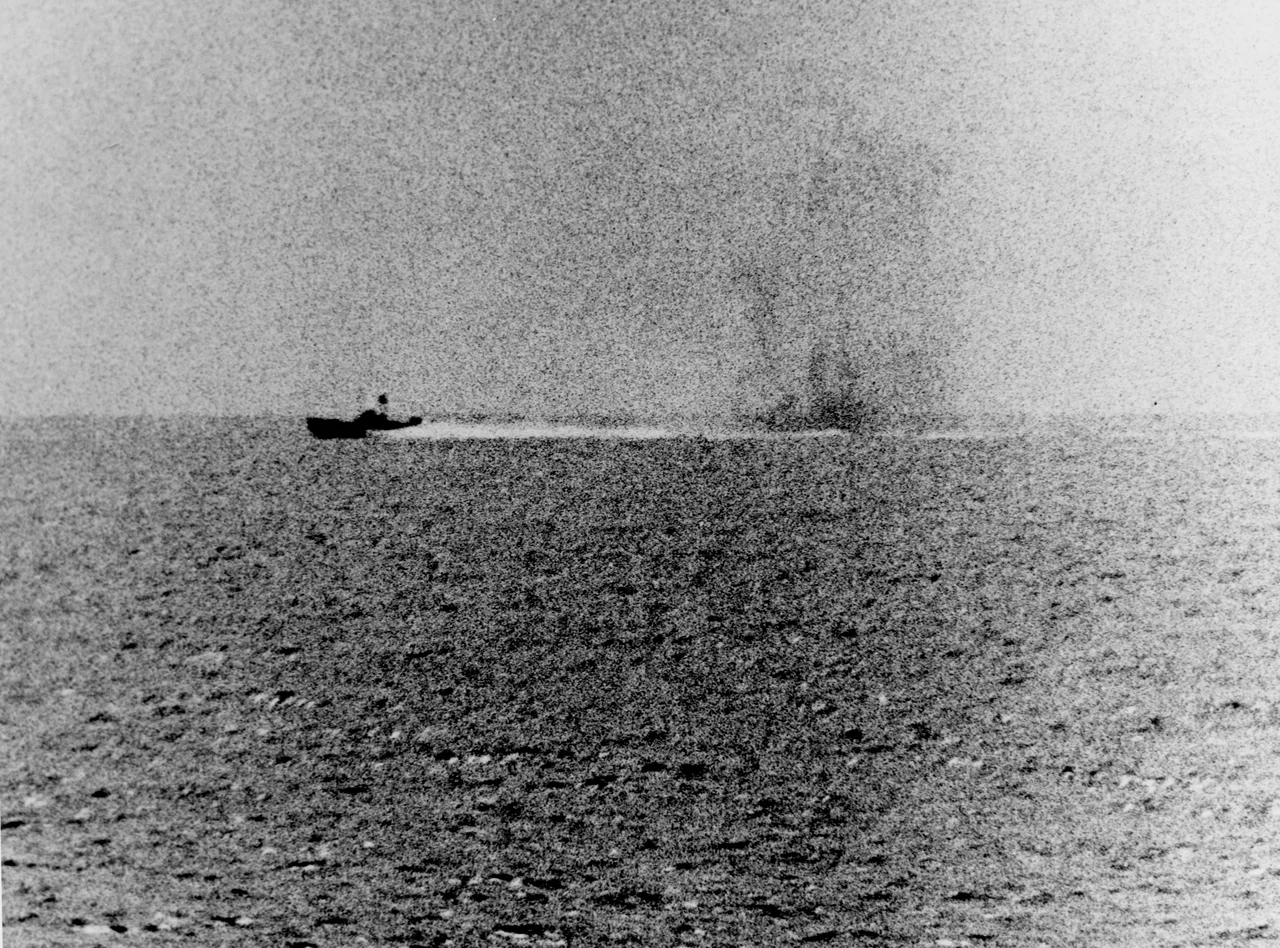
On the night of 30–31 July 1964, four SOG vessels shelled two North Vietnamese islands, Hon Me and Hon Ngu. The following days brought the Gulf of Tonkin incidents: the destroyer USS Maddox was attacked by North Vietnamese torpedo boats on 2 August, and a second attack was reported — though it never actually took place — on 4 August. President Lyndon Johnson's announcement to Congress and the public did not mention that SOG vessels had been operating in the same waters immediately before and during the Maddox's cruise, nor that Laotian aircraft flown by Thai pilots had bombed North Vietnam on 1 and 2 August. Hanoi, facing what may have looked like a coordinated escalation, responded accordingly. The Gulf of Tonkin Resolution — granting Johnson unprecedented authority to conduct military operations in Southeast Asia without a declaration of war — followed. SOG's psychological warfare wing also ran an elaborate operation in which captured North Vietnamese fishermen were held on Cu Lao Cham Island and told, by South Vietnamese crews posing as dissidents, that they were still within northern waters. After two weeks of gentle interrogation and political indoctrination, the fishermen were returned home carrying messages from a fictional resistance movement called the Sacred Sword of the Patriot League.
Into the Trail: Shining Brass and Prairie Fire
In October 1965, MACV-SOG conducted its first cross-border mission into Laos, targeting a suspected truck terminus on Laotian Route 165. Teams typically consisted of two or three American Special Forces soldiers and three to twelve indigenous fighters — primarily Nùng or Montagnard mercenaries — inserted by helicopter into areas along the Ho Chi Minh Trail. Their mission was to penetrate, observe, remain undetected as long as possible, and call in airstrikes on lucrative targets. The first mission was deemed a success, but it cost SOG's first casualty: Special Forces Captain Larry Thorne, killed in a helicopter crash. Ambassador William Sullivan in Vientiane — determined to maintain his authority over operations in nominally neutral Laos — placed strict limits on how deep teams could penetrate, which targets they could engage, and how long they could stay. SOG personnel, who needed every operational advantage they could get, called him "the Field Marshal." The enmity was mutual. By 1969, at the height of the campaign, 433,000 tons of bombs were dropped on Laos. The human cost was borne by everyone along the trail — North Vietnamese soldiers maintaining supply lines, Laotian civilians in the bombed zones, and the SOG teams themselves, who suffered mounting casualties as the North Vietnamese developed sophisticated counter-tracking systems.
The Black Year and the Men Who Didn't Come Back
In 1968 — what the unit's own histories call its "black year" — MACV-SOG lost 79 Special Forces soldiers killed in action or missing. In a single night in August, a Viet Cong company and sapper platoon infiltrated Forward Operating Base 4 near Marble Mountain Air Facility, killing 17 Special Forces soldiers in what was the unit's largest single-day loss of the war. Between 1960 and 1968, the CIA and MACV-SOG together dispatched 456 South Vietnamese agents to the north — nearly all of whom were either killed or imprisoned. North Vietnamese security forces had learned to capture a team, turn its radio operator, and run the communication channel back to SOG headquarters, requesting resupply drops that they then seized. It was, the source article notes, one of the most successful counterintelligence operations of the post-World War II period. Thirteen MACV-SOG personnel were awarded the Medal of Honor. Among them was Master Sergeant Roy Benavidez, who waited years for official recognition before receiving his award from President Ronald Reagan. On 4 April 2001, the U.S. Army awarded the unit a Presidential Unit Citation at Fort Bragg, acknowledging what had been secret for decades: that these men had fought, and that many of them had not returned.
From the Air
MACV-SOG operated across a wide geographic area spanning South Vietnam, Laos, Cambodia, and North Vietnam. The unit's geohash coordinates (approximately 16.5°N, 107.5°E) place it near the border region of Quảng Trị Province and southern Laos — the primary area of its Shining Brass/Prairie Fire operations. From altitude, the terrain is a dense ridgeline of the Annamite Range, deeply forested, with no obvious landmarks. This was the point. Forward Operating Bases were located at Khe Sanh (visible as a plateau clearing), Kontum, and Da Nang. The nearest airports to the operational area are Đồng Hới (VVDH) and Phú Bài International (VVPB) near Huế. The Ho Chi Minh Trail corridor, running roughly north-south through southeastern Laos, is the central geographic reference for understanding the unit's operations.
Nearby Stories
- Battle of Signal Hill (Vietnam) 5.4 km away
- Operation Scotland II 8.4 km away
- DMZ Campaign (1969–1971) 14 km away
- Southern Laos 15 km away
- Saravan 40 km away
- National Route 9 (Vietnam) 55 km away
- Bà Nà Hills 82 km away
- Sam Phan Bok 86 km away