
Mina Clavero
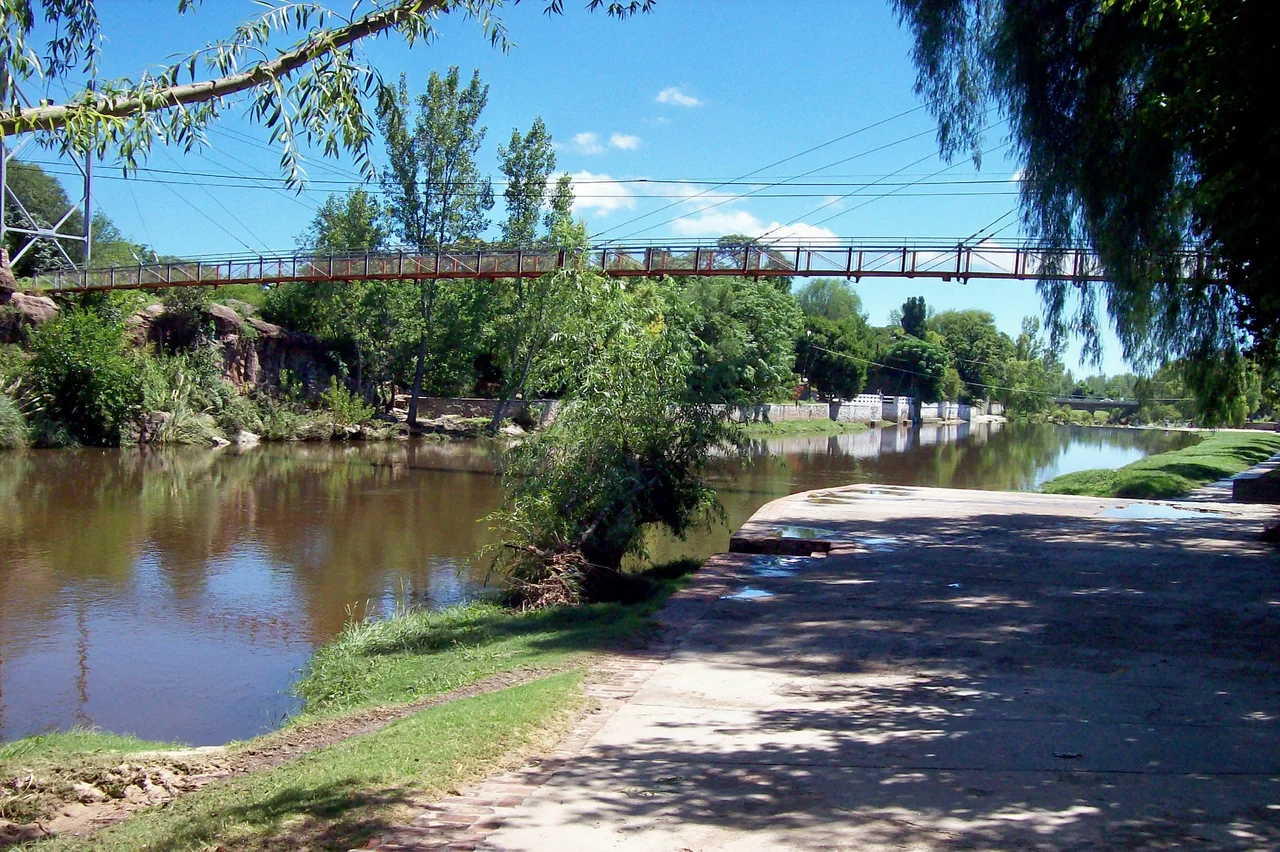
There are beaches here, hundreds of kilometres from any ocean. The Mina Clavero river runs cold and clear out of the Sierras Grandes, and where it slows it spreads into pools edged with golden sand and smooth rock. On a summer day the banks fill with families and the water with swimmers, and it is easy to forget you are in the mountains of central Argentina rather than on a coast. In 2019 the country agreed the river was something special, voting it one of Argentina's seven natural wonders. The town that grew up around it is the bright, busy heart of the Traslasierra valley.
Crystalline Water, Golden Sand
The river is the reason Mina Clavero exists as it does. Born from streams high on the Pampa de Achala, it tumbles down through the valley, carving small waterfalls and natural basins as it goes, then bends north at the edge of town to meet the Panaholma and form the Río de los Sauces. The water is famously cold and clear. It can also be sudden: rain falling in the high mountains just 25 kilometres away can swell the river while the town itself stays sunny, so since 2009 flood-warning systems have watched the upper reaches. By the time the river reaches the La Viña dam downstream, it has gathered the whole valley's runoff into one of the region's most important waterways.
Caciques, Miners, and a Saint
The valley's name reaches back to the Comechingones, the people who lived here in independent clans, each under its own cacique. One of them, Milac Navira, led the clan whose land became Mina Clavero, and many believe the town's name descends from his. Others trace it to a colonial mining family named Clavero. Spanish expeditions came surveying for minerals after Córdoba was founded in 1573, and by the 1890s the area was known for the supposed healing properties of its waters. The town owes its spiritual founding to the priest José Gabriel Brochero, who in 1887 persuaded Doña Anastasia Favre de Merlo to open a guest house here. Brochero spent his life serving the people of these sierras; in 2016 Pope Francis canonized him as the first saint born and died on Argentine soil.
The Condor of Traslasierra
Mina Clavero is rally country, and it produced the sport's Argentine hero. Jorge Raúl Recalde was born here in 1951, a driver they called El Cóndor de Traslasierra. In 1988, behind the wheel of a Lancia Delta Integrale, he became the only Argentine ever to win the Rally Argentina, and the only South American to win a round of the World Rally Championship. He died in 2001 of a heart attack while competing in a rally near Villa Dolores, still racing the mountain roads he had grown up on. Argentina's Congress named his hometown the national capital of rally and declared the day of his death the national day of Argentine rally. The mountain stages around Mina Clavero still feature in the championship.
320 Days of Sun
Set at 915 metres between the Achala and Pocho ranges, Mina Clavero claims a microclimate of its own - dry, bright, and famously sunny, with cool nights and, by local count, around 320 sunny days a year. The terrain invites every kind of motion: trekking, horseback riding, climbing, mountain biking, kayaking, and paragliding over the Río de los Sauces. Nearby, the Quebrada del Condorito National Park opens into a gorge some 800 metres deep where condors ride the thermals. In town, the Museo de las Campanas displays more than 600 bells gathered from around the world. With lodgings reportedly outnumbering residents two to one, Mina Clavero is built to welcome visitors - by day to its river beaches, by night to its casinos, theatres, and streets full of life.
From the Air
Mina Clavero lies at 31.72 degrees south, 65.01 degrees west, in the Traslasierra valley of western Córdoba Province, at about 915 metres elevation, set between the Achala range to the east and the Pocho range to the west. From the air, look for the town straddling the bright thread of the Mina Clavero river just before it bends north toward its confluence with the Panaholma. The nearest major airport is Córdoba's Ingeniero Taravella International (ICAO: SACO), reached overland from the capital via Route 20, the Camino de las Altas Cumbres, which climbs over the high Sierras Grandes. Recommended viewing altitude is 6,500-10,000 feet AGL. The high ground to the east - including the Pampa de Achala and the deep gorge of Quebrada del Condorito - can generate strong thermals and afternoon cloud, so expect lift near the ranges and watch for building weather over the high country.
Nearby Stories
- Fábrica Argentina de Aviones 6.5 km away
- LADE Flight 072 16 km away
- Villa Carlos Paz 34 km away
- National University of Córdoba 35 km away
- Sierra de las Quijadas National Park 169 km away
- San Luis 196 km away
- Villa San Agustín 218 km away
- Battle of Cepeda (1820) 332 km away