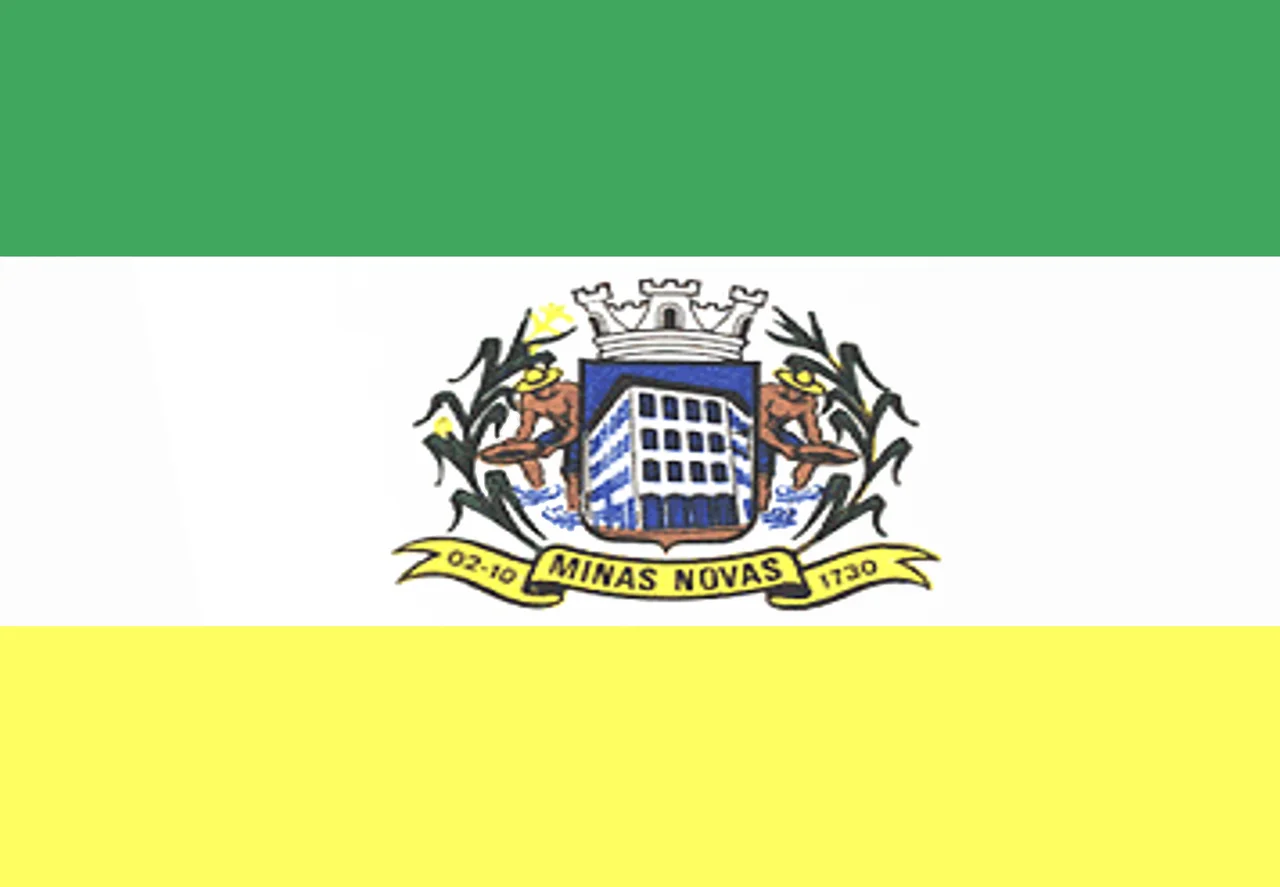

Minas Novas
The town exists because a man got lost. In the late 1720s, the bandeirante Sebastiao Leme do Prado was heading for the Aracuai River and the Itamarandiba, fleeing an epidemic that had struck his previous camp near Diamantina. He never reached either river. Somewhere in the tangled hills of northeastern Minas, he took a wrong turn and stumbled instead onto the Fanado River and a stream the paulistas eventually named Bom Sucesso - Good Success. The name was appropriate. There was gold in the gravel. Word spread across the hinterland, a rush began, and on 2 October 1730 the settlement that had grown up around the discovery was elevated to the status of a town. It was called Vila de Nossa Senhora do Bom Sucesso das Minas Novas da Contagem. Today it is called Minas Novas, and about 31,000 people live in it.
The Border That Moved
For the first thirty years of its formal existence, Minas Novas was technically part of Bahia. The administrative borders of colonial Brazil were loose things, drawn over terrain nobody had fully mapped, and the Crown had originally assigned the region to the captaincy of Bahia for jurisdictional purposes. That changed on 28 September 1760, when Minas Novas was transferred to the captaincy of Minas Gerais under the Ouvidor of the Serro Frio Comarca. The town kept its Bahian bishop, though - ecclesiastically it remained part of the Diocese of Jacobina. For decades the village was administered by one colonial authority for taxes and another for sacraments. Only in 1840, with a provincial decree on 9 March, did it receive the formal category of municipality and shed the last of its long, colonial-Portuguese name for the one it still carries.
The Sobradao
On a hill in the center of town stands a four-story building made of wattle and daub. It was finished in 1821 - two hundred and four years ago - and it is called the Sobradao, the big mansion. Four stories of Baroque-styled wattle and daub is almost unheard of in Brazilian architecture; the construction technique is typically used for ground-level rural houses. Some sources describe the Sobradao as the first skyscraper of Brazil, a claim whose veracity depends on how literally you want to interpret skyscraper. What is undisputed is that it has stood for two centuries in the climate of the Jequitinhonha - hot, humid summers, dry winters - without concrete, without steel, without any of the materials that have otherwise replaced wattle and daub almost everywhere else. The chapels of Saint Joseph and Saint Gundisalvus, and the Churches of Saint Francis and Rosary, complete a remarkably intact colonial-era core for a town this size.
The Brotherhood of the Rosary
Every June the town holds a festival for Our Lady of the Rosary, organized by the Irmandade dos Homens Pretos do Rosario - the Black Folk Brotherhood of Our Lady of the Rosary. The brotherhood dates to the slavery era, when enslaved and later freed Africans formed religious sodalities that gave them a measure of community, mutual aid, and protected celebration in a brutal colonial society. The dances and costumes carry strong African influences, as do the rhythms of the drumming; the music is closer in some ways to the traditions of Bahia and the Jequitinhonha valley than to anything in the Portuguese liturgical tradition. Minas Novas was settled largely by enslaved people and later by their descendants, and that demographic history shapes its cultural inheritance. The festival remains central to the town's identity - a living continuation of an institution born of bondage and survival.
The Rivers of the Hinterland
Water organizes Minas Novas. The Fanado River flows through the city itself, supplying its water. It joins the Aracuai River, which cuts through the municipality to the west. The Setubal River threads through the east and also flows into the Aracuai; the Capivari rises within the municipality's boundaries. All of these are tributaries of the larger Jequitinhonha system, which drains the interior of eastern Brazil toward the Atlantic coast of Bahia. The Jequitinhonha valley has a reputation for poverty - the post-gold-rush depletion left the region impoverished for generations - but it also has a reputation for cultural richness. The music, pottery, and textiles of the valley have entered the Brazilian canon. Minas Novas sits inside that cultural geography, 500 kilometers north of Belo Horizonte and well off the tourist routes.
Elevation and Quiet
The urban area sits at 635 meters above sea level, high enough that mornings can be cool even in a subtropical latitude. Neighboring municipalities - Capelinha, Chapada do Norte, Leme do Prado named after the founding bandeirante, Novo Cruzeiro, Setubinha, Turmalina, Virgem da Lapa - form a constellation of small Jequitinhonha towns with their own histories of gold, coffee, and out-migration. The 2020 population was 31,497. It has not grown much. It has not shrunk much either. It remains what it has been for three centuries: a small interior town on a river, with a four-story mud-walled building on a hill and a saint's festival in June that outlasted an empire.
From the Air
Coordinates: 17.22S, 42.59W, in northeastern Minas Gerais in the Jequitinhonha valley region. Elevation 635 meters. Approximately 500 km north of Belo Horizonte by road. Nearest significant airports: Araxuai or Teofilo Otoni for general aviation; Belo Horizonte-Confins (SBCF) for commercial connections. Terrain is broken Espinhaco foothills with scattered dry-forest and cerrado vegetation. Rainy-season afternoon thunderstorms routine; winter brings very clear, dry conditions with excellent visibility across the Jequitinhonha valley.
Nearby Stories
- Araçuaí 13 km away
- Novo Cruzeiro 34 km away
- Grão Mogol 40 km away
- Araçuaí River 46 km away
- Malacacheta 83 km away
- Rio Preto State Park 86 km away
- Janaúba 119 km away
- Pico do Itambé State Park 141 km away