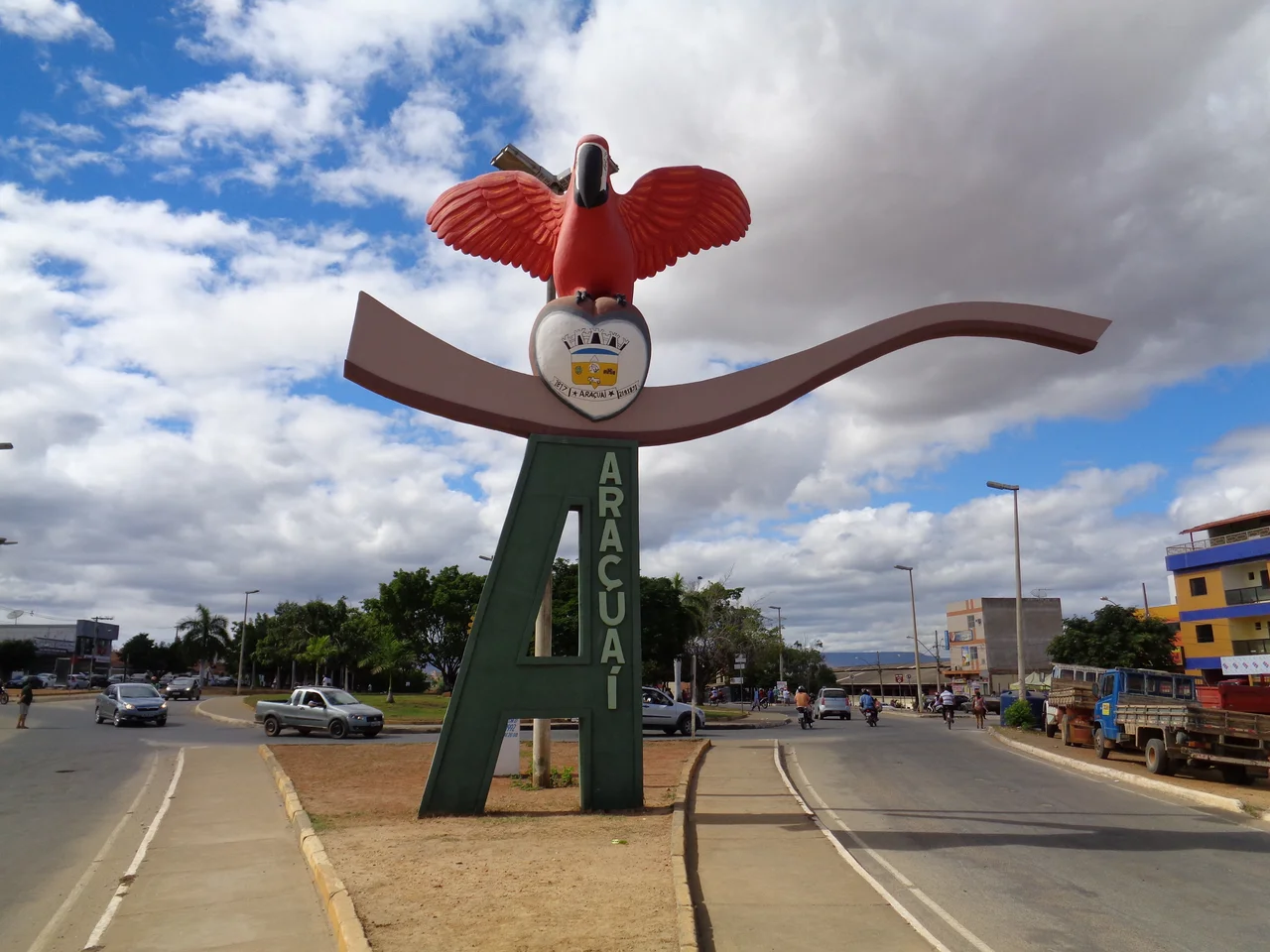

Araçuaí
On November 19, 2023, a thermometer in Araçuaí registered 44.8 degrees Celsius - 112.6 Fahrenheit - the hottest air temperature ever recorded in Brazil. For a town of roughly 36,712 people tucked into the arid northeast of Minas Gerais, that record was not an anomaly. It was a concentration of what Araçuaí had always been. The Jequitinhonha Valley bakes. The wind shimmers above the red soil. People learn to move in the morning and sit still at noon. And yet somehow this small, hot, dry place has managed to produce both gold rushes and lithium booms, a town founded by prostitutes, and a museum built by a Dutch Franciscan friar who fell in love with Brazilian popular religion.
Only Gold There
Two competing stories explain the town's name. According to the French naturalist Auguste de Saint-Hilaire, who traveled these valleys in the early nineteenth century, paulista prospectors found so much gold in the river here that they cried out 'ouro só ali' - 'only gold there' - and from that exclamation Araçuaí was born. Philologist Eduardo de Almeida Navarro offers a more sober explanation. He traces the name to the Tupi language, where araso'iá (araçoia) refers to a kind of bird and 'y' means river. The river of the araçoias. Either story carries its own truth - gold and birds, profit and beauty. Until 1857 the place was not called Araçuaí at all. It was called Calhau, named for the pebbles - calhais - that filled the streambeds.
The Priest and the Prostitutes
Before the Europeans, the Tocoió and Botocudo peoples lived along these rivers, hunting and gathering in valleys that had supported human habitation for thousands of years. European settlement came in fits and starts. A priest named Carlos Pereira de Moura founded the Aldeia do Pontal, today called Itira, at the confluence of the Jequitinhonha and Araçuaí rivers - a good spot for canoe traffic, with access in four directions. But Father Moura was strict. He banned alcohol. He banned prostitutes. The canoeists drifted away, and with them so did the prostitutes, who paddled upstream on the Araçuaí to find a more welcoming harbor. They found it at the Fazenda da Boa Vista da Barra do Calhau, where a woman named Luciana Teixeira took them in. She started a village on her land in 1817. That village became Araçuaí. The town's founding story is one of women claiming space that a priest had denied them.
The Heat Record
Brazil is a big country, and the hottest corner of it is the sertão - the semi-arid interior of the northeast. Araçuaí sits at the southern edge of that zone, inside Minas Gerais but sharing the climate of states much farther north. The municipality covers 2,235 square kilometers at an elevation of 307 meters. The temperature reaches extremes because humidity is low and the surrounding rock and soil absorb heat all day and release it slowly. When the continental airmass stagnates over central Brazil in late spring, temperatures in Araçuaí climb past anything recorded elsewhere in the country. On that November day in 2023, the reading broke records that had stood for decades. Residents describe it as the moment when simple shade stopped being enough.
The Lithium Boom
Between Araçuaí and the neighboring town of Itinga lies the largest lithium mine in Brazil, operated by Sigma Lithium Resources. The region has long been known for its mineral wealth - pegmatites dense with tourmaline, emerald, and aquamarine - but lithium is the metal of the moment, required for the batteries that power electric vehicles and grid storage. What gold once was to these valleys, lithium is becoming. Whether the revenue will reach the people who live here is another question. The city's GDP of around 520 million reais comes mostly from services and public administration. Per-capita income hovers at roughly 14,200 reais, well below the state average of 40,100. The mines extract. The town waits to see what trickles back.
A Museum in the Valley
Not all the stories here are about money. The artist Lira Marques, a local daughter, and Frei Chico - a Dutch Franciscan friar who spent his life studying Brazilian popular culture and religiosity - founded a museum together in Araçuaí. He came from Europe and never left. She stayed in the place she was born and kept painting, sculpting, and collecting. The museum they built holds the devotional objects, folk art, and spiritual expressions of the Jequitinhonha Valley people - the faces that guidebooks rarely mention. It is a reminder that the valley is not only its heat record, its gold rushes, its lithium mines. It is also the people who stayed through all of it, making things with their hands.
From the Air
Located at 16.85°S, 42.07°W in the northeast of Minas Gerais, elevation 307 m. Recommended viewing altitude: 4,000-6,000 feet for a clear sense of the Jequitinhonha Valley topography. Nearest airport is Montes Claros (SBMK) to the west. Visual landmarks include the confluence of the Araçuaí and Jequitinhonha rivers at the town's edge, and the extensive lithium mining operations near Itinga to the east. Extreme heat is common - flight planning should account for high density altitude during warmer months.
Nearby Stories
- Minas Novas 20 km away
- Grão Mogol 45 km away
- Novo Cruzeiro 49 km away
- Mata Escura Biological Reserve 54 km away
- Serra Nova State Park 92 km away
- Vargem Grande do Rio Pardo 129 km away
- Nanuque 149 km away
- Vitória da Conquista 225 km away