
Serra Nova State Park
Rain that falls on the west side of a ridge inside Serra Nova State Park eventually reaches the Atlantic via the São Francisco. Rain that falls on the east side reaches the Atlantic via the Jequitinhonha. The divide between Brazil's two great northeastern river basins runs right through these mountains, which is part of why researchers pushed so hard, starting in the 1990s, to get them protected. Serra Nova was created by decree in October 2003 and expanded over the next decade to cover almost 50,000 hectares of the Serra Geral and Espinhaço ranges - rocky, rugged country at 28°C annual average, where rupestrian fields meet cerrado meet dry forest, and where researchers keep finding amphibians that are probably new to science.
A Landscape of Water
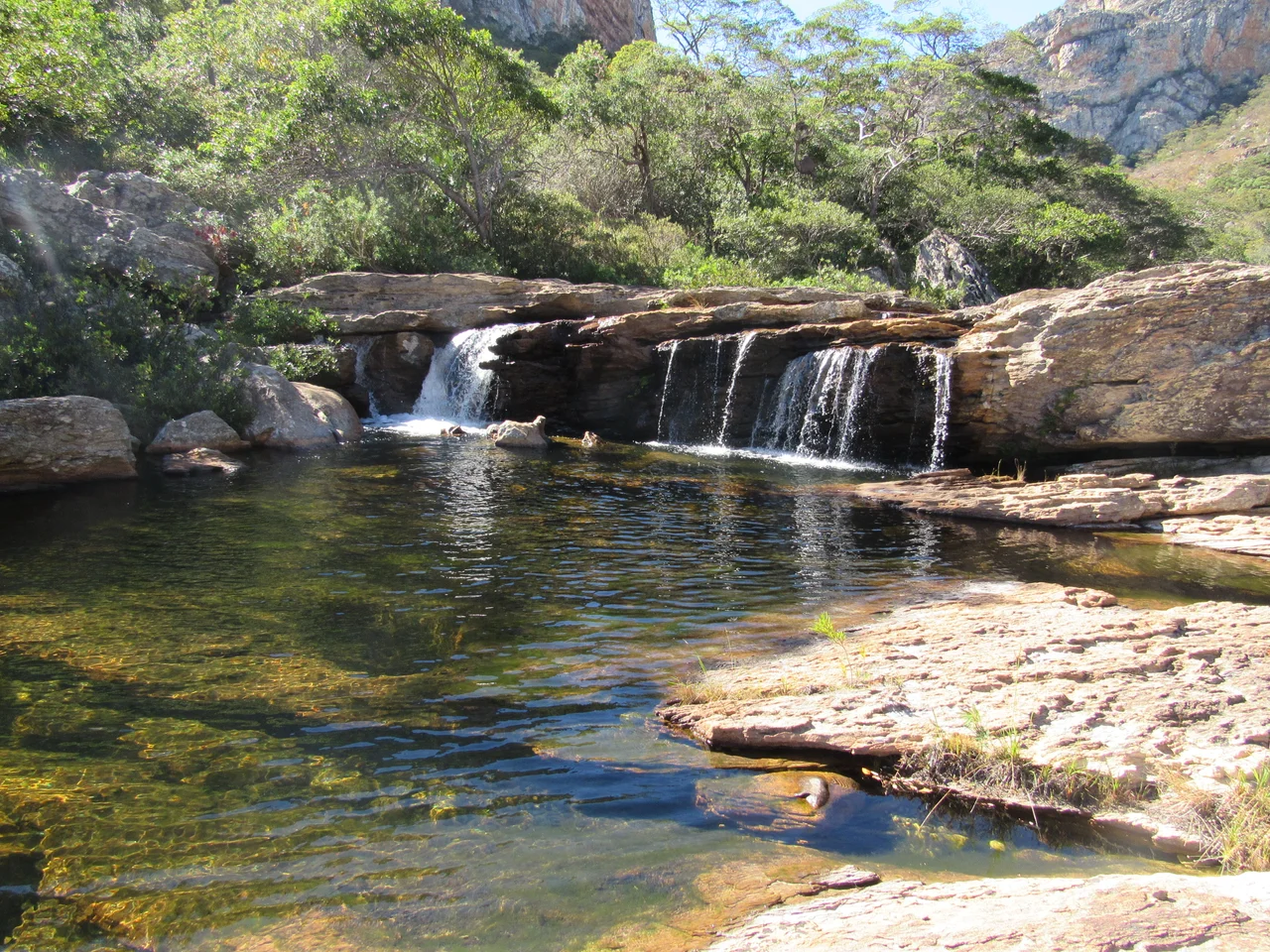
The park covers five municipalities in northern Minas Gerais: Rio Pardo de Minas, Porteirinha, Mato Verde, Riacho dos Machados, and Serranópolis de Minas. Belo Horizonte is 640 kilometers to the south. Inside the park boundary, several rivers rise: the São Gonçalo, the Ventania, the Suçuarana, the Bomba, the Ladim, the Córrego da Velha. The Mosquito River cuts through the Serra do Talhado, a ridge that was added to the park in the 2008 expansion. The attractions are water too: Cachoeira do Serrado, Poço do Jacaré, Poço da Sereia - waterfalls and pools fed by springs that, above some of these ridges, bubble up directly from Precambrian rock. Visitors are told to stay clear of the watercourses at the first sign of rain. Mountain weather in the sertão does not negotiate.
Rupestrian Fields
The dominant vegetation is campos rupestres - rupestrian fields - a category that sounds generic but in the Espinhaço means something very specific. Rocky, open meadows grow on quartzite outcrops at altitudes between 900 and 2,000 meters, baked by equatorial sun and swept by wind. Most of the plants are small, tough, and in many cases endemic to a single mountain range. Among them stand native trees with Tupi-Guarani names that have outlasted most of their species' original range: jataipeba, aroeira, sucupira. Lower down, cerrado savanna takes over - another globally threatened ecosystem, cleared across most of central Brazil for soybeans and cattle. The Espinhaço Complex is listed as threatened by agriculture, which is a polite way of saying the land outside the park boundary is rapidly becoming something else.
What Lives Here
The fauna list reads like a who's-who of Brazilian dry country. Cougars. Maned wolves, the lanky orange canid that is more stilts than wolf. Crab-eating foxes. Tufted capuchins moving through the gallery forests along the streams. Southern tamanduas, the climbing anteater. Helmeted manakins - small black-and-red birds that display in understory leks. Hummingbirds, salamanders, boa constrictors coiled in sun-warm rock crevices. Rattlesnakes. Coral snakes with their warning rings of black and red. Bothrops jararacussu - a pit viper whose bite can kill if antivenom is not reached in time. In 2007, researchers from PUC Minas surveying the amphibians of Serra Nova recorded 27 species; at least one of them appeared to be new to science, the kind of finding that still happens in the rockier folds of Minas Gerais and reminds Brazilian biologists why this terrain keeps earning protection.
From the Air
Serra Nova sits in northern Minas Gerais at 15.74°S, 42.80°W, covering parts of the Serra Geral and Espinhaço ranges with rugged terrain and peaks reaching 900+ meters. The park straddles the divide between the São Francisco and Jequitinhonha river basins - a useful large-scale reference, as the São Francisco valley is visible to the west and northwest. Nearest airport is Montes Claros (SBMK) about 200 km south. Climate is tropical with dry winters; afternoon convective activity is common in the December-February wet season. Mountain weather can change quickly; maintain generous terrain clearance especially near the Serra do Talhado.
Nearby Stories
- Janaúba 11 km away
- Vargem Grande do Rio Pardo 44 km away
- Grão Mogol 65 km away
- Araçuaí River 87 km away
- São João das Missões 112 km away
- Araçuaí 125 km away
- Brumado 151 km away
- Das Velhas River 216 km away