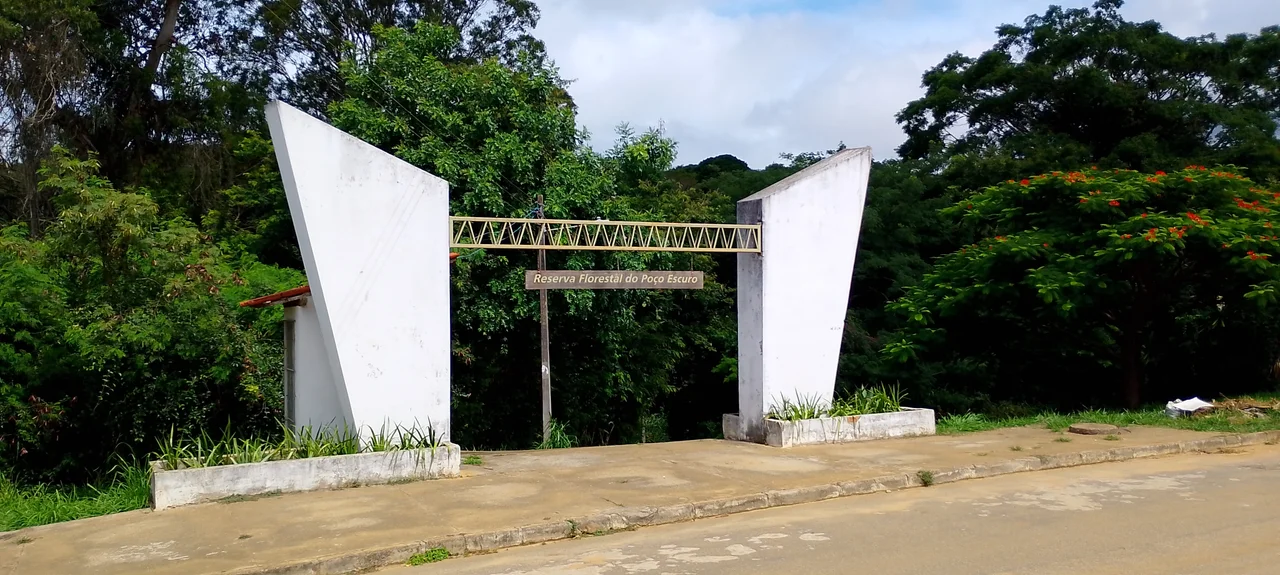

Vitória da Conquista
The name is blunt about its origin. Vitória da Conquista — Victory of the Conquest — was founded in 1783 by a Portuguese soldier-explorer named João Gonçalves da Costa, after a series of battles against the Imboré and the Mongoió, the indigenous peoples whose ancestral territory this high plateau had been for generations. Costa built a church to the Holy Mother of Victory on the site of the last battles and called his new settlement the Arraial da Conquista. Today the city is the third largest in Bahia, with a population of around 398,000 and the cool mountain air of a thousand-metre plateau — and locals simply call it Conquista, dropping the victory and keeping the name of the place.
The Conquest
João Gonçalves da Costa was born in Chaves, in the Trás-os-Montes region of northern Portugal, and served the Portuguese crown during the reign of King Joseph I. His assignment in Brazil was explicit: to fight the indigenous peoples of the Bahian interior, to take their land, and to convert them to Christianity. Costa was not a figure of mythic grandeur; he was one of many bandeirantes-turned-colonisers who shaped the southern half of Bahia by force. The peoples he encountered included the Aimoré (known locally as Imboré), renowned across colonial records for their defence of this stretch of the Atlantic rainforest frontier, and the Mongoió, speakers of a Kamakan language now listed as extinct. The conquest that named this city cost lives that history mostly refused to count. It is worth remembering those lives when we speak the city's name.
Roads and a Plateau
Founding the settlement was only the first part of Costa's assignment. The Portuguese crown also ordered him to lead the construction of two of the principal roads of inland Bahia: one from the new town east to the coast at Ilhéus, and one north and west to the Jequitinhonha River in Minas Gerais. These were the veins that would let the colony move cattle, cotton, gold, and slaves through territory that had previously been considered impassable. The second of those roads, widened and paved many times, is today part of BR-116 — the Rio-Bahia, one of the longest federal highways in Brazil, a kind of asphalt spine that still carries Conquista's commercial traffic north and south. The city's geography is its economy. It sits at the strategic intersection of highways, at an altitude between 923 and 1,100 metres, above the heat of the coast and the lowland sertão.
The Mountain Climate
That altitude shapes daily life. Conquista has a tropical highland climate that Köppen classifies as Cwa, bordering Cwb and Aw — cool winters, warm summers, misty rains from April to August, heavier storms from October to March. Mean temperatures range from 17.8°C in July to 21.8°C in March; monthly rainfall varies from about 18 mm in July to 128 mm in December. Winters are cool and often foggy, with cold air climbing up the plateau from the distant ocean. The vegetation belts the city: dry grasses and ferns at higher elevations, palms lower down, and — at mid-slope — the coffee-growing band that is one of the region's defining crops. Conquista coffee is known across Bahia.
A Modern Capital
Conquista is the economic and educational capital of southwestern Bahia, serving a vast hinterland that also stretches into northern Minas Gerais. Its main university, the Universidade Estadual do Sudoeste da Bahia, has its main campus here. Big employers include Coca-Cola, Dilly Calçados shoes, Umbro, BahiaFarma, and the Café Maratá coffee brand. The Ymborés Industrial Park on the outskirts houses industries from ceramics to granite cutting; micro-enterprises produce candles, safes, clothing. The city's bus terminal is a major regional hub, and Glauber Rocha Airport — named for the pioneering Brazilian filmmaker born here in 1939 — connects Conquista to Salvador, São Paulo, and Brasília. The city has drawn attention, too, for its crime figures, which have fluctuated significantly: in 2019 an outside ranking placed it among the world's most violent cities, but by 2022 Conquista's homicide rate had dropped to 22.1 per 100,000 — the lowest among Bahia's larger cities, according to the 2024 Atlas of Violence from Brazil's Institute for Applied Economic Research.
Glauber and Minotauro
Conquista's most famous son is Glauber Rocha, the film director who helped create the Cinema Novo movement in the 1960s and who is remembered internationally for Deus e o Diabo na Terra do Sol — Black God, White Devil — one of the most singular films ever made about the Brazilian sertão. Rocha was born in Conquista in 1939 and died young, at 42, in 1981. The airport carries his name, and the Espaço Unibanco Cinema Glauber Rocha in Salvador preserves his legacy. Another son of the city is Antônio Rodrigo Nogueira, nicknamed Minotauro, one of Brazil's greatest mixed martial artists, a former Pride and UFC heavyweight champion who still trains fighters on Conquista's streets when he comes home. And the swimmer Nayara Ribeiro and the track athlete Leandro de Oliveira represent the city in different corners of Brazilian sport. The House of Dona Zaza — Casa de Dona Zaza — is the city's only state-protected historic building, a reminder of how much of the old conquest-era town has been lost to modern growth and how much work remains to preserve what survives.
From the Air
Vitória da Conquista sits at 14.87°S, 40.84°W on the southwestern Bahia plateau, at elevations between 923 and 1,100 metres. From the air the city appears as a substantial urban cluster rising abruptly above surrounding scrub plateau, with BR-116 running north–south through it. Glauber Rocha Airport (SBVC) serves the city with flights to Salvador and São Paulo. Salvador (SBSV) lies roughly 270 nm to the northeast; Ilhéus (SBIL) about 110 nm east on the coast. Winters (June–August) often bring cool, foggy conditions and low ceilings at the plateau altitude — pilots should expect marginal VFR on winter mornings. Summer thunderstorms from October through March can build quickly over the highlands. Cruising altitudes of 9,000–12,000 ft give a good view of the plateau and the abrupt break to the coastal lowlands east of the city.
Nearby Stories
- Brumado 47 km away
- Vargem Grande do Rio Pardo 94 km away
- Serra das Lontras National Park 116 km away
- Itabuna 124 km away
- Mata Escura Biological Reserve 131 km away
- Serra do Conduru State Park 143 km away
- Sincura 153 km away
- Caminho dos Gerais State Park 169 km away