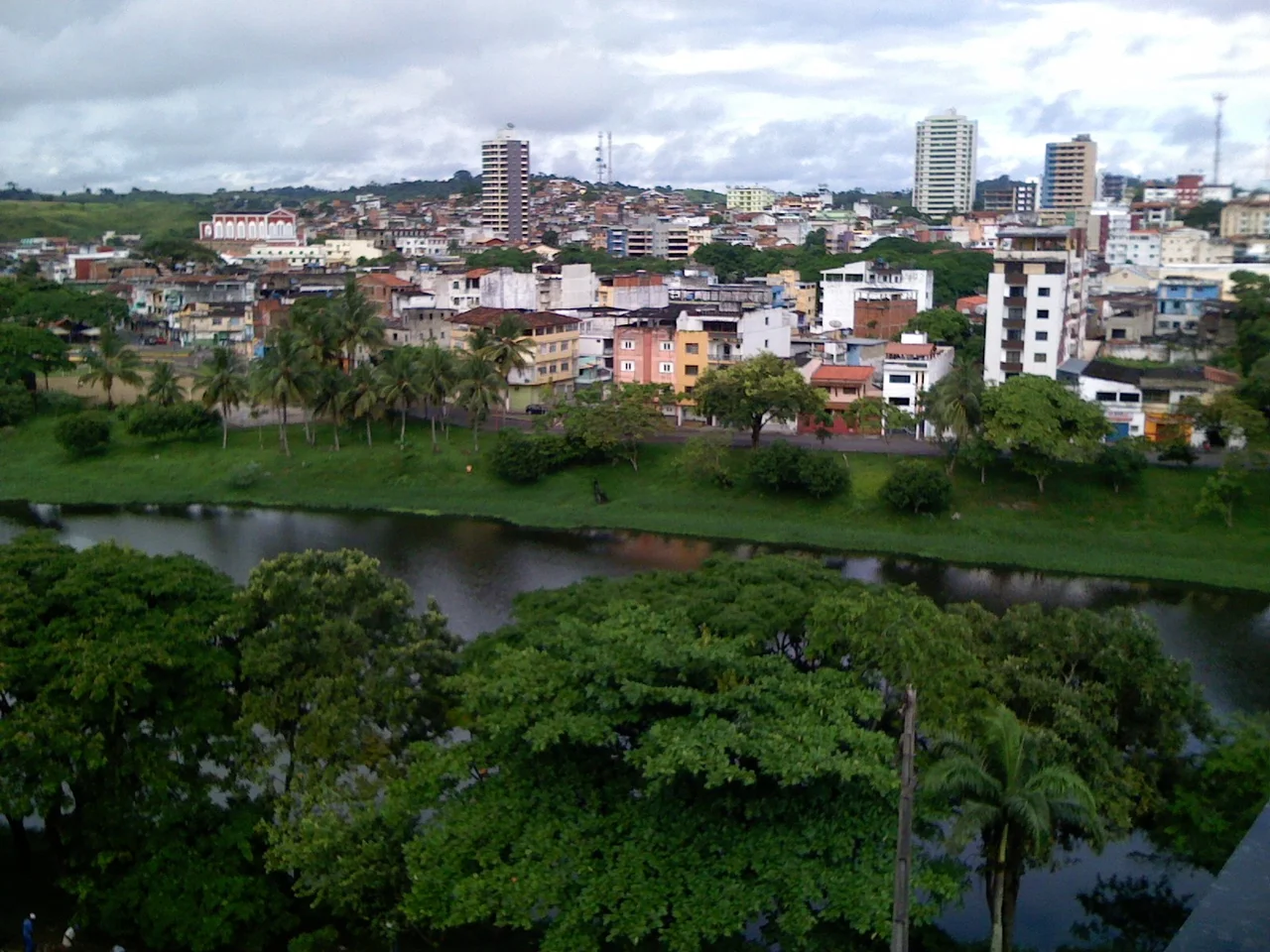

Itabuna
Itá means stone. Abuna means father. The Tupiniquim, who lived along the Cachoeira River long before the Portuguese arrived, named a particular boulder in the water the father of stones, because it was larger than the others around it. That name traveled, got compressed, got Portuguese-ified, and became Itabuna. The city now holds 214,000 people and ranks sixth in Bahia by population. The river still runs through the middle of it. The father stone is still out there somewhere under the current.
Before the Road
The Captaincy of Ilhéus, established by the Portuguese crown in the sixteenth century, was supposed to extend authority deep into this territory. It did not. The nomadic Aimoré people, emerging from the interior in the 1550s, made European settlement impossible for two hundred years. When the coast was finally pacified, the inland forest still belonged to no one the Portuguese recognized. What eventually brought settlement was geography. This stretch of the Cachoeira valley was the easiest crossing point for drovers pushing cattle inland toward Vitória da Conquista, and in 1857 a rough camp called Arraial de Tabocas took shape on the riverbank. The name referred to a massive jequitibá tree the settlers argued over before felling, the disputed 'pau da taboca' that opened the clearing.
A Town Made by Migrants
From 1867 onward, migrants from the neighboring state of Sergipe arrived in numbers. Two cousins, Felix Severino de Oliveira (later renamed Félix Severino do Amor Divino) and José Firmino Alves, founded Fazenda Marimbeta near the growing settlement. A street in the Conceição neighborhood still carries the farm's name. The place grew from camp to village to town, always in the shadow of older Ilhéus on the coast. Independence came in 1910, when Itabuna was formally emancipated from its coastal neighbor. By 1978 it had its own Catholic diocese. It was no longer anyone's suburb.
The Golden Era
Cocoa made Itabuna. The soil around the Cachoeira valley, well-drained and mineral-rich, turned out to be some of the best in the world for Theobroma cacao. Through the twentieth century, the city became Brazil's second-largest cocoa producer, shipping beans through the port at Ilhéus to chocolate makers in Europe and the United States. The cocoa barons of Jorge Amado's novels were not fiction. Their mansions, their disputes, their fortunes, and their violence shaped the character of this city as much as the river did. Downtown, Avenue Amélia Amado still holds buildings that went up during the boom.
Witch's Broom, and What Came After
Crinipellis perniciosa arrived in Bahian cacao plantations in 1989. The fungus causes a disfiguring growth farmers call vassoura de bruxa, witch's broom, and it destroys production rather than just reducing it. Within a decade, southern Bahia's cocoa economy had collapsed. Itabuna, which had arranged itself entirely around the crop, faced the question that breaks small-city economies across the world: what do you do when your one industry disappears? The answer here has been diversification, patient and incomplete. The city is now a regional commercial hub on the BR-101 highway, servicing a wide agricultural and ranching interior. Its economy is no longer dependent on any single crop.
The City Now
Itabuna sits at 14.78°S, 39.28°W, about forty kilometers inland from Ilhéus. It covers 401 square kilometers with a density of 550 people per square kilometer, dense for a Brazilian interior city. The Cachoeira River still cuts through downtown, though the father stone of Tupiniquim memory is rarely remarked upon now. Itabuna Esporte Clube plays in the state football league. Jorge Amado, the novelist most identified with Ilhéus, was actually born here in 1912 on a cocoa farm called Auricídia, and the birthplace is marked with a small museum. The city Itabuna remembers its origin story even as the economy that built it has moved on.
From the Air
Located at 14.79°S, 39.28°W in the interior of southern Bahia, roughly 40 km west of the coast. Nearest airport is Ilhéus Jorge Amado (SBIL / IOS), about 35 km to the east; Itabuna has no scheduled commercial service of its own. Recommended VFR cruising altitude 3,000-5,000 ft to follow the BR-101 corridor through rolling terrain that rises toward the interior. Tropical climate with reliable flying conditions most of the year; afternoon cumulus buildups common in summer (December-March).
Nearby Stories
- Serra do Conduru State Park 15 km away
- Serra das Lontras National Park 17 km away
- Vitória da Conquista 120 km away
- Battle of 4 May 161 km away
- Mata Escura Biological Reserve 192 km away
- 2019 Northeast Brazil Oil Spill 200 km away
- Brumado 213 km away
- SS Principessa Mafalda 224 km away