
2019 Northeast Brazil Oil Spill
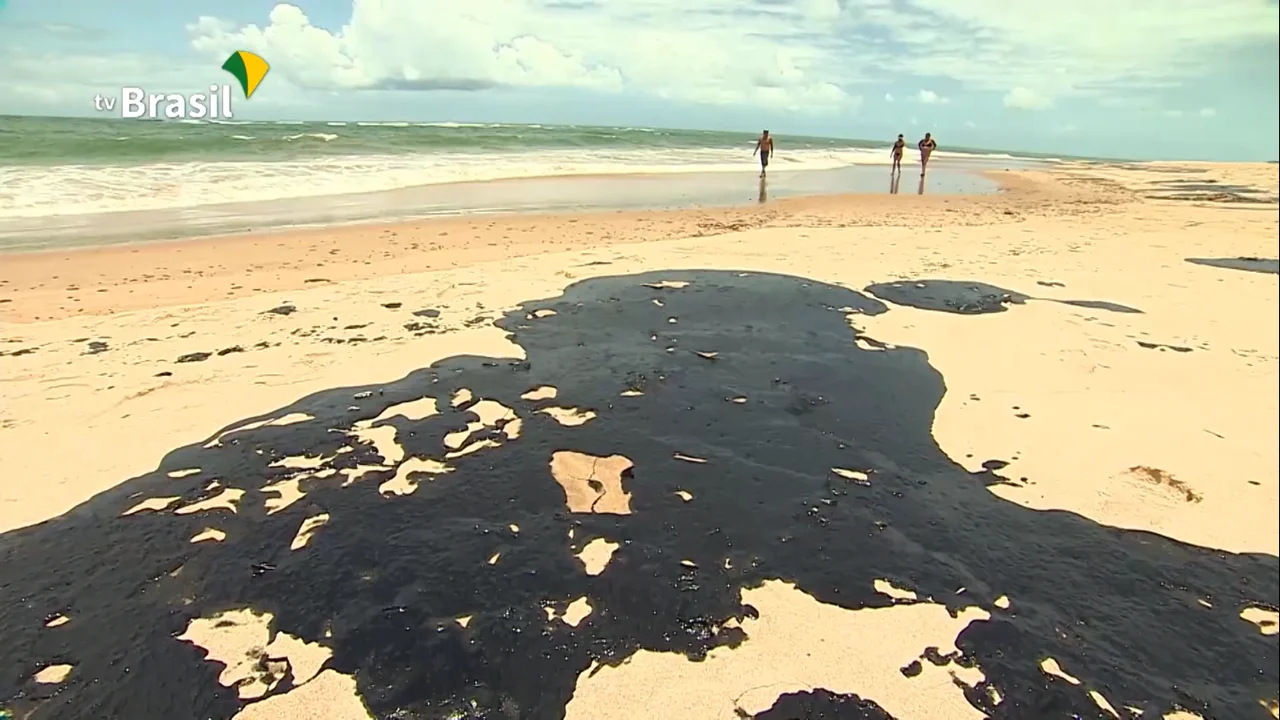
In August 2019, crude oil began washing ashore on beaches in northeastern Brazil. By late October, tar had landed on more than 200 localities across all nine states of the Northeast Region - a 3,000-kilometer stretch from Maranhão to Bahia. The oil was not Brazilian. Chemical tests linked it to Venezuelan crude, but the Venezuelan state oil company denied responsibility, and the suspected vessel - a Greek-flagged tanker called the NM Bouboulina - was never definitively proven to be the source. Brazilian authorities never mapped the slicks in the water. More than 1,000 tonnes of crude was cleaned off beaches. Much of the cleanup was done by civilians with plastic bags and their bare hands.
First Reports, No Source
The first reports arrived on August 30, 2019, with broader recognition coming on September 2. The oil was of a type not produced in Brazil, which narrowed the source to imported crude. The Brazilian Navy and Petrobras analyzed samples and found chemical signatures consistent with Venezuelan oil - but the Venezuelan government denied that their state company PDVSA had received any reports of spills near Brazil from any of their clients or subsidiaries. A Greek-flagged tanker, the NM Bouboulina, owned by Delta Tankers Ltd, came under suspicion, but investigators could not definitively prove it was responsible. The chemical tests did establish one important fact: all the oil came from a single source, meaning one event, one vessel, or one release, even if the specific culprit remained unclear. By late October, Brazilian authorities still had not been able to locate or map the slicks in the open ocean - meaning they could not warn coastal communities before the oil arrived on their beaches.
A Coastline Under Siege
By October 23, 2019, the oil had contaminated more than 200 localities across all nine states of Brazil's Northeast Region. The northeastern coast is the Brazilian Atlantic at its most iconic: white sand beaches, mangrove estuaries, coral reefs, barrier islands, and some of the country's most celebrated tourist destinations in Bahia, Pernambuco, and Rio Grande do Norte. All of it was affected. The slicks reached sea turtle nesting grounds protected by Projeto TAMAR, the national sea turtle conservation program, and dozens of turtles - along with migratory seabirds - arrived on shore coated in crude. The Rio Grande do Norte Institute for Sustainable Development and Environment (Idema) worked with TAMAR to develop emergency educational materials, instructing volunteers and residents on how to handle oil-contaminated animals and how to protect themselves from exposure while cleaning.
Coast Guardians
In Bahia, a civilian volunteer group called Coast Guardians organized itself online, crowdfunded money for basic protective clothing - gloves, masks, boots - and dispatched 20 beach teams along the contaminated coast. Most of the early cleanup was done by these volunteers and by local fishermen and beachgoers using plastic bags, shovels, and whatever they could find. The Brazilian government did eventually deploy thousands of troops to assist, but by then the oil had been washing ashore for weeks. Fishermen, who depend on clean coastal waters for their livelihoods, found their catch contaminated and their equipment destroyed. Several barrels of crude, presumably from the same vessel or source, washed up intact on beaches, only deepening questions about where the oil had come from and why no one had spotted it earlier.
A Government That Would Not Act
President Jair Bolsonaro, who had taken office in January 2019 promising deregulation of Brazil's environmental protections, initially blamed Venezuela for the spill. Then, as evidence remained inconclusive, he shifted to accusing environmental activists of staging the spill to stop his government from signing new oil deals. He did not visit the affected areas. He delegated disaster management to other officials, with the Vice President making many of the relevant public announcements. Critics noted that in April 2019, months before the spill, Bolsonaro had closed two federal committees that formed part of Brazil's national contingency plans for oil spill response. The Brazilian Senate environment committee publicly criticized the executive branch for failing to declare a climate emergency and for abandoning the existing spill preparedness infrastructure. Brazilian fishermen occupied the headquarters of the environmental agency Ibama in Salvador on October 22, 2019, demanding action. Football teams protested in their own way: in one match, one team wore custom shirts with black patches covering their designs; the other wore black gloves.
The Largest Tropical Coastal Disaster Ever Recorded
By any measure, the 2019 spill was the worst oil spill in Brazilian history - and, according to the peer-reviewed scientific literature that followed, the largest environmental disaster ever recorded on the Brazilian coast, or on any tropical coastal region anywhere in the world. Tropical coastlines, with their warm waters, high biological productivity, and complex ecosystems of mangroves and coral reefs, absorb oil damage differently from cold-water coastlines - and recover much more slowly. Oceanographers warned in late 2019 that the ecological consequences would last decades. Rhodolith beds - calcium-carbonate algal structures that support reef ecosystems - were identified in a 2020 Science article as requiring urgent protection. More than six years later, residual contamination still turns up on beaches after storms, and communities along the Northeast coast still remember the weeks in 2019 when they showed up at the beach in the morning with garbage bags because no one else was coming to clean it up.
From the Air
The 2019 oil spill affected over 3,000 kilometers of the Brazilian Northeast coastline across all nine northeastern states - Maranhão, Piauí, Ceará, Rio Grande do Norte, Paraíba, Pernambuco, Alagoas, Sergipe, and Bahia. The specified geohash point at 13.06°S, 38.48°W is near Salvador, Bahia, one of the major affected areas. From cruising altitude on clear days, the Northeast coast appears as a long arc of white sand beaches, coconut palms, and coastal lagoons. Major nearby airports include Salvador's Deputado Luís Eduardo Magalhães International (SBSV) and Recife's Guararapes International (SBRF). This story is about events that played out at ground level on hundreds of beaches - more a story of human response than a sight from the sky.
Nearby Stories
- Rio São Francisco Mangroves 36 km away
- Morro de São Paulo 45 km away
- MV Araraquara 117 km away
- Serra do Conduru State Park 126 km away
- Pé de Serra 128 km away
- SS Annibal Benévolo 171 km away
- Ilhéus 188 km away
- SS Principessa Mafalda 398 km away