
Miracle of Calanda
Some four fingers below the knee, the surgeons made their cut. It was mid-October 1637, in a hospital in Zaragoza, and the young farmer on the table had no real anaesthetic—only wine and drugged drink to blunt the edges of an agony he would never forget. His name was Miguel Juan Pellicer, he was twenty years old, and his right leg, black with gangrene, had to come off to save his life. What makes his story one of the most argued-over episodes in the history of the Catholic Church is what the records claim happened two and a half years later, back in his home village of Calanda: that the leg came back.
A Boy Asleep on a Cart
Pellicer was born in Calanda, a village in Aragón, in 1617. In the summer of 1637 he was working as a farm labourer on his uncle's land near Castellón, some 60 kilometres from Valencia. One day, steering a cart by riding one of the mules that pulled it, he fell—most likely because he had dozed off in the heat. A cartwheel rolled across his right leg and snapped the tibia. He was treated first at Castellón, then admitted to the hospital in Valencia, where he stayed five days. But Pellicer had somewhere else in mind. He was fervently devoted to Our Lady of the Pillar, whose great sanctuary stood in Zaragoza, and he set out for that city and its hospital, roughly 300 kilometres to the northwest—a punishing distance for a man with a shattered leg.
Fifty Days to Zaragoza
The journey took him about fifty days, and by the time he arrived the leg was beyond saving. The doctors recorded it as "very phlegmonous and gangrenous," blackened and rotten. Two master surgeons, Juan de Estanga and Diego Millaruelo, carried out the amputation four fingers below the knee. They gave him alcohol and drugged drink, as was the custom, but the pain was still ferocious; witnesses would later recall that throughout the ordeal the young man called on the Virgin of the Pillar, unceasingly and with great fervour. He survived. In the spring of 1638 the hospital fitted him with a wooden leg and a pair of crutches and sent him home. For two years Miguel Pellicer lived as an amputee, a familiar figure at the doors of the basilica, anointing his stump with oil drawn from its lamps.
Two Feet Beneath the Cloak
On the night of 29 March 1640, back in Calanda, Pellicer went to bed late. A soldier billeted in the house had taken his usual bed, so he lay down on a makeshift one in his parents' room. Sometime between half past ten and eleven, his mother came in and saw two feet protruding from beneath the cloak that covered her sleeping son. She woke her husband. When they roused Miguel, he told them he had been dreaming that he was inside the Sanctuary of Our Lady of the Pillar, rubbing his leg with holy oil, exactly as he had done so many times before. According to the account, the right leg—amputated two and a half years earlier and buried in the hospital cemetery in Zaragoza—was whole again.
The Inquiry
An event like this could not stay a family's secret. A formal ecclesiastical investigation opened in Zaragoza on 5 June 1640, presided over by the city's archbishop, and ran for about a year. The hearings were held in public. Twenty-four witnesses, chosen as the most trustworthy among the many who knew Pellicer in both Calanda and Zaragoza, gave testimony, and the surviving records note no voice of dissent. The surgeons who had performed the amputation were among those interviewed. In the canonical transcript, Juan de Estanga describes applying medicine after medicine, then resolving to cut the leg off when nothing else would serve; Diego Millaruelo swears that he assisted and saw it done. On the strength of such testimony, the Church declared the restoration a miracle.
What the Record Shows
Nearly four centuries on, the case still divides people, precisely because it is so unusually well documented for its age. The Italian writer Vittorio Messori laid out the surviving papers in his book Il Miracolo, arguing that the sheer weight of sworn testimony is difficult to dismiss. Skeptics counter that a seventeenth-century canonical inquiry was never a neutral investigation—it set out to confirm a miracle, not to test one—and they question how fully the surgeons' recorded words support the story. Both sides return to the same yellowed transcripts and read them differently. What is not in dispute is the human core of it: a real young man lost a leg to gangrene, endured an amputation that would still horrify a modern patient, and became, willingly or not, the centre of a mystery that has never been settled.
From the Air
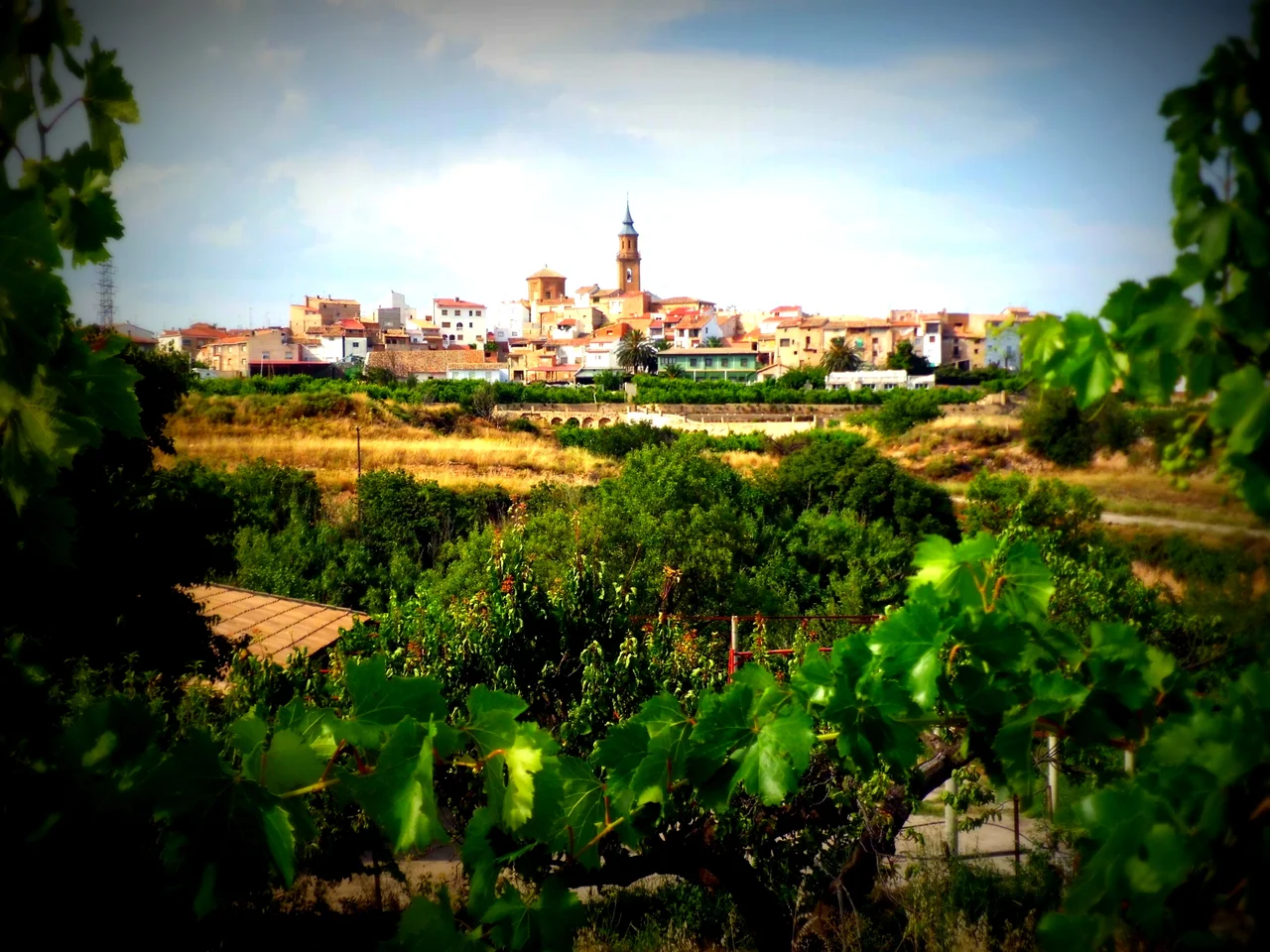
The village of Calanda sits at 40.94°N, 0.23°E in the Bajo Aragón, west of the Ebro's lower valley, amid olive groves and low, dry hills. From 5,000–7,000 ft AGL, look for the compact town on rising ground; its church of El Pilar preserves a carved image of Pellicer's restored leg set into one of its arches. Lleida-Alguaire (LEDA) lies roughly 90 km to the north-northeast and Reus (LERS) to the east, with Barcelona (LEBL) the main coastal gateway; Zaragoza, where the amputation and the inquiry took place, is roughly 120 km to the northwest. Visibility is best in the dry, clear air of autumn and winter.
Nearby Stories
- Sant Mateu 16 km away
- Cartoixa d'Escaladei 17 km away
- Vandellòs I nuclear incident 17 km away
- Mequinenza 29 km away
- Battle of Belchite (1937) 38 km away
- Teruel 68 km away
- Battle of Teruel 86 km away
- Portinatx 180 km away