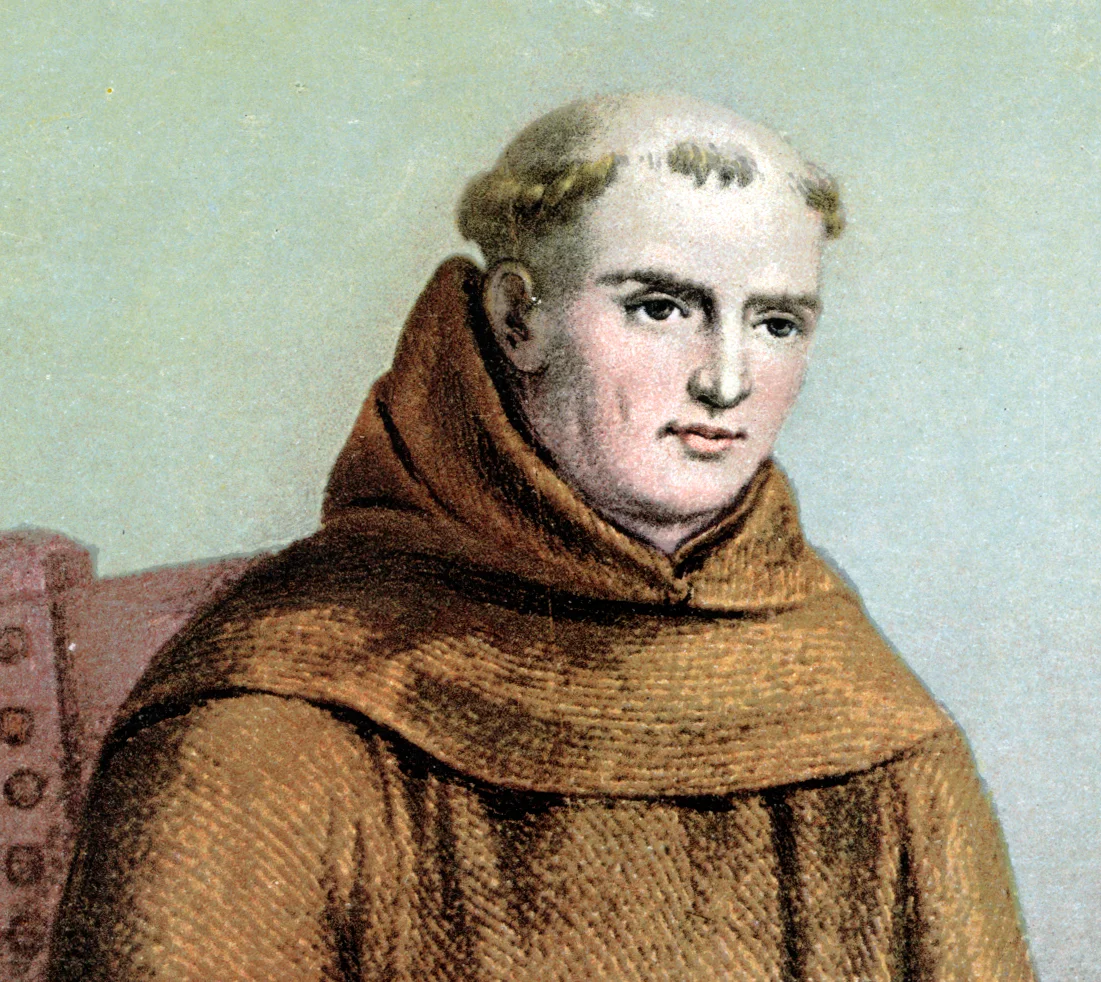

Misión San Fernando Rey de España de Velicatá
On May 14, 1769 — Pentecost Sunday — Junípero Serra paused in the Cochimí village of Velicatá and founded a mission. He was on his way north, part of the Portolá expedition that would plant the first Spanish settlements in what is now California. The mission he founded that day, San Fernando Rey de España de Velicatá, would be his only one in Baja California. Every other mission Serra established stands in the state that bears his most lasting legacy. This one marks the starting line.
The Jesuit Map, the Franciscan Foot
The site at Velicatá had been scouted three years earlier by the Jesuit missionary-explorer Wenceslaus Linck, who identified it as a promising location on the route northward. But Linck's order never got to build here. In 1768, the Jesuits were expelled from all Spanish territories by royal decree — a sweeping political act that dissolved nearly a century of their work in Baja California almost overnight. The Franciscans arrived to take over the existing missions and, crucially, were charged with expanding northward into Alta California. Velicatá sat perfectly on that route. When Serra established the mission on May 14, 1769, he was fulfilling both religious and imperial mandates simultaneously.
A Brief Peak and a Long Decline
The mission's history was compressed. Under Franciscan management and then, after 1773, under the Dominicans who took over Baja's missions while the Franciscans focused on Alta California, San Fernando Velicatá saw rapid growth followed by rapid collapse. Epidemic disease tore through the Cochimí population that the mission had gathered. The pattern was tragically familiar across the mission system: native people who had maintained sophisticated lives in the desert for generations were brought into close quarters with pathogens for which they had no immunity. By around 1818, the missionaries were no longer permanently resident. The institution had essentially dissolved.
What the Desert Kept
The ruins of Mission San Fernando Velicatá sit in the desert southeast of El Rosario, reachable by rough unpaved road. A few walls still stand, along with stone foundations. An aqueduct and a small dam — engineering works that the missionaries built to manage the scarce water — remain visible just to the west of the main ruins. The site also holds petroglyphs and traces of pictograms, art that predates the mission entirely, created by the Cochimí people before Serra ever arrived. The Fort Guijarros Museum Foundation and various archaeological researchers have documented the site, but it remains largely undeveloped and infrequently visited — a remote ruin in one of Baja's most isolated corners.
Serra's First, California's Prelude
The mission at Velicatá sits at a hinge point in western North American history. What happened here in 1769 was the immediate precursor to the founding of San Diego, the first permanent Spanish settlement in Alta California, just weeks later. Serra used this location as a staging point, a last provisioning before the expedition pushed through unmapped territory. The name the mission shares with Mission San Fernando Rey de España in what is now Los Angeles reflects that connection — same patron saint, different world. The Baja mission is the rougher, earlier, forgotten half of a story that California usually tells about itself without mentioning where it began.
From the Air
Misión San Fernando Velicatá is located at approximately 29.97°N, 115.24°W in northern Baja California, in rugged interior terrain. The ruins are not directly visible from the air without local knowledge of the site location. Nearest airport is San Felipe International (MMSF), approximately 100 km to the east. Viewing altitude of 3,000–5,000 feet AGL provides best orientation to the surrounding terrain.
Nearby Stories
- Misión Santa María de los Ángeles 27 km away
- San Felipe Municipality, Baja California 42 km away
- Cedros Island 170 km away
- San Lorenzo Marine Archipelago National Park 188 km away
- Spanish Missions in Baja California 249 km away
- Laguna Army Air Field 261 km away
- Guadalupe Island Biosphere Reserve 262 km away
- Valle de Las Palmas 282 km away