
Moçâmedes
Stand on the waterfront at Moçâmedes and two impossible things meet. Behind you, the Namib Desert begins almost at once - one of the oldest and driest deserts on Earth, where rain is a rumour. In front of you, the Atlantic rolls in cold enough to chill the air, dragging up a current so rich in fish that the whole reason this city exists is bobbing somewhere beneath the surface. This is the capital of Angola's Namibe Province, a town that has been a fort, a fishing port, an iron-ore terminal, and at one point even changed its name entirely before changing it back.
A Bay, a Baron, and a Fort
The Portuguese first explored this stretch of coast in 1785 and named the bay after Baron Moçâmedes, the governor-general who sent the expedition. The city itself was officially founded in 1840, on a bay the Portuguese had bluntly called Angra do Negro. A factory went up that year, and a fort followed at Ponta Negra within months. The early colonists were an unusual mix: settlers from the Portuguese island of Madeira and from Brazil, soon joined in the 1850s by a sizable group of German colonists whom the Portuguese government paid to make the long voyage. It was a hard place to plant a city - no fresh water to speak of, desert on three sides - but the sea made it worth the trouble.
The Cold Current and the Catch
Moçâmedes owes everything to a quirk of oceanography. Despite sitting well within the tropics, it has a hot desert climate cooled by the Benguela Current, which sweeps north along the coast carrying frigid Antarctic water. That cold water makes July and August surprisingly chilly, dropping below 18 degrees - but more importantly, it feeds an extraordinary upwelling of nutrients. Fish gather here in staggering numbers. By the 1960s the port worked 143 fishing boats and ran several processing factories, ranking the town alongside Luanda, Benguela, and Lobito among Angola's great fishing harbours. The fishery remains the city's beating heart, the reason a settlement clings to the lip of a desert at all.
Iron, Rails, and Ore Ships
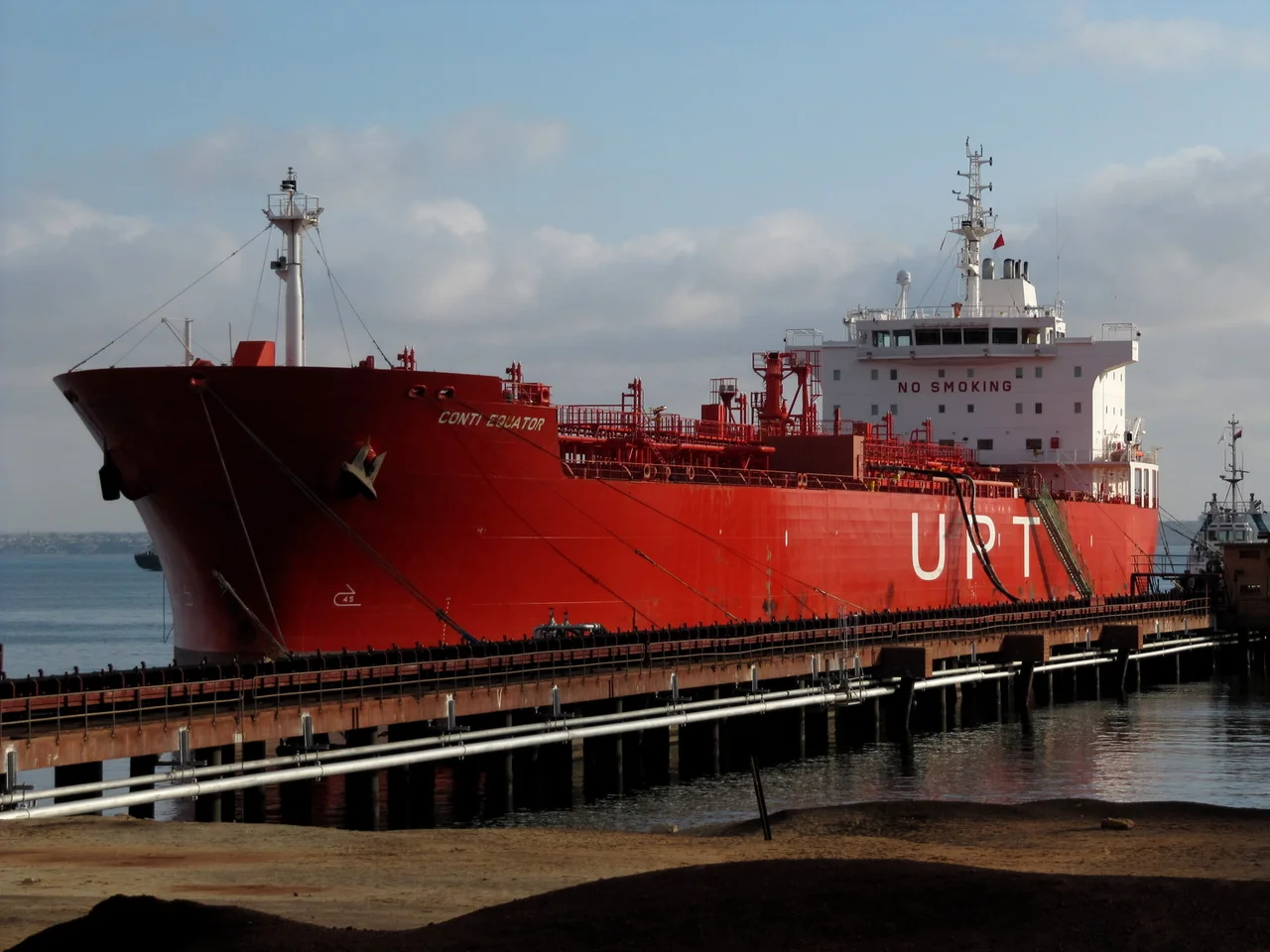
For a brief, intense period in the 1960s, Moçâmedes became an industrial gateway. In 1966 and 1967 a major iron-ore terminal was built at Saco, a bay just north of the city, to ship out ore from the mine far inland at Cassinga. The scale was ambitious: Germany's Krupp built the mine installations and a 300-kilometre railway, while a Portuguese-Danish venture built the modern harbour terminal. Within a single year the first 250,000-tonne ore carrier had docked and loaded. The town is also the terminus of the Moçâmedes Railway, a line first laid in narrow gauge and converted in the 1950s - a steel thread running from the Atlantic deep into Angola's interior highlands.
Two Names, One City
Names carry history here, and Moçâmedes has carried two. After Angola won independence, the city was renamed Namibe in 1985, shedding its colonial title, before officially reverting to Moçâmedes in 2016 - so older maps and younger residents may call it by different names. The colonial architecture still lines the historic centre, and the Sé Catedral de São Pedro anchors a Catholic diocese established in 2009. In 2013, then still called Namibe, the city co-hosted the Roller Hockey World Cup with Luanda - the first time that championship was held in Africa. The city is also a gateway to wild country: some 200 kilometres south lies Iona, Angola's oldest and largest national park, set aside as a reserve in 1937 and expanded to cover more than 15,000 square kilometres of desert in 1964. Today, with a population near 346,000 counted in the 2024 census, Moçâmedes endures as it always has: a working port at the edge of the sand, looking out at the cold sea that made it.
From the Air
Moçâmedes (formerly Namibe) sits at 15.20°S, 12.15°E on Angola's southwestern Atlantic coast, the capital of Namibe Province. From the air it reads as a sharp boundary - an urban grid and harbour pressed against the ocean on one side, the bare ochre dunes of the Namib Desert on the other, with no green transition between them. The port and the iron-ore terminal at Saco bay just to the north are key landmarks. The city is served by Welwitschia Mirabilis International Airport (ICAO FNMO, IATA MSZ), about 7 km south. Angola's oldest and largest national park, Iona, lies roughly 200 km to the south. The Benguela Current keeps the coast cool and often fog-bound in the morning; clearest viewing is midday to afternoon.
Nearby Stories
- Tchitundu-Hulu 57 km away
- Leba Cave 66 km away
- Tundavala Gap 79 km away
- São Martinho dos Tigres 133 km away
- Lubango 147 km away
- MV Dunedin Star 296 km away
- 1997 Namibia Mid-Air Collision 401 km away
- Tchibanga 1337 km away