
Murder of Lynette White
Lynette Deborah White was twenty years old when she was killed in a small flat above James Street in Cardiff's Butetown on Valentine's Day, 1988. Within hours, witnesses described a bloodstained white man seen leaving the area, and a photofit was issued. He should have been the central figure in everything that followed. Instead, over the next four years, South Wales Police would build a case against five men, three of whom had nothing to do with the murder, and a young woman who had been failed by every institution that should have protected her would be failed again - first by her killer, then by the system that claimed to seek justice for her.
Who She Was
Lynette had left school without qualifications and had been sexually exploited for money since she was fourteen years old - a child, in other words, when adults began paying to use her. By the time of her death she was working in Riverside, Cardiff, and was, in the words of a BBC Wales journalist who had interviewed her weeks before her murder, "probably the most visible prostitute working in Cardiff at the time." Friends described her as pretty and popular. Acquaintances said she was the first out at lunchtime and the last to leave at night, working even on Christmas Day. The pathologist Bernard Knight, who conducted her autopsy, identified 69 wounds. She had been stabbed seven times in the heart, but it was the throat injury that killed her - a single deep cut, the murder weapon at least five inches long.
The Photofit That Was Ignored
The man witnesses had seen leaving the flat was white, with blood on him. South Wales Police circulated his image on the BBC's Crimewatch in March 1988. DCS John Williams told the cameras: "This man almost certainly had the blood of the deceased on him." One individual matching the photofit was briefly detained in February and released after providing an alibi. A second possibility - referred to in court documents as Mr X, a man with a history of mental illness who admitted paying Lynette for sex, could not account for his movements that night, and shared the AB blood type found at the scene - was interviewed but never charged. Detective Constable Paul Fish believed that with more pressure Mr X would have confessed. The investigators chose what they called a softly-softly approach. Then, by November, they had given up on him entirely.
The Cardiff Three
What happened next has been described as one of the most egregious miscarriages of justice in British history. With no forensic evidence linking anyone to the crime, the police instead built a case from witness statements that shifted under questioning. Angela Psaila, a woman the courts later described as one of the most vulnerable members of Cardiff society - she had an IQ of 55 - gave one account, then another, then a third, each one more incriminating than the last. Leanne Vilday, the friend who had loaned Lynette the keys to the flat, similarly changed her story over hours of interviews. In December 1988, eight Black and mixed-race men from Cardiff's docklands were arrested. By November 1990, after what was then the longest murder trial in British history, three - Tony Paris, Yusef Abdullahi, and Stephen Miller - were convicted and sentenced to life imprisonment. They became known as the Cardiff Three. Miller, who had a mental age of eleven, had confessed to the murder after being interviewed nineteen times over four days, denied a solicitor for the first two sessions, and asked the same questions until he gave the answers the officers were waiting for. He had said "no" 307 times before he said "yes."
What the Court of Appeal Heard
In December 1992, the Court of Appeal quashed the convictions. Lord Taylor, in his judgment, said the police had "bullied and hectored" Miller during what he called "a travesty of an interview." Short of physical violence, Taylor said, it was hard to imagine a more hostile and intimidating approach by officers to a suspect. The truthfulness of Miller's confession was, in his words, "irrelevant" - the questioning was so coercive that the entire interview had to be rejected. Tapes of the interrogation were sent to the Director of Public Prosecutions as "an example of what we hope we shall never hear again in this court." Paris, Abdullahi, and Miller walked free after spending years in prison for a crime they did not commit. The actual killer, meanwhile, was still in Cardiff, and would remain there for another nine years.
Cellophane Man
When the case was reopened in September 2000, forensic scientists led by Professor Angela Gallop went back to the crime scene with techniques unavailable in 1988. They found a small trace of blood on the cellophane wrapper of a cigarette packet, then ten more traces under layers of paint on the skirting board. The killer was dubbed "Cellophane Man." The DNA matched nothing in the national database. Then, in January 2002, the Second Generation Multiplex Plus test gave them a reliable profile. The technique that finally identified him - familial DNA searching - had just been used by the same force to posthumously name Joseph Kappen as the Saturday Night Strangler, decades after his crimes. Now it led them to Jeffrey Gafoor. In July 2003, at Cardiff Crown Court, Gafoor pleaded guilty to Lynette's murder. He was sentenced to life with a minimum tariff of twelve years and eight months - shorter than the time Paris, Abdullahi, and Miller had served for a crime they did not commit, because his guilty plea triggered an automatic reduction.
What Remained Unanswered
By November 2005, around thirty people had been arrested in connection with the Independent Police Complaints Commission inquiry into the original investigation. Nineteen of them were serving or retired police officers. In 2008, three of the original witnesses - Psaila, Vilday, and Mark Grommek - were convicted of perjury and sentenced to eighteen months. In 2011, eight former officers stood trial in the largest police corruption case in British criminal history. Two weeks before Christmas, the trial collapsed when key documents were declared missing - documents that turned up in January 2012, still in the original box they had been sent in, in the office of the Detective Chief Superintendent who had been accused of ordering their destruction. The defendants were acquitted, having never faced a jury verdict on the substance of the charges. Tom Mangold of the BBC, who had covered the case across three decades, called it the biggest scandal in the history of British justice. Lynette White had been twenty when she was killed. By 2012, the men responsible for the wrongful convictions were preparing to sue the police. No one was ever held criminally accountable for what was done to her, to the Cardiff Three, or to her family.
From the Air
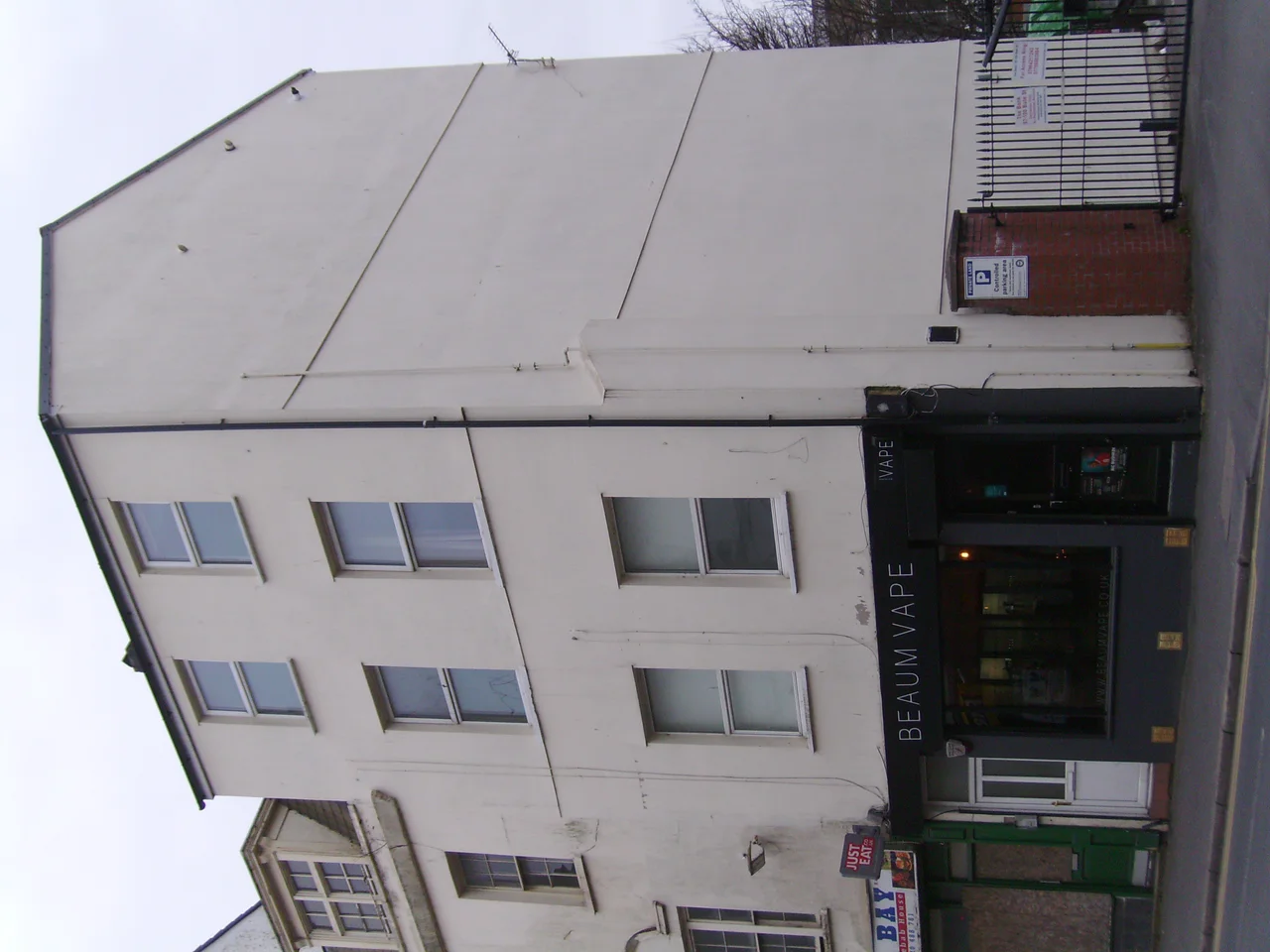
The site of the murder - 7 James Street in Butetown, Cardiff - sits at roughly 51.46503°N, 3.16353°W, just north of Cardiff Bay. The area was historically Cardiff's docklands, known as Tiger Bay, and is now part of the redeveloped Cardiff Bay district. Nearest airport is Cardiff (EGFF) some 6 miles to the west. Bristol (EGGD) is across the Severn Estuary about 25 miles to the east. From the air, Cardiff Bay's distinctive horseshoe outline is clearly visible, with the Senedd, Wales Millennium Centre and Pierhead Building clustered around the waterfront. Best viewed in clear daytime conditions; the city is part of the densely lit South Wales urban corridor by night.
Nearby Stories
- Berkeley Castle 1 km away
- Tower Colliery 5.9 km away
- Battle of Sedgemoor 5.9 km away
- Royal Victoria Park 7.1 km away
- Ewenny Priory 8.9 km away
- Crumlin Viaduct 10 km away
- Stourhead 11 km away
- Exmoor 16 km away