
Museum of Pre-Columbian and Indigenous Art
Uruguay spent much of its history insisting it had no indigenous past. The Charrúa, the people who hunted and roamed the land between the great rivers long before Europeans named it, were nearly destroyed in the nineteenth century, and the young nation that rose afterward often described itself as a country of immigrants alone. The Museum of Pre-Columbian and Indigenous Art, known across Montevideo as the MAPI, is an answer to that silence. Behind a grand nineteenth-century facade in Ciudad Vieja, it holds the art and tools of the Americas' first peoples and insists, room by room, that they were here and that what they made still matters.
A Cure That Never Came
The building was never meant to be a museum. At the end of the nineteenth century the Spanish-born developer Emilio Reus planned it with two German architects as a hydrothermal medical establishment, a place where the well-to-do might take healing waters. Construction finished in 1888. The healing business faltered, and over the decades the handsome structure was put to other uses, including a stint as the headquarters of the Ministry of National Defense, before it was eventually abandoned. It was declared a National Historic Monument in 1986. In 2004 it was renovated and reopened with a wholly different purpose, and the MAPI was born within its walls, inaugurated on 17 September of that year.
The People the Country Forgot
The museum's first commitment is to Uruguay's own indigenous peoples, the Charrúa above all. They lived semi-nomadically across the grasslands, moving with the rains and the game, and they were the predominant people of the region when Europeans first arrived in the sixteenth century. Their near-destruction came in 1831, when President Fructuoso Rivera summoned the Charrúa leaders to a riverbank under a pretext of friendship and then ordered the army to fall upon them. The killing on the Salsipuedes Creek, and the captivity and exile that followed for the survivors, all but ended them as a living community. Four were even shipped to Paris to be displayed as curiosities. To present Charrúa objects with care, then, is to restore a dignity that was deliberately taken, and to acknowledge that their descendants are still here today.
A Continent in One Building
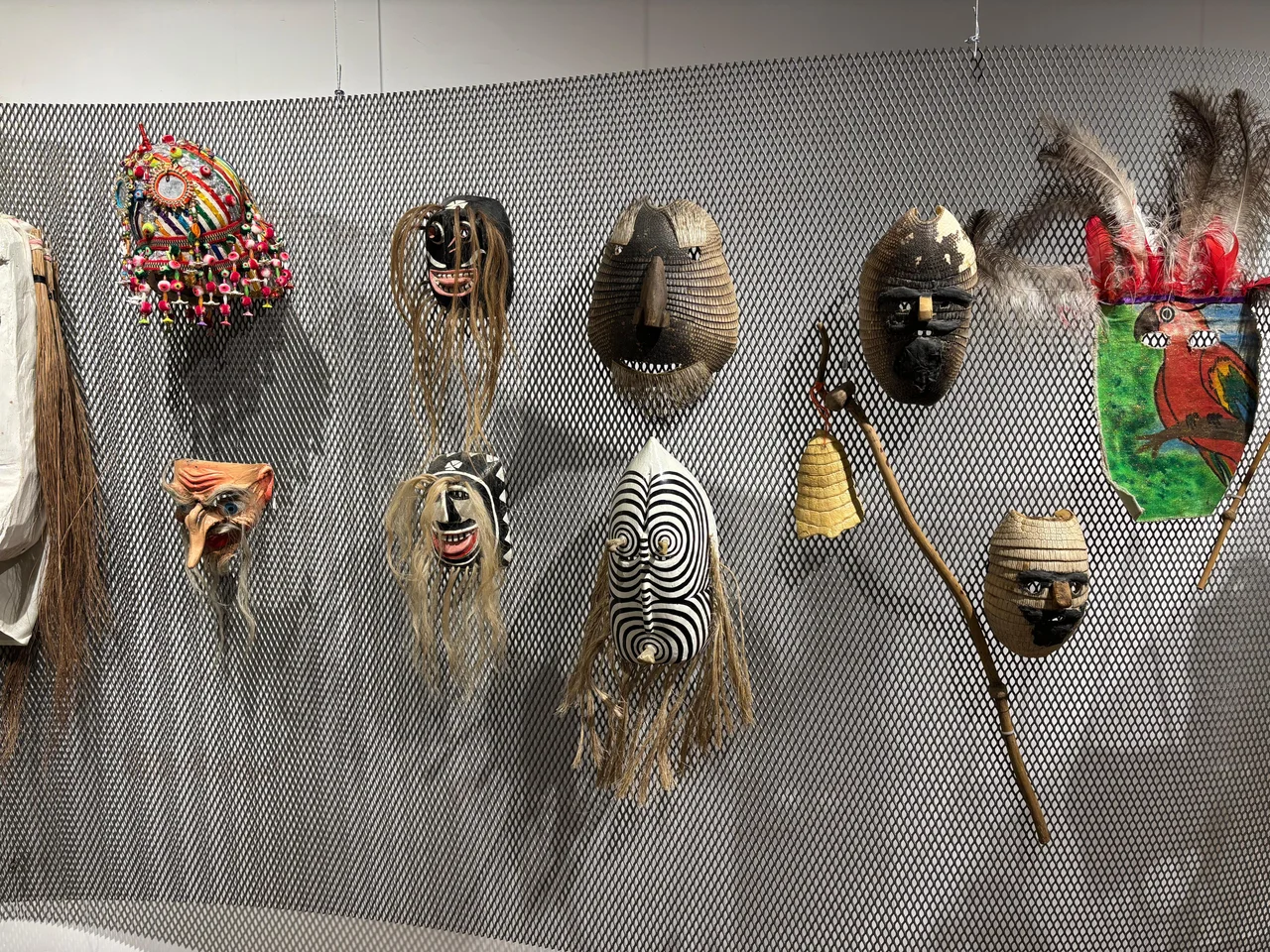
Beyond Uruguay, the MAPI gathers the wider world of the pre-Columbian Americas. Its galleries range across Mesoamerica, taking in Mexico and Guatemala; the intermediate region of Colombia and Ecuador, with its Cuasmal, Capulí, and Tuncahuán cultures; the Andean heartland of Peru and western Bolivia; and the southern Andes reaching into Chile and Argentina. The collection began with the holdings of the collector Matteo Goretti and runs to more than 700 ethnographic and archaeological pieces, a number that has grown over the years into the thousands. Textiles whose dyes have held their color for centuries, fired ceramics, traditional musical instruments, and worked art sit alongside objects from the peoples of the Amazon and the River Plate basin. It is a single building holding the craft of a hemisphere, each object a small testament to a way of seeing the world that long predates the arrival of Europeans.
Carried to the World
For a museum devoted to the deep past, the MAPI has reached pointedly into the present. In 2013 it joined Google Arts & Culture, opening its collection to anyone with a screen, anywhere on the planet, and it has built a steady presence on platforms like YouTube to carry its galleries beyond the walls of the old Reus building. There is a quiet justice in that. The art of peoples once dismissed or erased now travels farther than its makers ever could, viewed by audiences who may never set foot in Montevideo. For a country that spent generations denying it had an indigenous heritage at all, a museum that insists on showing one, and showing it to the world, is itself a kind of correction. The objects that survived conquest, neglect, and forgetting are, at last, being looked at on their own terms, and being seen.
From the Air
The MAPI occupies a historic building in Ciudad Vieja, Montevideo's Old Town, at 34.91°S, 56.21°W, near the western tip of the city's peninsula on the north shore of the Río de la Plata. From the air the colonial street grid of the old quarter and the adjacent working port are the clearest references; the museum is one building within that dense grid. Carrasco/General Cesáreo L. Berisso International Airport (ICAO: SUMU) lies roughly 20 km east along the coast, with Ángel S. Adami Airport (ICAO: SUAA) to the northwest for general aviation. The broad brown estuary to the south and the harbor cranes to the north make the peninsula easy to identify at lower altitudes in clear weather.
Nearby Stories
- Piriápolis 24 km away
- Minas 40 km away
- Tronador (rocket) 67 km away
- Nueva Helvecia 69 km away
- La Plata Museum 122 km away
- Battle of Sarandí 126 km away
- Mundo Marino 145 km away
- South Georgia Island 2584 km away