
Namsskogan Familiepark
In 2011 this park counted more than 52,000 visitors. The municipality it sits in has around 800 residents. Sixty-four outsiders for every local, in a district of spruce forest and river where the population has been falling for decades — that arithmetic explains a great deal about why the collapse of Namsskogan Familiepark in February 2025 was not treated as an ordinary business failure. The park was one of the few reasons anyone driving the E6 north had to take their foot off the accelerator. It was also, at that moment, home to more than thirty species of animal that could not simply be switched off.
A Pond on the Long Road North
The park opened in 1989, wrapped around Tronestjønna — a small lake at Trones, roughly 30 kilometres south of the village of Namsskogan and hard against European route E6. The location is the whole idea. E6 is Norway's spinal highway, and the stretch through inland Trøndelag is a long, beautiful, monotonous run of forest between anywhere and anywhere else. A family park placed exactly there converts driving fatigue into ticket sales. It ran daily through the summer season and by appointment in winter, which is the standard rhythm for tourism at 64 degrees north, where the visitors and the daylight arrive together and leave together.
Thirty Species and a Row of Rides
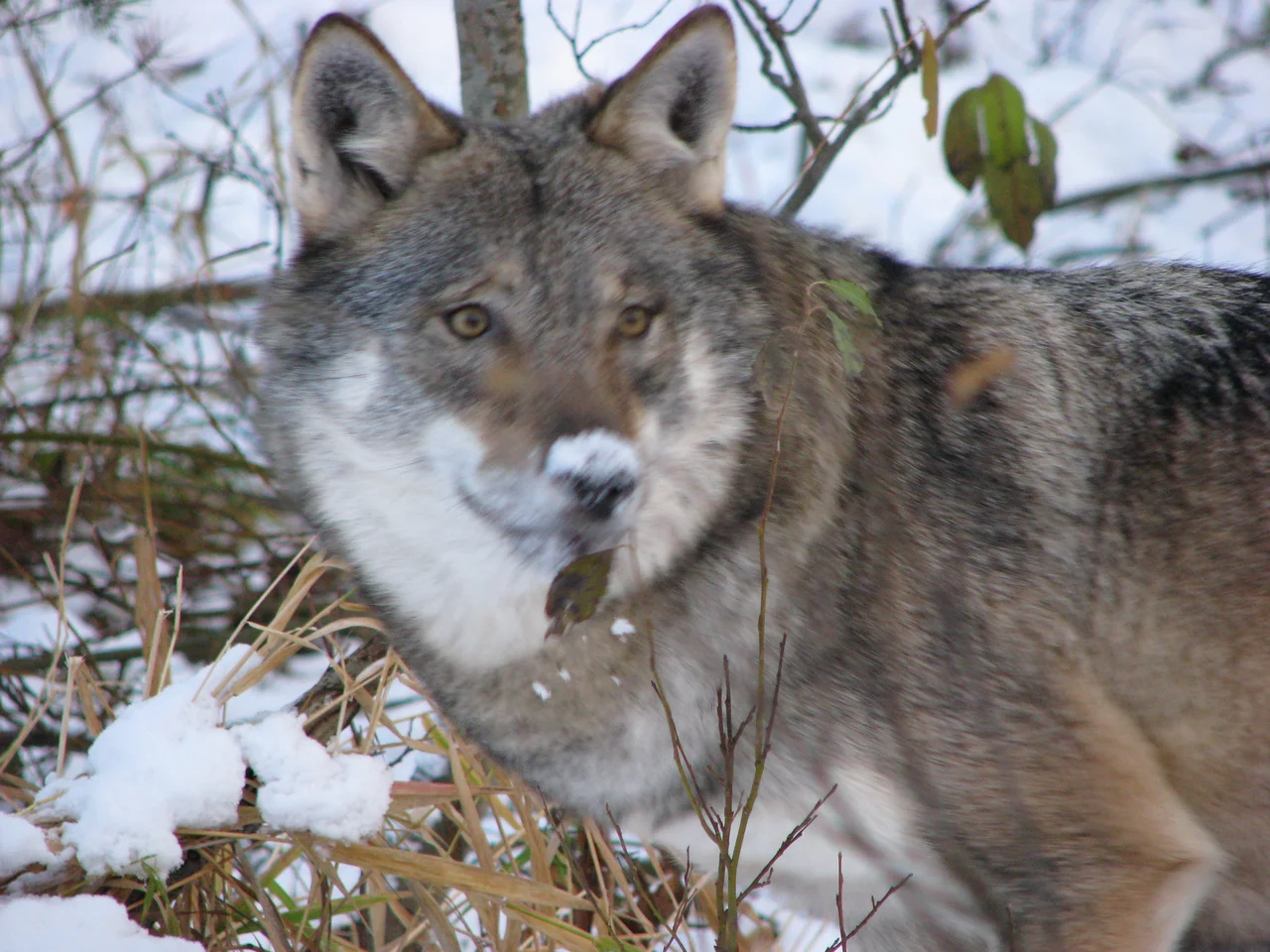
More than thirty species lived here, and the collection leaned deliberately Nordic: bears, wolves, moose, reindeer, and Arctic fox, alongside several kinds of livestock for the smaller visitors to meet at eye level. Individual animals became locally famous — a bear called Søs, an Arctic fox called Birk, a reindeer given the deadpan name Trine Rein. Amusement rides filled the gaps between enclosures, which is the compromise every northern wildlife park makes: the animals bring the parents, the rides keep the children from asking to leave. For a generation of families in Trøndelag and Nordland, this was the day out.
February 2025
The operating company filed for bankruptcy in February 2025. In most insolvencies the immediate questions are about creditors and payroll. Here the first question in the Norwegian press was blunter and more urgent — what happens to the animals? A zoo in liquidation is a peculiar kind of asset. The bears still needed feeding on the day the accounts stopped balancing, the wolves still needed a keeper, and none of that pauses while lawyers work through a schedule of claims. The park had already outlived the mine at Skorovatn, which closed in 1984, and had become one of the last significant employers in a municipality that lost more than a tenth of its people in the decade to 2024.
Park Nordica
The site was sold. New owners reopened it in May 2026 under a new name, Park Nordica, which is roughly the outcome everyone in the valley had hoped for and few would have predicted in the weeks after the filing. It has not been a clean restart: as of June 2026 a dispute was still running over who actually holds title to the buildings and the land the park occupies. That is an unromantic footnote, but it is also the honest condition of a great many rural Norwegian attractions — thin margins, complicated ownership, and a business model that depends on a few good summer weeks and a highway that keeps carrying people north.
Why It Matters Here
It is easy to be condescending about a roadside animal park. Consider the alternative. Namsskogan covers 1,417 square kilometres and holds fewer people than a single city apartment block. Its pyrite mine is gone, its population curve points down, and its principal exports are timber, hydroelectricity and, more recently, electrons sold to a cryptocurrency operation. A place like that does not get many institutions that draw fifty thousand strangers a year and give teenagers a summer job. When the park went under, what was at stake was not just a zoo. It was one of the few pieces of evidence that people still had a reason to stop here.
From the Air
The park lies at 64.7431°N, 12.8475°E, at roughly 140 m (460 ft) elevation, immediately north of Trones Church on the west side of the Namsen valley. From 1,500–3,000 ft AGL the giveaway is Tronestjønna, a small round pond with the enclosures and car park wrapped around it — an unmistakable clearing in continuous spruce. The E6 highway and the Nordlandsbanen railway run north–south past the site and make an easy line feature to follow up the valley from Grong toward the Nordland border. Nearest airports: Namsos Airport, Høknesøra (ENNM) southwest, Mosjøen Airport, Kjærstad (ENMS) north, Trondheim Airport Værnes (ENVA) far south. Expect valley fog on calm autumn mornings and heavy snow cover from November through April, which flattens the terrain contrast considerably.
Nearby Stories
- Tunnsjøen 6.9 km away
- Majavatn 14 km away
- Wideroe Flight 744 29 km away
- Wideroe Flight 710 41 km away
- Grane Municipality 51 km away
- Namsos Campaign 52 km away
- Battle of Stiklestad 100 km away
- Lapplandsleden 149 km away