.JPG)
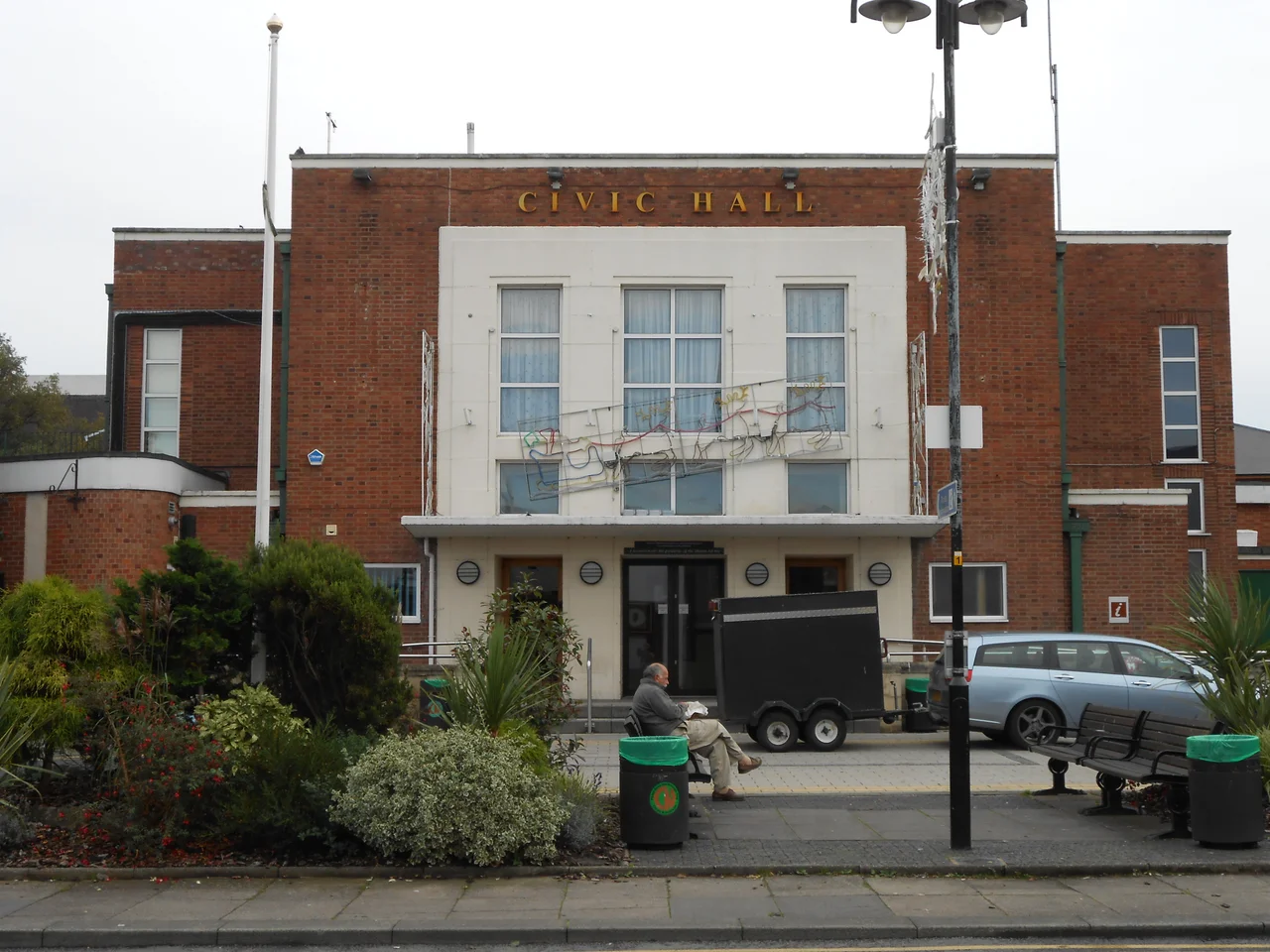
Nantwich
In December 1583 most of Nantwich burned. The fire began in the centre and ate eastward through the timber-framed houses until only Churche's Mansion and a scatter of buildings on the wrong side of the wind stood. Elizabeth I, told of the disaster, sent funds and ordered an England-wide appeal that brought money from as far as Bury St Edmunds in Suffolk. The town was rebuilt within a few years, on exactly the same plan, with timber from Delamere Forest hauled in along the street that was renamed Beam Street to remember the work. Four centuries later, Nantwich has one of the highest concentrations of listed buildings in England. Walk down High Street and you are walking through a town that has consciously chosen to keep being itself.
Salt, Brine, and the Roman Garrison
The name carries the story. Nant comes from the Welsh for stream or brook; wich and wych are Anglo-Saxon names for a brine spring. Long before the Romans arrived, a Celtic nemeton or sacred grove may have stood on these springs, and a 1194 record of the town as Nametwihc preserves a memory of that pre-Roman use. The Romans built nothing grand here, but they took the salt. Garrisons at Deva Victrix (Chester) and the legionary camps near Stoke received Cheshire brine evaporated in lead pans as part of their wages and rations. The salt industry that grew from those Roman foundations peaked in the mid-sixteenth century, when about four hundred salt houses worked the brine pits. The last one closed in the mid-nineteenth century, and the architectural historian Nikolaus Pevsner thought that decline had quietly saved the town: with no Victorian boom, nobody had reason to tear down the Tudor streets.
The Siege and Holly Holy Day
When civil war broke out in 1642, Nantwich declared for Parliament. Royalist forces besieged the town several times, with the last siege lasting six weeks through the winter of 1643 and 1644. Sir Thomas Fairfax broke the Royalist lines outside town on 26 January 1644, scattering the besieging army and saving the people inside the walls from a coming hunger. In gratitude, townsfolk pinned sprigs of holly to their caps, a custom that lapsed for centuries until 1973, when the educational charity Sealed Knot revived it as Holly Holy Day. Every January now, reenactors in seventeenth-century coats march through the streets to a field outside town and refight the battle, with the people of Nantwich watching from the same lanes their ancestors did. Sir William Brereton, who commanded Parliament's forces in the region, had based his headquarters here in 1643.
The Half-Timbered Town
Nantwich has one of the county's largest collections of historic buildings, second only to Chester. They cluster along Barker Street, Beam Street, Churchyard Side, High Street and Hospital Street, and continue west across the River Weaver along Welsh Row. The oldest listed building is St Mary's Church, fourteenth-century and Grade I. Two timber-framed Elizabethan mansions, Sweetbriar Hall and the Grade I Churche's Mansion, predate the 1583 fire. From the rebuilding came 46 High Street and the Grade I Crown coaching inn, both jettied and gabled in the manner Tudor carpenters favoured. William Camden visited a few years after the fire and called Nantwich the "best built town in the county." There are Georgian town houses (Dysart Buildings, Townwell House) and Victorian banks (Alfred Waterhouse's former District Bank). Listed structures include twelve cast-iron bollards, a mounting block, and a summerhouse, the small civic furniture nobody quite knew how else to classify.
Brine Baths and Cheese Fairs
The brine that built Roman Cheshire kept working through the Victorian period in a different form. The Brine Baths Hotel opened south of town in the 1890s, advertising the "strongest saline baths in the world" alongside tennis courts and a nine-hole golf course. The hotel served as an auxiliary hospital in the First World War, an army base and WAAF quarters in the Second, then a miners' convalescent home before being demolished in 1959. The open-air brine pool at Snow Hill, opened in 1883, still operates, the last visible inheritance of two thousand years of salt. Modern Nantwich keeps itself busy with festivals. The Nantwich Food Festival each September draws around 30,000 visitors to the town centre. The Jazz and Blues Festival fills the pubs at Easter. Until 2019, the International Cheese Awards judged the world's best wheels at the grounds of nearby Dorfold Hall, a Grade I Jacobean mansion that Pevsner rated among the finest of its kind in Cheshire.
People Born in the Brine
John Gerard, born in Nantwich in 1545, wrote the Herball or Generall Historie of Plantes (1597), one of the first great English works of botany. Joseph Priestley, co-discoverer of oxygen, lived in the town from 1758 to 1761. Sir William Bowman, born here in 1816, is remembered in medicine for Bowman's capsule and Bowman's membrane, parts of the kidney and eye he was the first to describe. Admiral David Beatty, born in nearby Stapeley in 1871, commanded the British battlecruisers at Jutland. Ben Miller, the actor, grew up here; AJ Pritchard, the Strictly Come Dancing professional, went to school here. The list is uncommonly long for a town of fourteen thousand, perhaps because the same brick streets keep producing the same sort of attention to detail in whoever passes through them.
From the Air
53.07 N, 2.52 W, on the Cheshire Plain on the banks of the River Weaver. From 3,000 to 5,000 feet AGL the town reads as a compact, dense brick-and-timber core surrounded by green pasture, with the Shropshire Union Canal cutting along the western edge on an embankment. St Mary's tower (the meridian of the old Cheshire Ordnance Survey maps) gives the best fix. Nearby airports: EGCC Manchester to the north-east, EGNR Hawarden to the west, EGNX East Midlands further east-south-east.
Nearby Stories
- Valle Crucis Abbey 1.8 km away
- Caverswall Castle 2.9 km away
- Haughmond Abbey 2.9 km away
- Basingwerk Abbey 4.1 km away
- Battle of Winnington Bridge 6.6 km away
- RAF Hednesford 8.3 km away
- Anson Engine Museum 9.7 km away
- Battle of Maes Moydog 14 km away