
Narrow Gauge Railway Museum
Inside one room at the Narrow Gauge Railway Museum, the furniture is wrong. There is a desk and a chair and a small lamp, and an inkwell, all arranged as if someone had just stood up and walked out for a cup of tea. The room is called the Awdry Study, and the furniture belonged to the Reverend Wilbert Awdry, a Cheshire vicar who volunteered on the nearby Talyllyn Railway in the 1950s and who wrote a small book about a small engine called Thomas. The Skarloey Railway in his books is the Talyllyn, only fictionalised; the small locomotives that Thomas works alongside are recognisably the same engines that pull tourists from Tywyn Wharf station today. Awdry's desk sits among the wagons and signals because he is, in a sense, what the museum is also about: how the small railways of Britain came to mean something larger than their gauge.
The First Voluntary Railway Society
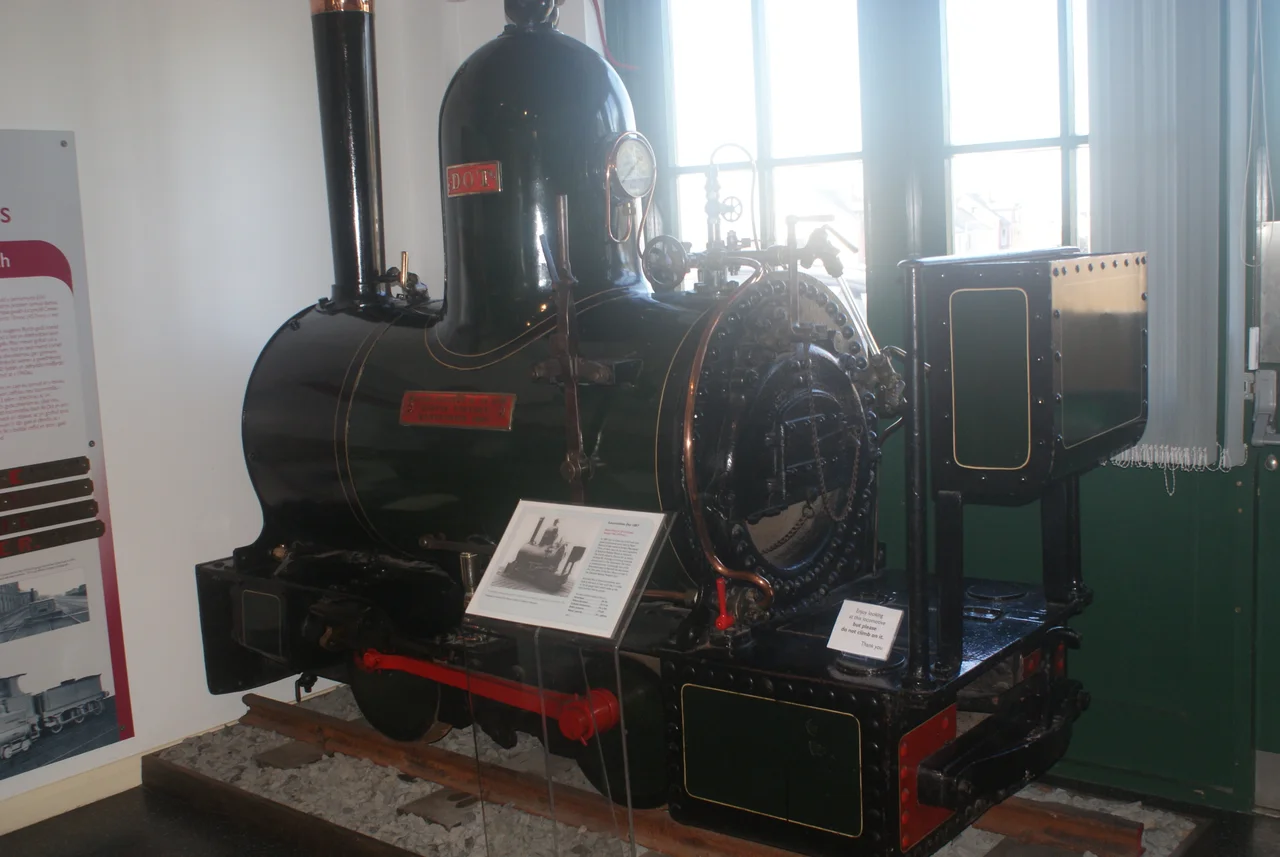
The Talyllyn Railway Preservation Society was founded in 1950 and took control of the failing Talyllyn slate line in February 1951. It was the first voluntary society anywhere in the world to take over and operate a public passenger-carrying railway. Within months, the news had spread through Britain's railway enthusiast circles, and items from other narrow gauge lines that were being closed and scrapped began to arrive at Tywyn. Wagons, signals, locomotive nameplates, ticket stocks, tools - the detritus of a dying industrial subculture. A small committee was formed to collect and preserve what they could. The first exhibit, donated in 1952 by Guinness from their St James's Gate Brewery railway, was a small locomotive. The displays began in the old Gunpowder Store at Wharf station, expanded into a coal yard in 1964, and never really stopped growing.
Eighty Railways, One Thousand Objects
The collection now holds more than a thousand items from over eighty narrow gauge railways spread across Wales, England, the Isle of Man, Ireland, and Scotland. Six locomotives are on display, with more in store. Eleven wagons inside, another eleven outside. Track sections from early plateways through to modern narrow gauge. Signal frames from the Manx Northern Railway, the Isle of Man Railway, the County Donegal Railways - lines that mostly no longer exist. The original Talyllyn weighbridge from 1865 has been restored and given a new shelter built to match the rest of Wharf yard. Whole categories of industrial railway are represented: military narrow gauge from the Western Front, peat railways, brewery shunting lines, slate quarry tramways. The museum is what you build when an entire branch of engineering history is dying and you want some of it to survive.
The 2005 Rebuild
By the late 1990s the building had reached the end of what it could do. It was damp in winter, hot in summer, and the collection was deteriorating in conditions the curators could no longer accept. With the golden jubilee of the Preservation Society approaching in 2000, an appeal was launched. The Heritage Lottery Fund came in with the largest share; trusts, foundations, and individual donors made up the rest. Work started in 2001. The new building rose alongside an extended booking office, providing the museum, a refreshment room, and an education room on two floors. On 13 July 2005 the Prince of Wales and the Duchess of Cornwall (now King Charles III and Queen Camilla) opened the complete facility. In 2010 the museum gained Accredited status under the national museums scheme, recognising it as one of the small but properly curated specialist museums of Britain.
The Tank Engine and the Vicarage
Wilbert Awdry came to the Talyllyn in 1952, two years after he had published The Three Railway Engines and a year after Thomas the Tank Engine. He volunteered as a guard, signalman, and station master at various points, and he based much of the Skarloey Railway, the small narrow gauge line of his later books, on the Talyllyn. Sir Handel, Peter Sam, Skarloey himself - these characters were thinly veiled portraits of Talyllyn locomotives. After Awdry died in 1997, his family donated his study furniture to the museum. It is reassembled now in a side room, complete with his typewriter, the lamp he wrote by, and the books on his shelves. Children stand in the doorway and look in. The desk does not seem large enough to have produced a global cultural phenomenon. Most desks do not.
From the Air
Located at 52.58N, 4.09W at Wharf Station Tywyn, on the Cardigan Bay coast of southern Gwynedd. From the air, look for the small town of Tywyn between a long flat beach and the green hills inland, with the Talyllyn Railway running east toward the hidden upland valley of Nant Gwernol. The Dysynni estuary lies just to the north. Nearest airports: Llanbedr (EGFD) approximately 12nm north; Caernarfon (EGCK) approximately 30nm north; Welshpool (EGCW) approximately 35nm east. Recommended viewing altitude: 1,500-2,500 ft for the town, the beach, and the railway line. Cadair Idris rises sharply to the north-east; mountain cloud can build quickly in the area.
Nearby Stories
- Penrhyndeudraeth 2.7 km away
- Cwmhir Abbey 11 km away
- Battle of Maes Moydog 13 km away
- HMS Whirlwind (R87) 14 km away
- Strata Florida Abbey 18 km away
- Bardsey Lighthouse 19 km away
- HMS H5 22 km away
- Llangollen Railway 23 km away