
Novgorod Oblast
An eleven-year-old boy named Onfim sat down in Novgorod sometime around 1260, pulled a slab of birch bark off a tree, scratched lines and drawings into it, and dropped it. Eight centuries later archaeologists pulled the bark out of the city's anaerobic mud, where it had sat preserved like everything else made of organic material in old Novgorod. Onfim's homework drawings now hang in the Novgorod State Museum and provide one of the most vivid windows in the world into ordinary medieval European life. Over a thousand birch bark documents have been excavated. They are why we know what 12th-century Novgorodians ate, owed each other, fought about, and named their dogs. The city that produced them ran itself as a republic for three hundred years, until Moscow came calling.
Where Russia Began
The chronicles say Rurik settled in Novgorod in 862 and founded the dynasty that would rule Russia for seven centuries. His successor Oleg moved the capital to Kiev, but Novgorod kept its independence and grew rich on the trade route from the Varangians to the Greeks: Vikings in longboats sailing south down the Volkhov, across Lake Ilmen, up the Lovat, then portaging to the Dnieper and on to Constantinople. In 1136 Novgorod evicted its prince and made itself a republic, with the veche, a public assembly of citizens, electing officials and making decisions. Pskov was the only other Russian city that worked the same way. Novgorod joined the Hanseatic League and became one of the great trading cities of medieval northern Europe, and by some good fortune the Mongol invasion never reached it. The 11th-through-14th-century churches of Veliky Novgorod still stand because of that absence.
The Massacre of 1570
Ivan III brought Novgorod into the Grand Duchy of Moscow in the late 15th century, ending the republic. In 1570, Ivan IV, the Terrible, fearing treason from a city that remembered its independence, sent his oprichnina to sack Novgorod. For weeks his men tortured, drowned, and burned the inhabitants. The number killed is debated but ran into the thousands or possibly tens of thousands, in a city of perhaps 30,000. Novgorod never recovered its old commercial weight. Swedish armies plundered what remained during the Time of Troubles in the early 17th century. By the time Peter the Great's reforms reorganized the Russian state in 1708, Novgorod was a provincial backwater being absorbed into the new Saint Petersburg-centered geography. The 1851 Moscow-Saint Petersburg Railway bypassed it entirely, and the towns that grew up along the line, Malaya Vishera, Okulovka, Chudovo, became the new local economic centers.
Occupied, 1941-1944
The German Wehrmacht reached Novgorod in August 1941 and occupied it for two and a half years. The city was systematically destroyed. The 12th-century Saint George Monastery was looted; the Saint Sophia Cathedral, founded in 1045, was damaged; the Millennium of Russia monument unveiled in 1862 was disassembled by German troops to ship to Germany as scrap, and was rescued in pieces only because the Red Army arrived first. Civilian deaths across what is now Novgorod Oblast ran into the tens of thousands; the Demyansk Pocket, where six German divisions held out from February to April 1942, and the Leningrad-Novgorod Offensive of January 1944 turned much of the region into killing ground. The Soviet population census of 1989 recorded about 753,000 people in the oblast. The 2021 census recorded 583,000. The wartime demographic wound, especially to the male population, never fully closed.
Lakes, Birch Bark, and a Quiet Recovery
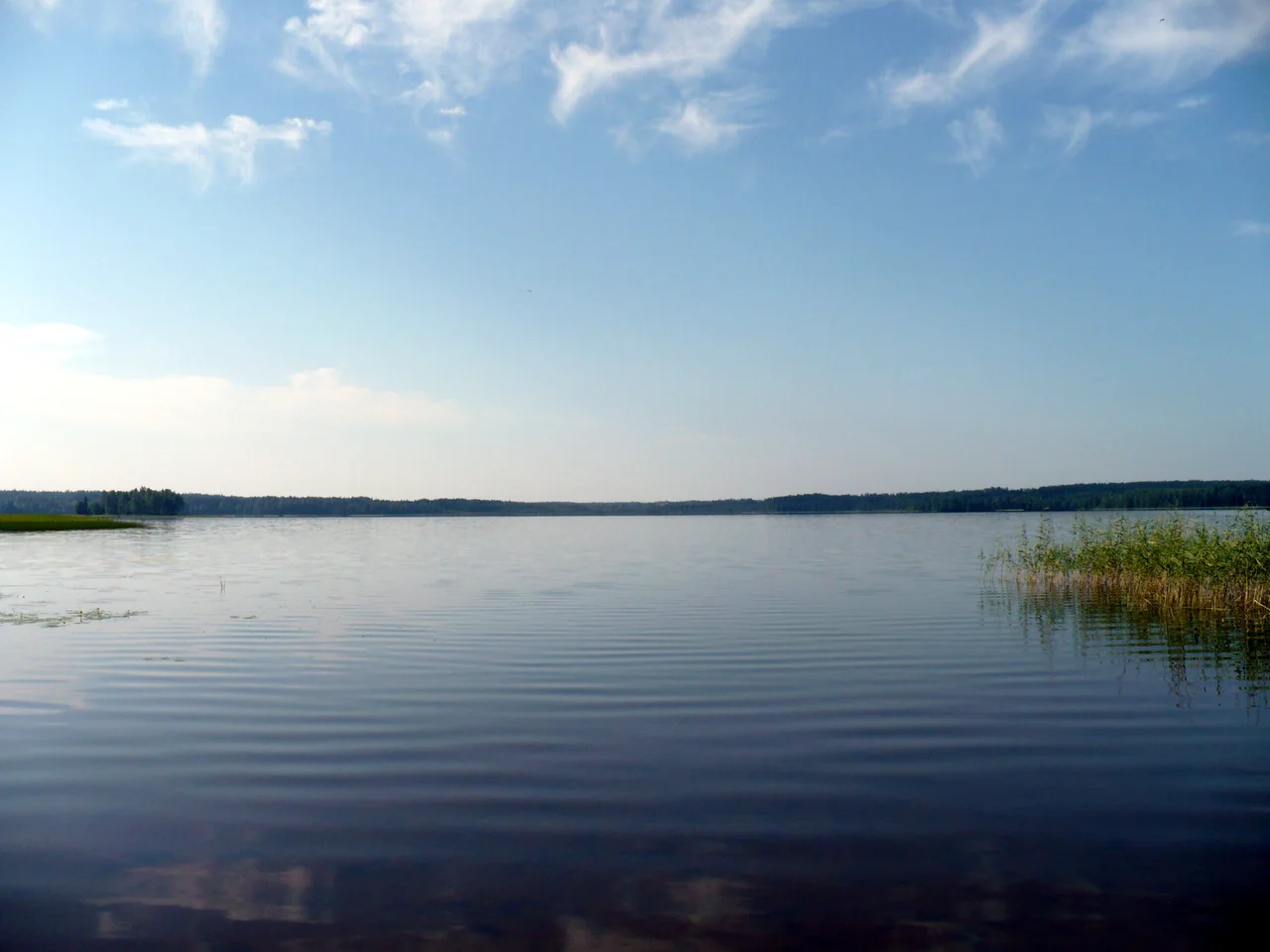
Geographically the oblast is a low country shading east into the Valdai Hills, with Lake Ilmen at its center fed by the Msta, Lovat, Pola, Polist, and Shelon rivers, and drained northward by the Volkhov toward Lake Ladoga. Lake Seliger, shared with Tver Oblast, is one of the largest in central Russia. Two federally protected areas, Valdaysky National Park and Rdeysky Nature Reserve with its vast Polist-Lovat swamp system, preserve some of the Russian northwest's surviving wild country. The historic monuments of Veliky Novgorod, restored over decades after the war, are now a UNESCO World Heritage Site. Veliky Novgorod was the city's renaming in 1999, returning the old prefix that means Great. The Hanseatic merchants are long gone. The chronicles, the icons, the onion domes (which Novgorod helped invent), and Onfim's birch bark scribbles remain.
From the Air
Novgorod Oblast is centered around 58.4 N, 32.4 E in northwestern Russia, with Veliky Novgorod its capital at the north end of Lake Ilmen on the Volkhov River. The oblast borders Leningrad Oblast (north), Vologda Oblast (east), Tver Oblast (south), and Pskov Oblast (west). Lake Ilmen and the Valdai Hills are the dominant geographic features visible from altitude. Nearest airports: Novgorod Airport (ULNN, largely abandoned) at Veliky Novgorod, with regular service from Saint Petersburg Pulkovo (ULLI) about 180 km north. The M10 federal highway runs through the oblast connecting Moscow and Saint Petersburg. Recommended viewing altitude 5,000-10,000 ft over a vast lake-and-forest landscape.
Nearby Stories
- Valday Iversky Monastery 26 km away
- Khutyn Monastery 38 km away
- 2023 Wagner Group Plane Crash 94 km away
- Battle of Krasny Bor 131 km away
- Kalinin Nuclear Power Plant 153 km away
- Tsarskoye Selo 164 km away
- Toropets Depot Explosions 187 km away
- Krokhino, Vologda Oblast 320 km away