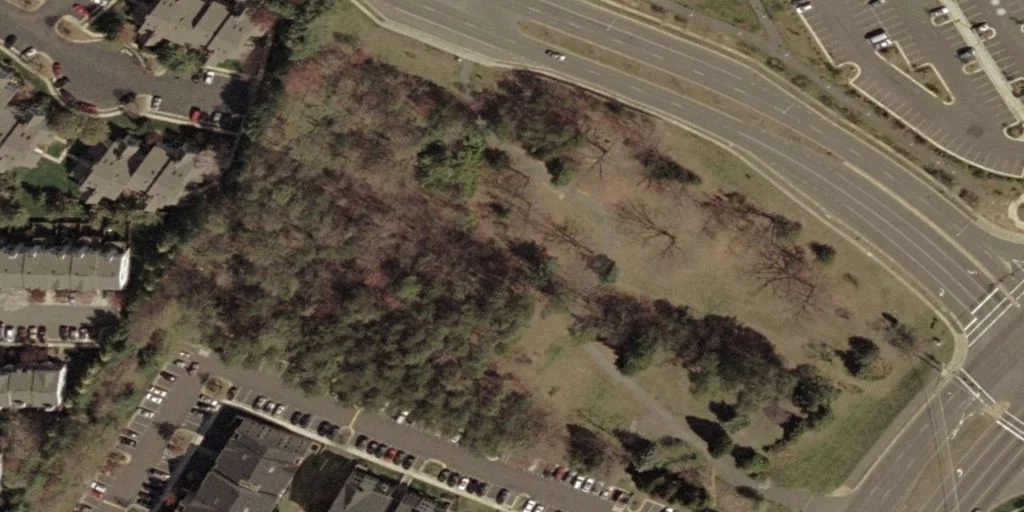

Ox Hill Battlefield Park
Two Union generals died at Ox Hill on September 1, 1862, in a Virginia thunderstorm so heavy that some of the soldiers' powder would not fire. Brigadier General Isaac Stevens picked up the fallen colors of the 79th New York Highlanders, shouted Highlanders, my Highlanders, follow your general, and led a charge into Confederate lines in the woods. He was shot through the head within seconds. About an hour later, Major General Philip Kearny - one-armed since the Mexican-American War, the most respected combat commander in the Army of the Potomac - rode through a cornfield to investigate a reported gap in the Union line. He came face to face with Georgia infantry. They told him to halt. He ignored them and turned to ride away. A musket volley brought him down. The 4.8-acre park that preserves the spot where this happened is now bordered by a Fairfax County shopping center.
Lee's Attempt to Cut Off the Retreat
After winning the Second Battle of Bull Run on August 30, 1862, Robert E. Lee tried to finish the work. The defeated Union army was retreating toward the Washington defenses. Lee sent Stonewall Jackson with 20,000 men on a wide loop north and then east along the Little River Turnpike - now U.S. Route 50 - to get behind the Union line of retreat near Fairfax Court House. If Jackson could cut the road, Lee might be able to destroy Pope's army entirely. Union General John Pope learned of the move and sent about 6,000 men under Isaac Stevens and Philip Kearny to intercept. The two forces collided on the afternoon of September 1 on Ox Hill, along the Little River Turnpike. A severe thunderstorm broke over the battlefield just as the fighting started. Rain soaked muskets and uniforms. Visibility collapsed to a few yards. The fighting went on in the downpour.
Stevens's Charge
Isaac Stevens had been governor of Washington Territory before the war and a railroad surveyor before that. He led one of the two Union divisions onto the field. The 79th New York Highlanders - many of them Scottish immigrants, wearing kilts on parade but trousers in combat - charged Confederate troops massed in the woods. The Highlanders' color sergeant was killed early. Stevens dismounted, picked up the regimental colors himself, and called out Highlanders, my Highlanders, follow your general. He had taken perhaps a dozen steps when a Confederate bullet struck him in the head. He died instantly. The colors fell with him. The charge stalled. His son Hazard Stevens, also serving on the field as a young officer, would later receive the Medal of Honor for his Civil War service and survive to become one of the first men to summit Mount Rainier in 1870.
Kearny's Refusal
Philip Kearny was 47 years old, wealthy by inheritance, a graduate of the cavalry school at Saumur in France, a veteran of the Mexican-American War and the French campaigns in Italy where he had served with the French Imperial Guard and earned the Legion of Honor. He had lost his left arm at the Battle of Churubusco in 1847. General-in-Chief Winfield Scott called him the bravest man I ever knew. On the late afternoon of September 1, after Stevens's death, Kearny received a report from David B. Birney that there might be a gap in the Union line on the left. He rode forward through a cornfield with his single rein in his teeth - he had only one hand to hold the rein and the saber - to see for himself. He emerged into a clearing with Confederate troops from the 49th Georgia just ahead. One Confederate officer shouted That's a Yankee officer! Shoot him! Another called for him to halt. Kearny turned his horse and tried to ride away. The Georgia volley knocked him from the saddle. He died instantly. Confederate troops recognized him from his rank insignia. The next day, his body was returned to Union lines under flag of truce by Lee himself.
Neither Side Broke Through
The Confederate attempt to cut off the Union retreat failed. Neither side broke through. Total Union casualties came to about 1,300; Confederate losses about 800. By nightfall both armies disengaged, the Union force continuing its retreat toward Washington and the Confederates pulling back. Lee, denied the opportunity to destroy Pope's army, instead pivoted north and invaded Maryland three days later. The campaign culminated in the Battle of Antietam on September 17 - the bloodiest single day in American history. Ox Hill was the only major Civil War battle fought in Fairfax County. It is sometimes considered a tactical Confederate victory but a strategic Union one, because it bought the time the Union army needed to reach the safety of Washington. The death of Kearny was felt across the army. The Kearny Cross, an early American military decoration for valor, was named for him.
The Postage-Stamp Park
John N. Ballard, a Confederate cavalryman who had lost a leg serving under John S. Mosby, married the heiress Mary Reid Thrift and ended up owning much of the battlefield in the 1870s. On July 7, 1915, Ballard and his wife deeded a small plot near the site of Stevens's death to six trustees - three from New Jersey, where Kearny was from, and three from Virginia - for the purpose of erecting monuments to the men of both armies who fell on Fruit Vale Farm. Granite monuments to Stevens and Kearny were dedicated October 2, 1915, by the First New Jersey Brigade Society. In the 1980s commercial development swept across the rest of the battlefield. The Washington Post led a public campaign that pressured developers to leave the monuments in place. In 1987 a developer donated 2.4 acres to Fairfax County around the existing memorial; in 1994 the county added another 2.4 acres. The total preserve - 4.8 acres - is about 1.5% of the original 300-acre battlefield. The Fairfax County Park Authority restored the park in 2008 with a wheelchair-accessible trail, interpretive signs, and a reconstructed split-rail fence outlining the actual cornfield where Kearny fell.
From the Air
Ox Hill Battlefield Park sits at 38.857 N, 77.374 W, in the Fair Lakes section of Fairfax, Virginia, at the corner of West Ox Road (Route 608) and Monument Drive, just east of U.S. Route 50. Recommended viewing altitude is 1,500 to 2,500 feet AGL for a clear look at the small 4.8-acre park surrounded by the Fairfax Towne Center shopping district and modern subdivisions. The nearest airport is Manassas Regional (KHEF), about 7 nautical miles southwest. Dulles International (KIAD) lies 7 nm northwest - check Class B airspace. Ellanor C. Lawrence Park is about 2 nm west. Best light is mid-morning.
Nearby Stories
- Bladensburg Dueling Grounds 4.6 km away
- Monocacy Aqueduct 6.4 km away
- Howard County, Maryland 7.9 km away
- Third Battle of Winchester 8.1 km away
- Long Branch Plantation 12 km away
- Stafford County, Virginia 24 km away
- Battle of Cedar Mountain 30 km away
- St. Mary's City, Maryland 73 km away