
Paiján Culture
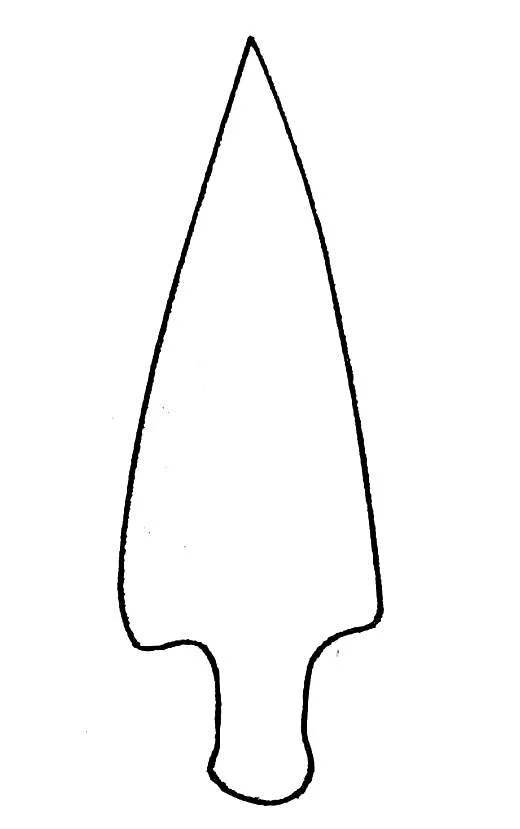
A needle of stone, maybe four inches long, tapering to a point so fine you could thread it through cloth. That is what the first Peruvians left behind. They hafted those points onto hollow cane shafts and waded into Pacific surf that stood fifteen kilometers closer to the Andes than it does today, spearing fish while the last of the Ice Age glaciers still gripped the high country behind them. The Paiján culture gave us Peru's oldest recognizable toolkit and, buried in ash on a desert plain, the oldest human bodies the country has yet produced.
The Archaeologist and the Plain
Rafael Larco Hoyle found the first points in the 1940s, scattered across a stretch of sun-bleached ground called the Pampa de los Fósiles north of the modern town of Paiján. Larco was a cotton planter turned scholar, the son of a sugar baron, and he cataloged what he saw with the patience of someone who had grown up among the huacas of the Chicama Valley. Decades later the French archaeologist Claude Chauchat returned to the same pampas and mapped not dozens but a whole landscape of sites - camps where bands stopped for a night, workshops where knappers shaped preforms, quarries where they chose their stone. The picture that emerged was not of a tribe but of a way of moving: people who knew every water source and lithic outcrop in a country that looks, to a modern eye, like nothing but dust and distance.
Fishermen of the Dry Coast
The Paiján world was arid. Rodents and lizards and land snails, a few stubborn plants the old people learned to grind on stone, and not much else above ground. The sea, then retreated far to the west on a lower ocean, was the reliable larder. Those slender lanceolate points were designed for it. Mounted on reed shafts, they worked as harpoons for the fish that came in on the cold Humboldt Current - mackerel, drum, sea bass - and the long thin blades tell you something about what the hunters needed: length to pierce water and reach, strength enough not to snap on bone. Archaeologists have sorted the points into types with names like Talambo and Contracting Narrow Stem, each a small refinement on a design that worked. Early Paiján bands ranged far, camping between the coastal plain and the western slopes of the Andes as the seasons turned. Later groups stayed closer to home, which anthropologist Tom Dillehay reads as a sign that the climate had softened, wild plants and game had multiplied, and there was less reason to keep walking.
Two Bodies in the Ash
In 1975, working a site on the same Pampa de los Fósiles where Larco had started, Chauchat uncovered skeletal remains in a layer of ancient ash. A teenager of twelve or thirteen. A young woman of about twenty-five. Radiocarbon dates came back at 10,200 years before present, give or take a century and a half - the oldest human remains yet found in Peru. We do not know their names or how they died or what they believed about what came next. We know only that someone who loved them or feared them or simply outlived them laid the bodies down and covered them with ash, and the desert preserved what was left. The Paiján teenager and the young woman are the first Peruvians with faces, however stripped the bone has become, and everyone who came after - Chavín, Moche, Wari, Chimú, Inca - descends from the people who sent their dead into that ash.
Before the Ceramics, Before the Cities
Paiján belongs to what archaeologists call the Lithic Stage, the long stretch before pottery and villages and irrigation - before the Norte Chico pyramids rose at Caral, before the Chavín cult carried its stone jaguars up into the highlands. The Paiján did not yet build anything monumental. They left no walls, no plazas, no tombs stacked with gold. What they left were the tools and the trash of their living: broken points, bones of vizcachas, the shells of snails piled in lenses you can still see eroding out of hillsides. It does not sound like much. But the shape of a Peru-to-come is already there in the Paiján pattern - a people arranging themselves between ocean, valley, and mountain, learning which river runs when and which quebrada holds water after the rains. Everything the later civilizations built, they built on that first topographic knowledge.
From the Air
Centered near 8.00 degrees S, 78.50 degrees W, on the arid coastal plain north of Trujillo, Peru. The Pampa de los Fósiles and related Paiján sites spread across the valleys of the Jequetepeque, Cupisnique, Chicama, and Moche rivers. Cruise between 10,000 and 12,000 feet for the best view of the coast-to-foothill transition. Nearest major airport is Trujillo's Capitán FAP Carlos Martínez de Pinillos International (SPRU). Clear, dry air most of the year; early morning haze can hug the coastal plain.
Nearby Stories
- Pallasca District 4.6 km away
- La Galgada 52 km away
- Battle of Cajamarca 65 km away
- Pirca Pirca 83 km away
- Rio Abiseo National Park 92 km away
- Piura 328 km away
- Easter Island: The Mystery of Rise and Collapse 3810 km away