
Palacio de Carondelet
When Simón Bolívar walked into the Presidential Palace in 1822, he was not easily impressed. The liberator had seen cathedrals in Caracas, government houses in Bogotá, the grand palaces of a dissolving Spanish empire. But something about Quito's building stopped him. He wondered, the record says, at its elegance and austerity. He asked who had overseen the renovation. The answer was the Barón Francisco Luis Héctor de Carondelet, the Spanish chairman who had hired architect Antonio García in 1801 to transform the earthquake-patched audience hall into something worthy. Bolívar gave the palace Carondelet's name. The name has stuck for more than two centuries, through every constitutional president and every dictator Ecuador has produced.
Before the Palace
The history of this building traces back to around 1570, when the Spanish Crown began buying up royal houses in the still-young city of Quito. The first seat of the Royal Audience operated near the convent of La Merced. When Diego Suarez de Figueroa, secretary of the audience, died in 1611, the government absorbed his small palace on the central square - the place that would come to be called the Plaza Grande. Then came the earthquake of 1627. The damage was severe, and the administration was forced to buy up neighboring buildings to restore the complex. This time the rebuild used stone and brick. From that point forward, the seat of the Royal Audience of Quito faced directly onto the Plaza Grande, establishing the geometry that still defines the heart of Ecuador's capital.
The Baron's Renovation
Francisco Luis Héctor de Carondelet was a well-traveled administrator. Before arriving in Quito in 1799 as chairman of the Audience, he had served as governor of Spanish Louisiana and Florida, leaving his name on avenues in New Orleans. In 1801 he hired Antonio García to rehabilitate both the Audience Palace and the cathedral. García also led work on the stone arches of the municipal sewers and renovated the prison. The result was an austere neoclassical facade above a stepped colonnade, unusual in Quito's baroque landscape and perhaps why Bolívar found it worth commenting on. After the Battle of Pichincha in May 1822 ended Spanish rule in Ecuador, the palace became headquarters of the South Department of Gran Colombia. Bolívar visited intermittently over the next few years. His admiration became the building's permanent name.
The Building That Houses Every Administration
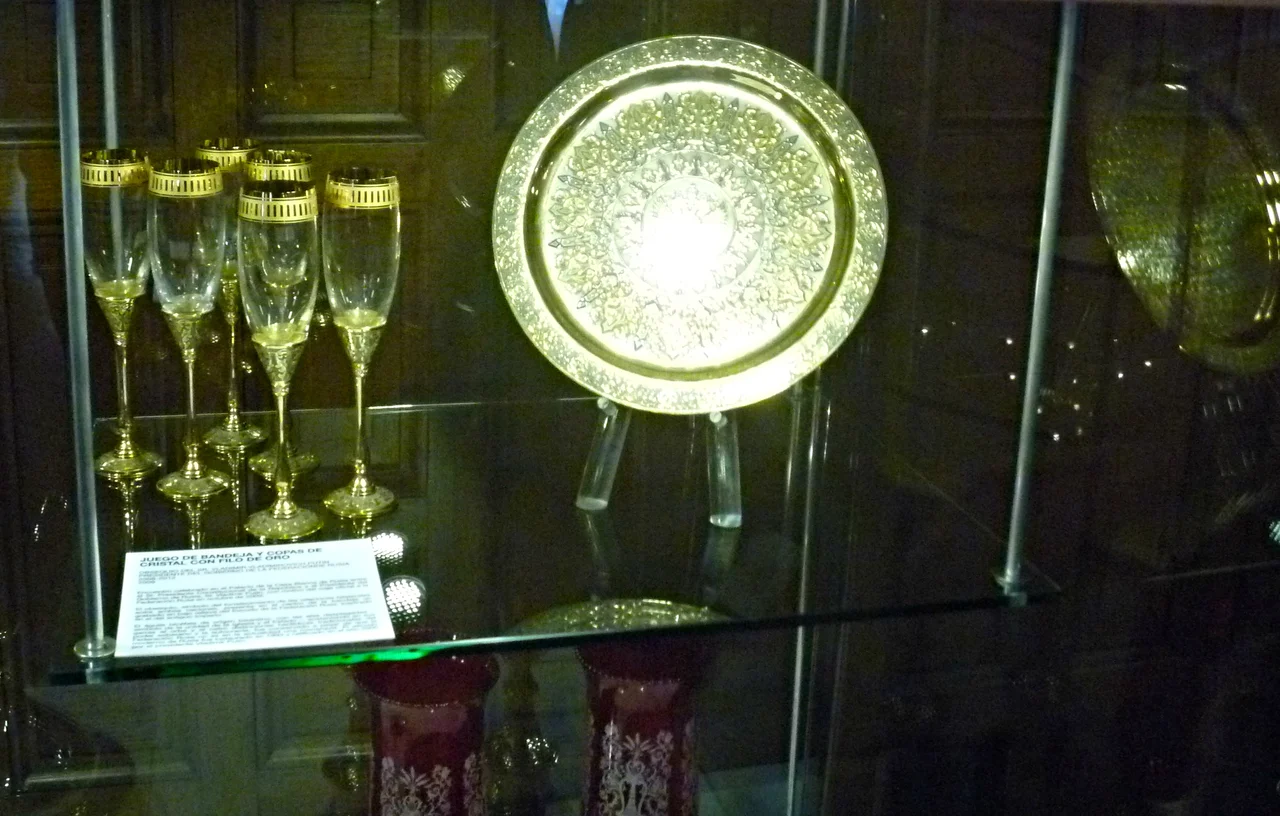
Nearly every Ecuadorian head of state - constitutional, interim, or dictatorial - has worked from these rooms. Gabriel García Moreno, Camilo Ponce Enríquez, and Sixto Durán Ballén each left significant architectural changes. The Presidency, Vice Presidency, and Ministry of the Interior together occupy what is now called the Complex of Carondelet, which also includes the former Post Office building on Benalcázar Street. On the third floor sits the presidential residence, a colonial-style apartment where the president and family actually live. During the presidency of Rafael Correa, the complex was declared Ecuadorian cultural heritage and opened to public tours. Archaeologist María del Carmen Molestina, former director of the Central Bank Museum, catalogued presidential gifts - a tiara from Iran's government, cups from Russia, gifts from the Spanish royal family during their 2012 visit - and displayed them alongside antique furniture recovered from the building's own collections.
The Quiet Looting
Molestina's investigation turned up something stranger than provenance questions. Most of the furniture visible today is new. Bronze fittings dating to García Moreno's era - the nineteenth-century hardware that should have survived across administrations - have been replaced by copies of gold-sprayed lead. The originals are gone. Molestina traced the restoration record through the presidencies of Camilo Ponce Enríquez (1956–1960) and León Febres Cordero (1984–1988), when the palace's holdings were still intact. After that, the paper trail thins. She believes most pieces remained until the Rodrigo Borja administration (1988–1992), after which Sixto Durán Ballén (1992–1996) ordered a new presidential suite on the third floor. Somewhere in those transitions, centuries of presidential heritage quietly left the building. Under President Lenin Moreno, the public museum was closed. The looting investigation continues.
From the Air
Located at 0.22°S, 78.51°W in Quito's Old Town, 2,850m elevation in the Andean valley. The palace sits on Plaza de la Independencia, flanked by the Metropolitan Cathedral and Archbishop's Palace - visible as a compact cluster of colonial architecture at the center of the UNESCO-listed historic core. Viewing altitude 4,500m reveals the narrow north-south valley between the Pichincha volcano (4,784m) to the west and the Guangüiltagua range to the east. Nearest airport: Mariscal Sucre International (SEQM) 18nm east near Tababela, handling all commercial traffic since Quito's old in-town airport closed in 2013. The plaza grid of Old Quito is the most distinctive visual pattern from altitude.
Nearby Stories
- Pululahua Geobotanical Reserve 13 km away
- Illiniza 21 km away
- Baeza 28 km away
- La Mana 48 km away
- Quinindé Canton 56 km away
- Tena 57 km away
- Guandera Biological Station 76 km away
- Valencia, Ecuador 82 km away