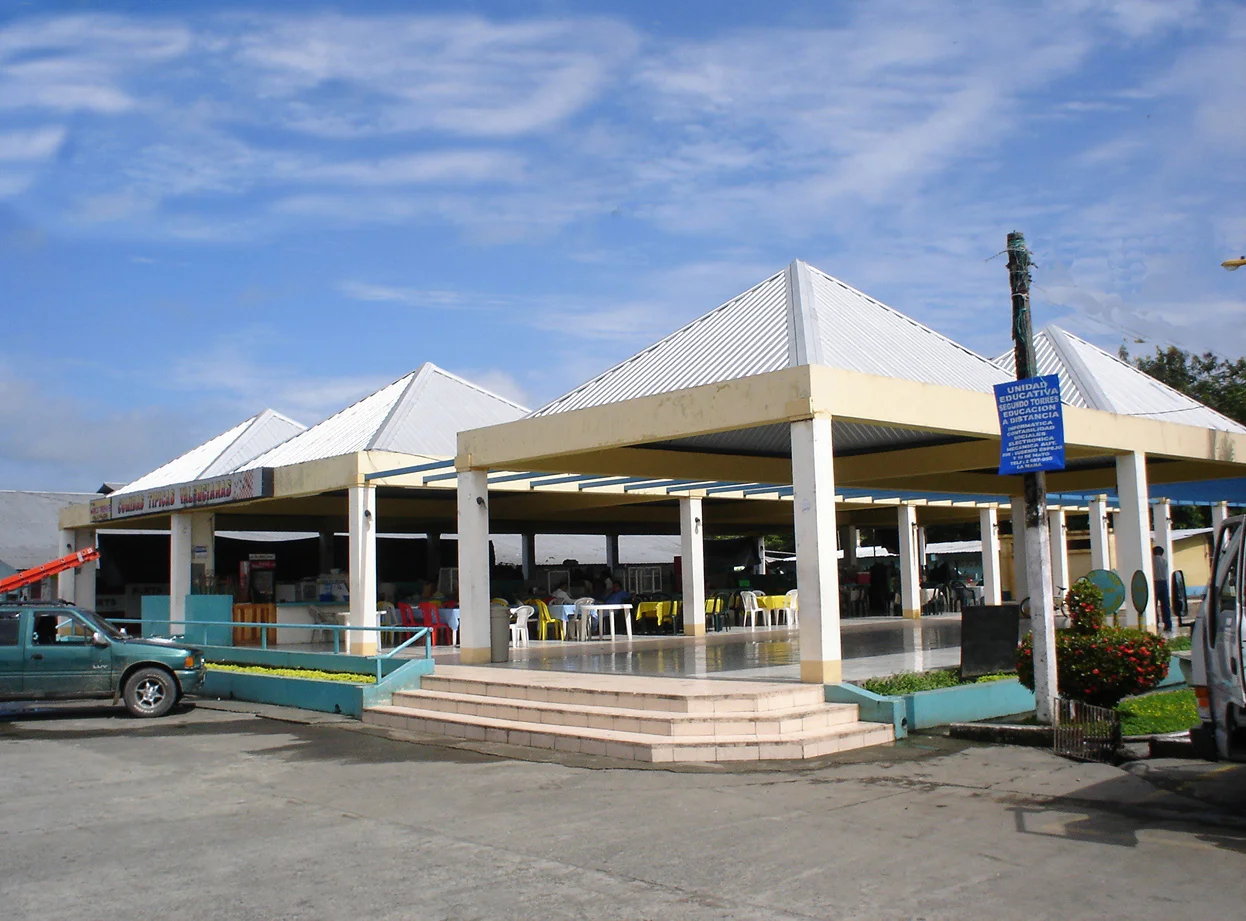

Valencia, Ecuador
In 1887 a man named Gregorio Valencia built his house on the banks of an estuary in coastal Ecuador. He was known throughout the surrounding hamlets for practicing brujeria - sorcery. Neighbors came to him for consultations, for herbs, for whatever it was he offered. Before long the estuary itself was being called Estero Valencia after him, and when a town grew up at the water's edge it kept the name. That town is now the sixth most populous city in Los Rios Province, a commercial center shipping bananas, cocoa, and African palm to the world. It is still called Valencia, and the estuary still runs.
Before Gregorio
The land was not empty before Valencia arrived. A village of Colorado people - the Tsachila, indigenous to Ecuador's coastal forests - had stood on the banks of the Pilalo River, taking the Spanish name San Pablo de los Colorados from missionary contact. When that town was destroyed, its people dispersed along the Pilalo and eventually settled around what became the Chicoleado hacienda. That hacienda, later expropriated by the state, was the nucleus around which Valencia organized itself. On August 16, 1944, the community was formally declared a parish within Quevedo canton. The sorcerer's name had stuck and the town that had grown around his house was now officially on the map.
Canton in the Banana Belt
Los Rios Province is one of Ecuador's agricultural engines, and Valencia sits near its heart. On December 29, 1995, under the government of President Sixto Duran Ballen, Valencia was elevated from parish to canton - granted its own municipal government and its own political identity separate from Quevedo. The sectional authorities shifted the official anniversary celebration to December 13, which is when the city now marks its founding. Ecuadorian cantons are roughly equivalent to counties, with mayors, councils, and the autonomy to manage local matters. For Valencia, cantonization was a graduation of sorts - recognition that its population and economic weight had outgrown its parish status.
African Palm and the Quevedo Orbit
The economy rests on agriculture so completely that it shapes the landscape visible from the air. Banana packing plants cluster near the main roads. African palm plantations - rows of tall, straight-stemmed trees that look like tropical colonnades from above - cover much of the canton, supplying Ecuador's growing palm oil industry. Cocoa, soybeans, coffee, rice, corn, plantains, passion fruit, and citrus fill in the rest. Valencia sits close enough to the city of Quevedo, one of Ecuador's major agricultural hubs, that it forms part of the Quevedo metropolitan area - a cluster of cantons that also includes Mocache, Buena Fe, El Empalme, Pichincha, and La Mana, placing it among the fastest-growing urban conglomerations in the country.
The Rivers That Made It
Valencia sits at around 60 to 105 meters above sea level on a broad coastal plain. Several rivers drain the area: the San Pablo, the Quindigua, the Lulo, and the Manguila. In the dry season they are modest streams; in the rainy season - December through May - they can run strong enough to flood fields and close roads. The climate is tropical, temperatures running between 20 and 32 degrees Celsius, rainfall reliable enough to have produced the lush agricultural base the economy depends on. Sixty percent of the city's 17,000 or so inhabitants as of the 2010 census came from elsewhere in Ecuador, drawn by farm work, processing jobs, and the steady rhythm of a town where the schedule is set by when the bananas ripen.
Hornado, Tilapia, and Bulls
Valencia keeps the traditional rural-coastal cuisine of Ecuador intact. Hornado - slow-roasted pork, a dish that spread from the Andes to the coast - is a local specialty, served with mote (hominy) or rice. Tilapia from local rivers and fish ponds fills the menus. Caldo de manguera, literally 'hose broth,' is a pork-blood-sausage soup whose unpromising translation hides a dish that holds ceremonial significance in Ecuadorean country cooking. The city's October festival for San Francisco de Asis, its patron saint, is marked by bullfighting fairs that the province considers among its best. The municipal stadium, holding 5,000, doubles as a concert venue. Two local clubs - Deportivo Napoli and Deportivo Montry - play in the regional second division. Small-town Ecuador at work.
From the Air
Coordinates 0.95 S, 79.35 W, elevation roughly 105 meters, on the coastal plain of central Ecuador just west of the Andes. Valencia sits in the Los Rios banana and palm belt, with the western flanks of the Andes visible to the east. From 5,000-8,000 feet the agricultural landscape is distinctive: vast blocks of banana plantations and geometric rows of African palm. Nearest airports are Jose Joaquin de Olmedo (SEGU/GYE) in Guayaquil, about 150 km south, and the small airstrip at Quevedo. Tropical climate, rainy season December-May; afternoon thunderstorms common in the wet months.
Nearby Stories
- San Luis de Pambil 4.1 km away
- Illiniza 6.3 km away
- Ambato, Ecuador 14 km away
- Cotopaxi 47 km away
- Palestina Canton 48 km away
- Manabí Mangroves 63 km away
- Ecuadorian dry forests 73 km away
- Mindo 92 km away