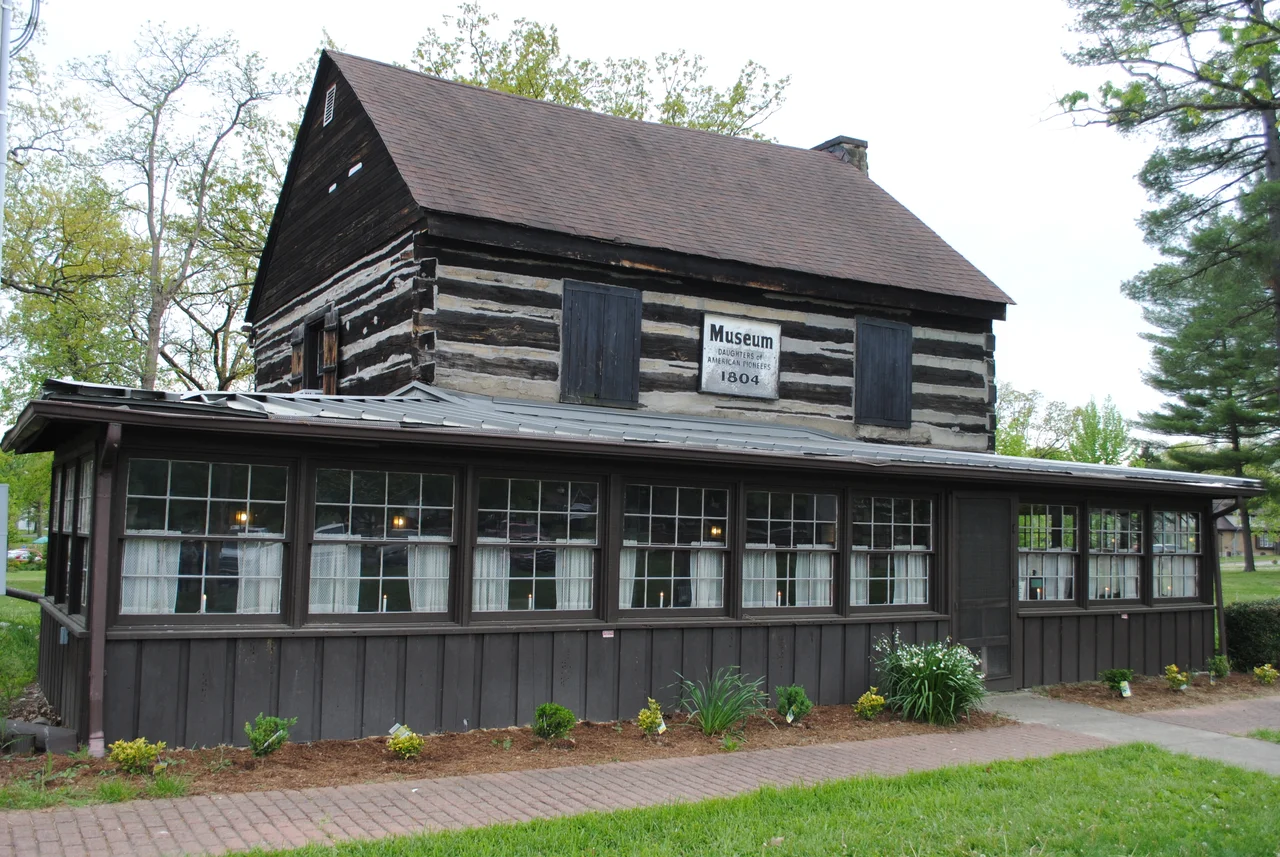

Parkersburg
Parkersburg was called Newport when it was first surveyed in 1773. The name changed in 1810 to honor Alexander Parker, the Pennsylvania veteran who had received the land as a grant from Virginia for his Revolutionary War service. Two centuries later, the city sits where the Little Kanawha River pours into the Ohio - 30,000 people on a bluff above the water, with the smaller Ohio town of Belpre directly across the river. The city's defining characteristic is its longstanding refusal to fit neatly into any single category. It was a petroleum town. It was a chemical-industry town. It was a regional retail center. It was the home town of a documentary filmmaker and a Republican senator and a fast-food expose. It is all of these things simultaneously, which is what makes it interesting.
The Rivers
Parkersburg exists because of the confluence of the Little Kanawha and the Ohio. River confluences were the most important strategic locations in pre-railroad America. Trade goods coming down the Little Kanawha from the interior of what is now West Virginia met the Ohio River system here, with onward connections to Pittsburgh upstream and to Cincinnati, Louisville, and eventually New Orleans downstream. Alexander Parker recognized the commercial potential. So did everyone who came after him. Blennerhassett Island, the Palladian-mansion estate of an Irish aristocrat that became the staging ground for Aaron Burr's 1806 expedition, sits in the middle of the Ohio about a mile downstream of the modern downtown.
The Oil Town
Burning Springs, 20 miles up the Little Kanawha, was producing commercial petroleum in 1836 - a fact that complicates the conventional story that the American oil industry began with Drake's Pennsylvania well in 1859. The crude floated downstream to Parkersburg, where it was loaded onto larger boats for shipment to refineries in Ohio. The Civil War boom and the post-war oil rush made Parkersburg one of the most prosperous cities in West Virginia in the second half of the 19th century. Money built the Blennerhassett Hotel in 1889. Money built the Julia-Ann Square and Avery Street neighborhoods. Money funded the 1905 Carnegie Library. The architecture of downtown Parkersburg is the architecture of an oil boom that lasted long enough to leave permanent infrastructure.
The Chemical Town
In the 20th century, the regional economy shifted. The petrochemical industry moved in. DuPont built a plant at Washington Works just south of the city in 1948 that became, for decades, one of the largest producers of Teflon in the United States. The plant also released, into the Ohio River and the surrounding aquifers, a perfluorinated compound called C-8 - a chemical that has since become one of the most notorious examples of industrial contamination in American history. The C-8 lawsuit settled in the 2000s. The book and 2019 film Dark Waters told the story to a national audience. Parkersburg's water supply, and the health of its residents, are still part of an ongoing legal and epidemiological process that has changed how the EPA and corporations treat persistent industrial chemicals.
The Film Town
Parkersburg has produced a surprising number of people connected to the film industry. Morgan Spurlock, who directed the 2004 documentary Super Size Me - the McDonald's expose that briefly made him one of the most famous documentarians in the country - was born and raised here. The 2006 Steven Soderbergh film Bubble was filmed in the Parkersburg area with a cast of local non-professional residents. The city has the kind of architecturally distinct downtown that filmmakers find useful when they want a setting that reads as authentically American but does not look like any specific place the audience has seen before. The neighborhoods of Julia-Ann Square and Avery Street, with their preserved Victorian and Colonial Revival housing, are part of why filmmakers keep coming back.
Getting Around
Parkersburg sits on Interstate 77, the major north-south corridor between Charleston and Akron. US-50 crosses the city east-west, connecting Athens, Ohio, with Clarksburg, West Virginia. The Ohio River and the bridges to Belpre give the city a connection to Ohio that is, in everyday economic terms, more important than its connection to most of the rest of West Virginia. West Virginia University at Parkersburg, a regional campus founded in 1961, has now absorbed the former Ohio Valley University campus and serves as the area's primary public higher-education institution. The newspaper of record is the Parkersburg News and Sentinel, on Juliana Street, which has been covering this city since the 19th century and whose archives are one of the best places to understand how Parkersburg has thought about itself across two hundred years.
From the Air
Located at 39.26 degrees N, 81.56 degrees W in Wood County, West Virginia, at the confluence of the Little Kanawha and Ohio rivers. Parkersburg is the largest city in the Mid-Ohio Valley region. Mid-Ohio Valley Regional Airport (KPKB) is about 6 nm north and serves as the area's primary general-aviation field. Recommended viewing altitude 3,000 to 4,500 feet MSL. Expect dissected plateau terrain throughout the area; the Ohio River and its industrial corridor dominate the landscape. Blennerhassett Island lies in the river about a mile downstream of downtown.
Nearby Stories
- Mountaineer Power Plant 5.3 km away
- Burning Springs Complex 7 km away
- Glenville, West Virginia 10 km away
- Strouds Run State Park 11 km away
- Salem University 26 km away
- West Virginia Penitentiary 42 km away
- The Y-Bridge of Zanesville 44 km away
- The Wheeling Suspension Bridge: The Longest Span in the World 81 km away