
Perth Museum
The stone weighs 152 kilograms. It is rough red sandstone, about 66 by 42 by 27 centimetres, with iron rings still set in either end from the days when it was carried by horseback to coronations. For seven hundred years, Scottish kings were crowned while sitting on it at Scone, three miles up the road. In 1296 Edward I of England took it south. In 1996 it came back to Edinburgh Castle. In 2024 it came home, to a purpose-built case in the former City Hall in Perth. Walking into the Perth Museum to see the Stone of Scone is, more than anything, an act of recognition: this is where the stone began.
A Hall, a Museum, a Homecoming
The building was Perth City Hall, opened in 1914 as the city's premier events venue, closed in 2005 when the new Perth Concert Hall took over its functions. For more than a decade after that it sat unused, the kind of grand civic shell that British towns struggle to reinvent. In January 2019, BAM Construction began a twenty-seven-million-pound conversion to a design by the Dutch firm Mecanoo, with the brief that the building would house the returning Stone of Scone and tell the story of the Kingdom of Alba - the early medieval Scottish kingdom for which Perth was a capital. A public competition in 2022 chose the new name. Sixty per cent of voters picked Perth Museum, beating out more imaginative alternatives. The Guardian called it the obvious choice.
The Stone Returns
The Stone of Scone, the Stone of Destiny, the coronation stone of the Scottish kings - it answers to many names. It was used to crown the kings of Scots from at least the ninth century until the late thirteenth, when Edward I removed it to Westminster Abbey, where it sat under the English coronation throne for seven centuries. It came north to Edinburgh Castle in 1996, and to Perth Museum in 2024. The museum was shortlisted for the Art Fund Museum of the Year 2025. Almost everyone agreed the stone was the centrepiece, and the building was built around it. But it is far from alone.
A Bronze Age Boat, an Egyptian Sarcophagus
The collection includes the Carpow Logboat, a 3,000-year-old vessel carved from a single oak trunk and excavated from the Firth of Tay in 2001. Beside it stands the sarcophagus of Ta-Kr-Hb, an Egyptian or Kushite woman who lived around 600 BCE. Researchers using forensic facial reconstruction revealed her face to the public in October 2024, identifying her as likely of Sudanese royal descent. She was treated as a curiosity in earlier centuries, displayed under various names, sometimes mishandled. The current display tries to do better, framing her as a person with her own story, restored to the dignity her sarcophagus was meant to grant her. The museum also holds the 17th century Glovers Incorporation dancing dress, a cast of the 64-pound salmon Georgina Ballantine landed in the Tay in 1922 - still the British record - and a fragment of the Strathmore meteorite.
A Kakapo Cloak From New Zealand
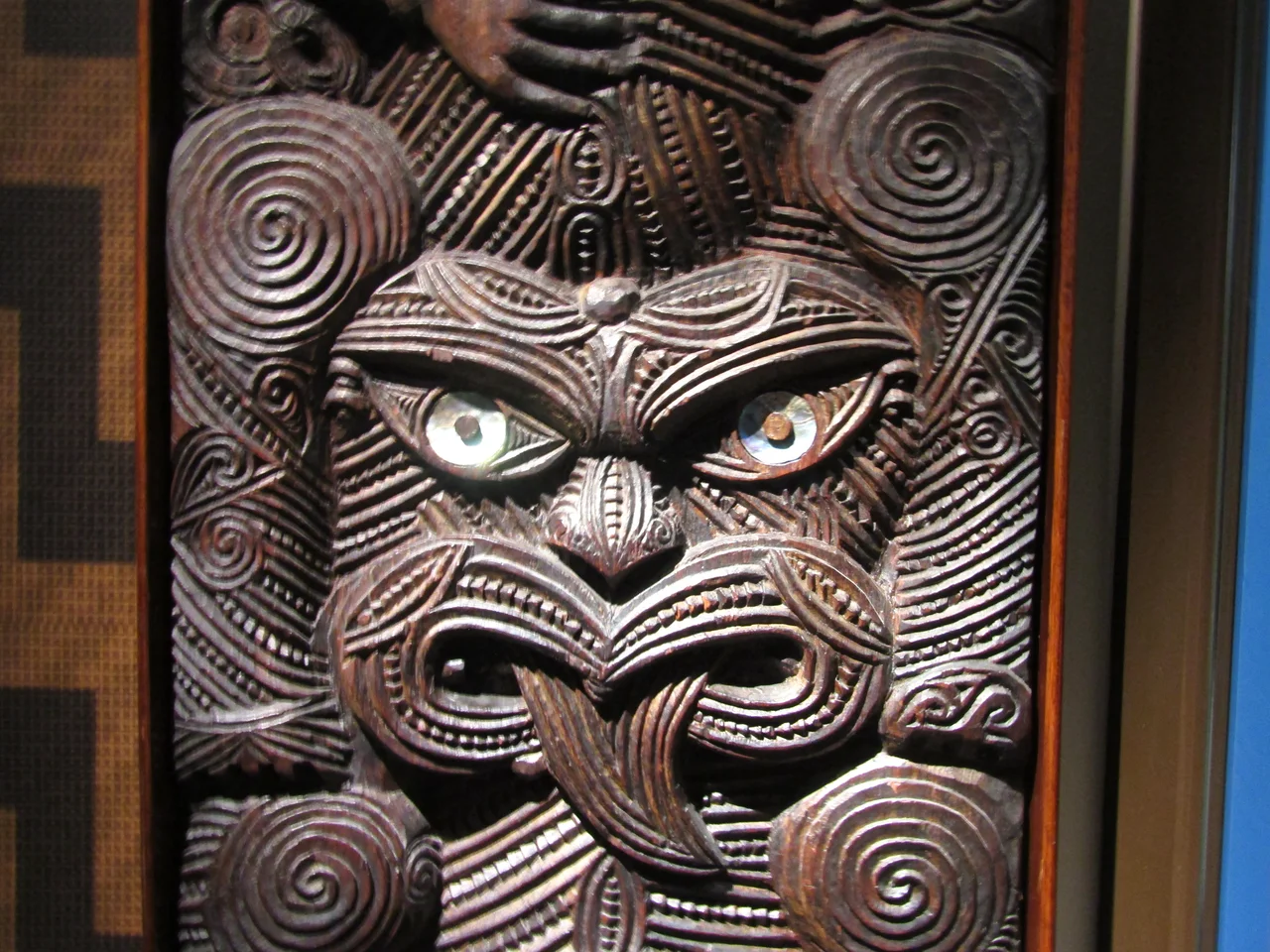
Perhaps the most surprising object in the collection is a Maori cloak made entirely of kakapo feathers, dating from the 1810s or 1820s. It is thought to be the only such cloak in existence anywhere in the world. The kakapo is a flightless, nocturnal New Zealand parrot, now critically endangered, and a cloak woven from its feathers is a treasure of almost incalculable cultural significance. The museum restored it in collaboration with the British Museum and Maori advisors, treating it not as an exotic prize but as a taonga - a treasure held in trust - whose proper care required Maori knowledge as well as conservation chemistry. It now lives, lit very softly, in the same building as the Stone of Scone.
Saint John's and the Streets Around
Perth Museum sits beside St John's Kirk, the medieval parish church that gave the city its older name of St John's Toun. The museum faces onto King Edward Street and is accessed from St John's Place, putting it at the geographic heart of the city. Outside, the streets carry the same names they did when the city was a capital. Inside, the objects tell that capital's story - from the Pictish stones and Bronze Age boats of the surrounding countryside, to the Egyptian and Maori treasures that travelled here through the channels of empire, to the stone on which Scottish kings were once crowned. It is, in a small Scottish city of 47,000 people, a remarkable concentration of meaning.
From the Air
Perth Museum sits at 56.40N, 3.43W in central Perth, beside St John's Kirk. Best viewed at 1,000-2,000 ft AGL above the city centre; the bulky former City Hall building is recognisable just west of the River Tay. Nearest ICAO airport is Perth (EGPT) 2 nm north-west; Dundee (EGPN) 18 nm east along the Tay. Kinnoull Hill rises just across the river as a natural waypoint.
Nearby Stories
- Drummond Castle 0.4 km away
- St Andrews 0.8 km away
- Aberfeldy 2.2 km away
- Yellowcraig 2.7 km away
- Fordell Castle 3 km away
- Battle of Sauchieburn 3.2 km away
- Battle of Dun Nechtain 3.3 km away
- Airlie Castle 13 km away