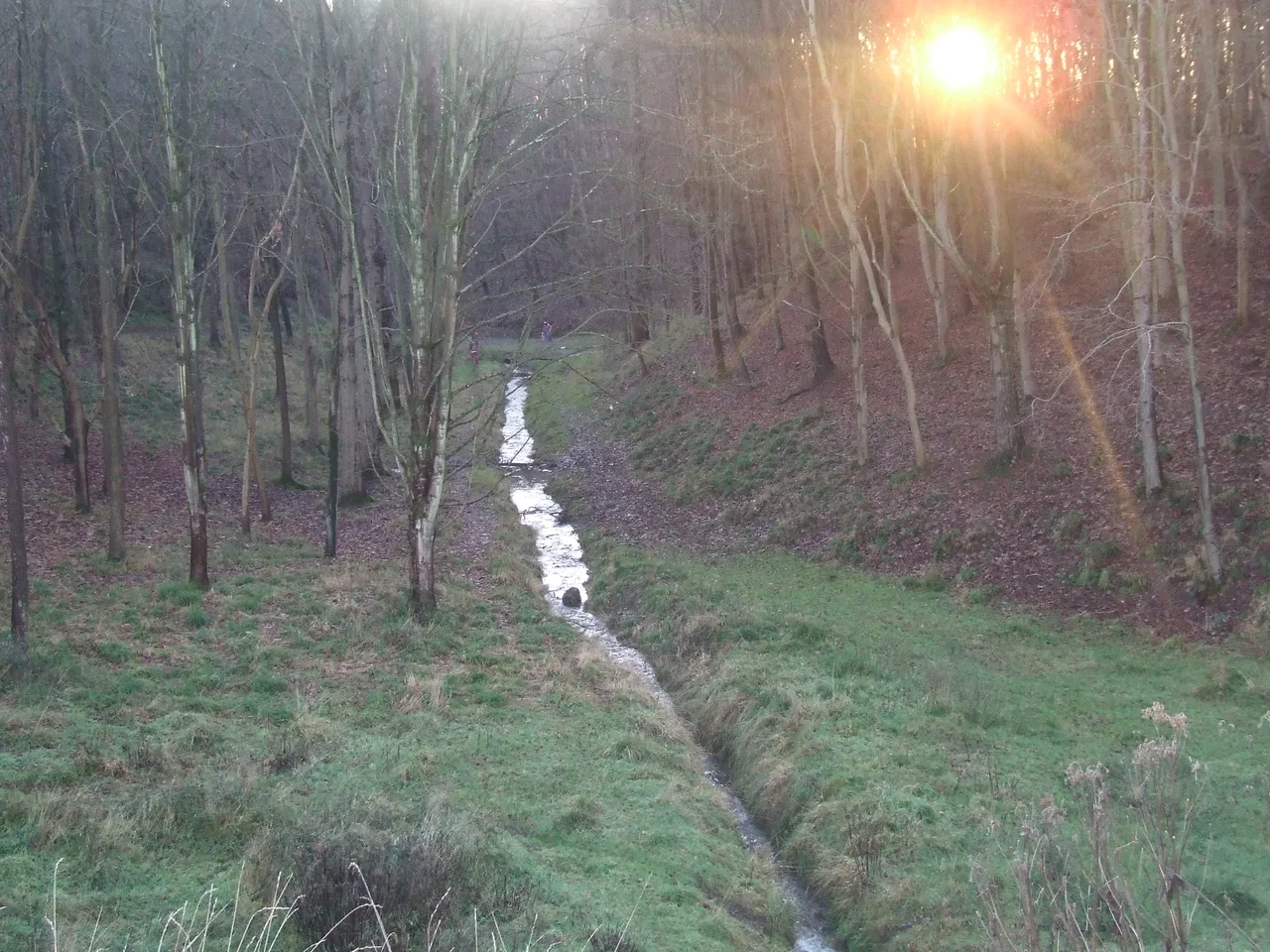

Phoenix Park
Inside an eleven-kilometre stone wall, just west of central Dublin, seven hundred and seven hectares of grassland and tree-lined avenues hold one of the strangest assemblages on the European continent. Wild fallow deer graze where Norman knights once held land. A sixty-two-metre Wellington obelisk - the largest in Europe - stands at one end. A thirty-five-metre Papal Cross stands at the other, where a million Dubliners gathered in 1979 to hear Pope John Paul II celebrate Mass. Two ambassadors live behind the wall, and so does the President of Ireland. This is Phoenix Park, an Irish landscape so densely layered with history that the Irish Government has formally asked UNESCO to call it a World Heritage Site.
A Hunting Park for the Duke
The name comes from a mishearing. In Irish the area was Fionn Uisce, "clear water," referring to a spring on the slope. English ears turned that into Phoenix, and Sir Edward Fisher built a country house here in 1611 and called it the House of the Phoenix. The land had belonged to the Knights Hospitaller of Kilmainham Priory before Henry VIII dissolved them and the Crown took everything. In 1662 a newly appointed viceroy, the Duke of Ormond, began enclosing two thousand acres around Fisher's house as a royal hunting park. By 1669 it had cost £31,000 and the wall was complete. Pheasants and wild deer ran loose inside. When Sir Christopher Wren's Royal Hospital was begun at Kilmainham in 1680, the park was reduced to its present extent, entirely on the north bank of the Liffey. In 1745 the Earl of Chesterfield opened the gates to the people of Dublin. They have been open ever since.
The Phoenix Park Murders
On the evening of 6 May 1882, Lord Frederick Cavendish and Thomas Henry Burke - the newly appointed Chief Secretary for Ireland and his Under-Secretary - were walking from Dublin Castle to the Viceregal Lodge across the park's central avenue. Members of a small republican splinter group called the Irish National Invincibles approached them on a dog cart. The assassins carried surgical knives. They killed both men in front of horrified witnesses. The killings shocked Victorian Britain and derailed delicate negotiations between William Gladstone's government and Charles Stewart Parnell over Irish Home Rule. Today a small cross, only sixty centimetres long, filled with gravel and cut thinly into the grass of Chesterfield Avenue, marks the spot. It is easy to walk past without noticing. That, in some sense, is the point - a quiet country lane that became, for one evening, a turning point in the long argument over Ireland's relationship with Britain.
Deer, Decimus Burton and the Wellington Obelisk
The herd of fallow deer descends, almost unbroken, from animals introduced by the Duke of Ormond in the 1660s. Between four hundred and four hundred and fifty of them still graze under the oaks. Three hundred and fifty-one plant species have been identified inside the wall, three of them rare and protected. In the nineteenth century the park had grown shabby, and the English landscape architect Decimus Burton was hired to redesign it. His work - new paths, gate lodges, levelled ground, planted trees - took almost twenty years and gave the park most of the look it has today. Robert Smirke's Wellington Monument, begun in 1817, was meant to be even taller than its sixty-two metres; the publicly subscribed money ran out. Its four bronze plaques were cast from cannon captured at Waterloo. Dublin Zoo, founded in 1830 and opened the following year, is the third oldest in the world.
A Pope, a Grand Prix and a Cricket Club
On 29 September 1979 the Papal Cross was raised at the edge of the Fifteen Acres, a great white steel structure thirty-five metres high. Workers erected it only a fortnight before Pope John Paul II arrived. The congregation at his open-air Mass numbered roughly one million - equal to the entire population of Dublin at the time. Pope Francis returned to celebrate Mass at the same spot in 2018. Sport, too, has woven itself through the park. Phoenix Cricket Club, founded in 1830 by John Parnell, the father of Charles Stewart Parnell, is the oldest cricket club in Ireland. Motor racing began here in 1903 with the Irish Gordon Bennett Speed Trials and continued through three Irish Grand Prix events. Bohemian Football Club was founded in a gate lodge in 1890. U2 played the free festival in 1978. Coldplay, Kanye West, Ed Sheeran and Arcade Fire have all played here. On 18 July 2022, a weather station inside the wall recorded 33.0°C, a new July high for Ireland.
From the Air
Located at 53.36°N, 6.33°W immediately west of central Dublin, north of the River Liffey. Best viewed at 2,500-4,500 ft AGL; the park reads as a giant green rectangle, the largest unbroken green space in any European capital. Look for the Wellington obelisk near the south-east corner and the Papal Cross at the Fifteen Acres. Dublin Airport (EIDW) lies 9 km to the north-east; Weston (EIWT) 14 km to the west.
Nearby Stories
- Athcarne Castle 4.2 km away
- Wicklow Mountains National Park 10 km away
- Castlepollard 12 km away
- Portlaoise 19 km away
- Edward Pakenham 20 km away
- German submarine U-1051 39 km away
- HMS Manners (K568) 52 km away
- HMS Tyler 61 km away