.JPG)
Plopsaland Belgium
In 1935, a Belgian beekeeper named Alberic-Joseph Florizoone opened a little place near the dunes of De Panne where you could buy a jar of his honey and watch bees through a glass hive. He called it Meli Park - meli being honey in Greek and a gentle pun in Flemish. Sixty-five years later, on 20 April 2000, the same patch of ground reopened with an electronic gnome in a red pointy hat as its mascot. Welcome to Plopsaland: a theme park named, as the owners will cheerfully tell you, by stitching together the first two syllables of Studio 100's bestselling children's characters - Kabouter Plop the gnome and Samson the talking sheepdog. The alternative name they considered was Pannadine. They dropped it when they realised it was already a brand of skin cream.
The Honey Years
Meli Park was, for its first decades, exactly what its founder intended: a working apiary you could visit, with a shop attached. Florizoone wanted Belgians to understand where honey came from - to see the bees, learn the seasonal rhythms of the hive, taste the difference between clover and heather and linden. To compete with the seaside resorts a few kilometres up the coast at De Panne, Meli slowly added small attractions across the decades: gardens, a small train, exhibits, the kind of family draws that turned an educational stop into a destination. By the late twentieth century it was a modest regional theme park aimed at school groups and Belgian holidaymakers. It was beloved. It was also losing money.
Enter the Gnome
Studio 100 is a Belgian children's media empire that very few people outside Flanders had heard of until their characters started taking over Plopsaland. The company was founded in 1996 by Gert Verhulst, Hans Bourlon, and Danny Verbiest - the latter the original puppeteer of Samson, a fluffy talking dog who had been a fixture of Flemish children's television since 1989. Studio 100 added Kabouter Plop (literally 'Gnome Plop'), a friendly red-hatted forest dweller, in 1997. Both shows were huge in Dutch-speaking Belgium and the Netherlands. In 1999 the Florizoone family sold the struggling Meli Park to Studio 100 and the broadcaster VMMa. The winter was spent ripping out honey-themed decor and installing gnomes. The reopening on 20 April 2000 came with parking shortages and catering panics. The crowds came anyway.
An Empire of Plops
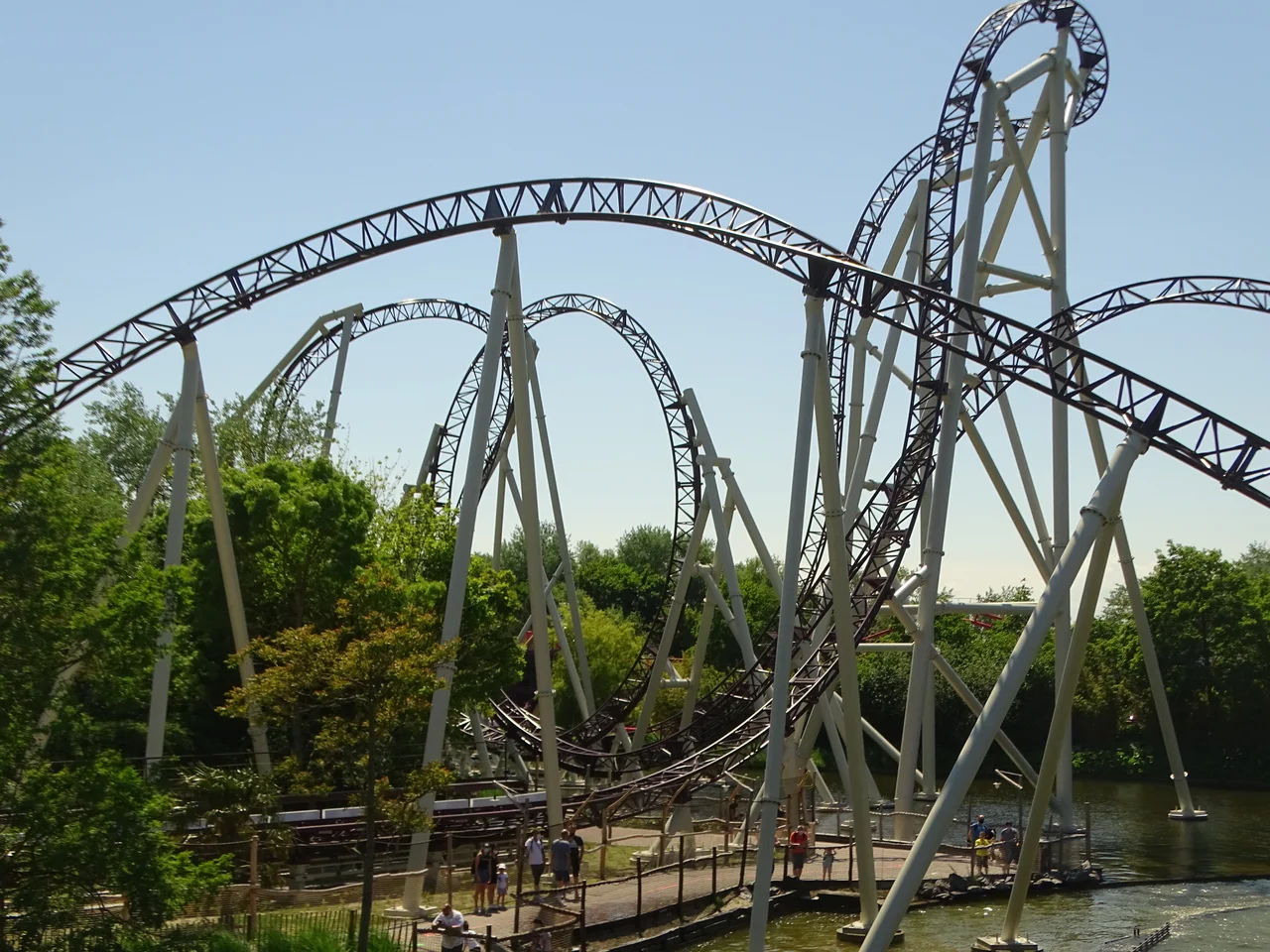
Studio 100 bought out its broadcasting partner in 2005 and turned Plopsaland into the flagship of a small theme-park empire. To distinguish it from new sister parks like Plopsa Indoor Hasselt and Plopsaland Ardennes, the De Panne site was renamed Plopsaland De Panne - and then, in summer 2025, simply Plopsaland Belgium to match the corporate naming across all the parks. New rides arrived in waves themed to Studio 100 properties: Anubis the Ride in 2009, named after a popular tween mystery series; Vic the Viking-land in 2013, based on the German-Belgian animated series; Heidi the Ride in 2017; and in 2021 The Ride to Happiness, a spinning multi-launch coaster themed around the Belgian girl group K3 and built by the Italian manufacturer Mack Rides. Circus Bumba followed in 2023. The park now offers 55 attractions including 7 roller coasters.
What Got Left Behind
Koning Plopsa - King Plopsa, a crowned cartoon gnome - was the resort's official mascot from 2000 to 2012, when he was quietly retired from logos and parade shows. You can still find him painted on a few walls around the resort, a piece of early-millennium branding preserved like a fossil. The honey, too, is mostly gone - though Meli Park has occasional revival events that draw older Belgians who remember coming as children to look at bees. The shift from beekeeping pedagogy to coaster-driven family resort took about twenty years. It tracks an arc many small European parks travelled: from local educational curiosity to global-style themed entertainment, financed by characters with their own TV shows and toy lines and streaming back-catalogues.
Why It Works Here
Plopsaland Belgium sits in Adinkerke, a village inside the De Panne municipality on the Belgian coast about 5 km from the French border. It is a 90-minute drive from Brussels, 45 minutes from Ghent, an hour from Lille, and walkable from De Panne railway station - which makes it one of the most accessible major theme parks in northwest Europe. Studio 100's characters are recognised across Flanders, the Netherlands, and increasingly Germany, where the company has built complementary parks. The dunes of the North Sea coast are minutes away. After a day of meeting a man in a gnome costume and riding a coaster named after a K3 song, families can go put their feet in the Channel - the same Channel from which Cromwell's redcoats once stormed the dunes a few kilometres west, fighting a different and grimmer kind of war.
From the Air
Coordinates 51.08 N, 2.60 E - on the Belgian coastal plain about 5 km from the French border at De Panne, just inland from the dunes. From altitude the park is unmistakable: a cluster of roller-coaster tracks and parking lots surrounded by flat polder farmland. Nearest airports: Ostend-Bruges (EBOS) 35 km northeast, Calais-Dunkerque (LFAC) 35 km southwest, Lille-Lesquin (LFQQ) 80 km south. The coastal location can bring rapid weather changes off the North Sea.
Nearby Stories
- Port of Zeebrugge 3 km away
- 1921 SNETA Farman Goliath ditching 4.5 km away
- 1382 Dover Straits Earthquake 7.7 km away
- HMS Wakeful (H88) 8.2 km away
- Battle of Mouscron 8.4 km away
- Battle of Cassel (1677) 10 km away
- 1933 Imperial Airways Ruysselede Crash 12 km away
- Boulonnais 26 km away