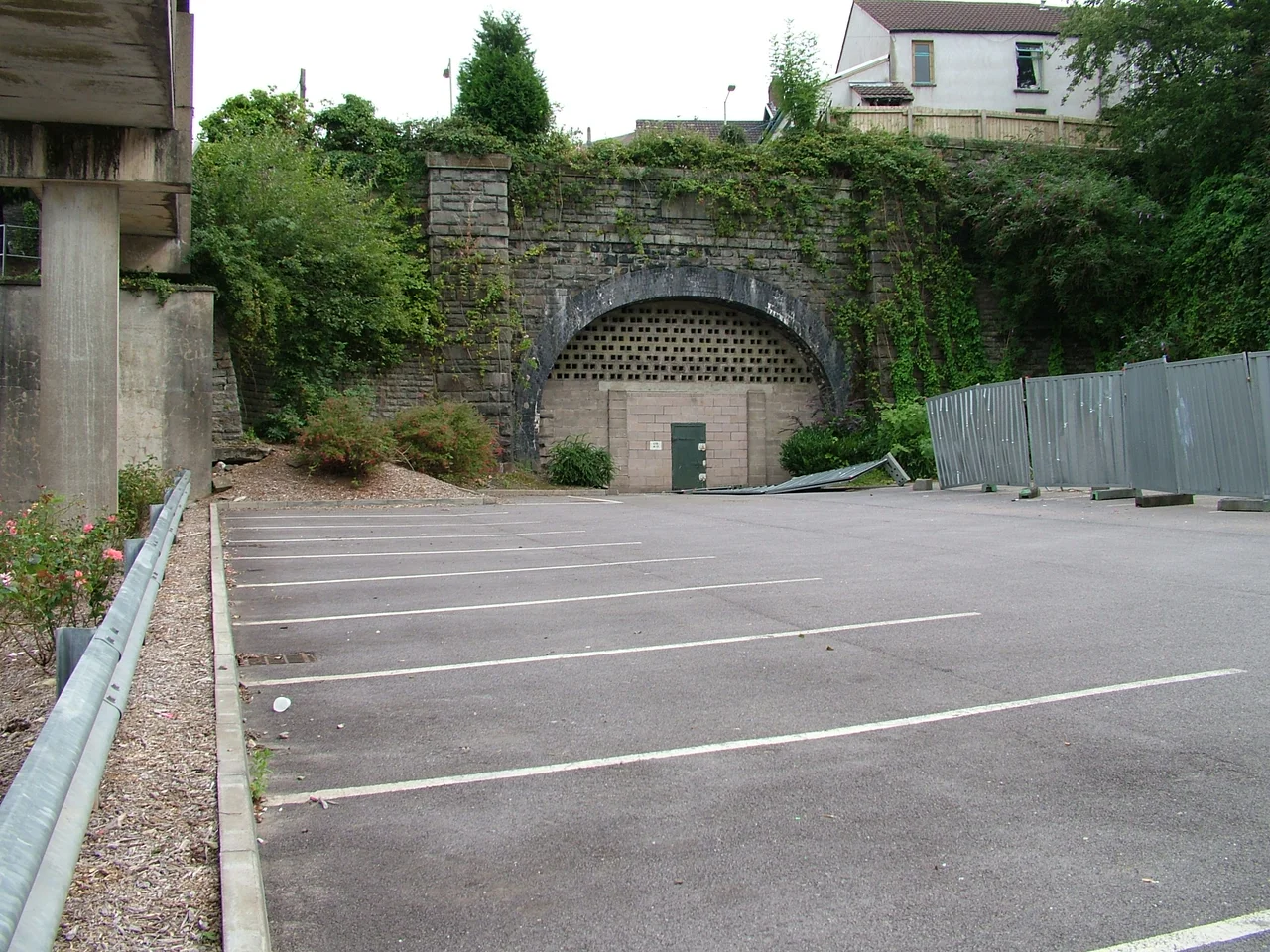

Pontypridd Railway Accident
Signalman Quick at Rhondda Cutting Junction had accepted the coal train onto his stretch of line. Forty minutes later he accepted the 09:10 passenger train from Treherbert to Cardiff onto the same line, having forgotten the coal train was still there. Signalman Hutchings at Gyfeillion Lower had not given the Train Entering Section signal that would have reminded Quick. He had also not put his signals back to Danger when he realised the conflict. The two-position block instruments they used had a setting called Line Clear but no separate setting for Line Blocked. At 09:48 on Monday 23 January 1911, the passenger train carrying about 100 people rounded the curve at Gyfeillion Lower with a clear signal ahead and collided with the stationary coal train. The front carriage's underframe lifted as it crumpled and drove like a battering ram through the carriage behind it. Twelve people died.
The Coke Ovens Bend
The accident took place at Hopkinstown, just outside Pontypridd, on a section of the Taff Vale Railway that ran through tight curves on the way down to Cardiff Docks. The locals called this spot the Coke Ovens, after the works that lined the trackside. The 09:10 from Treherbert had stopped at every Rhondda Valley village on the way down - Treorchy, Tonypandy, Porth - and was carrying maybe a hundred Monday-morning passengers heading to Cardiff. The coal train, ahead of it on the same line, had stopped for reasons that no one on the passenger train could have known. There were no automatic warnings. The driver of the passenger train had a clear distant signal and a clear home signal at Gyfeillion Lower, and the rules of his trade were that a clear signal meant the line was clear. He was running at about 35 miles an hour when his headlamp picked out the dark shape of the coal train wagons ahead, too close to stop in time.
What Should Have Happened
Under Rule 55 - the regulation that governed trains stopped between signals - the fireman of the coal train should have walked back to the nearest signal box to remind the signalman of the train's presence. He did not. He stayed in the cab. That single failure of Rule 55, the inquest concluded later, had set the conditions for the disaster. The signalmen then made it real. Hutchings at Gyfeillion Lower had taken the coal train onto his section but had failed to send the Train Entering Section signal back to Quick at Rhondda Cutting Junction. So Quick, looking at his block instrument, did not have a clear visual cue that the coal train was still in his block. Memory failed him: he had accepted the train forty minutes earlier and now, with the passenger train coming, he accepted it forward. Hutchings, who could see what was about to happen, did not put his signals back to Danger in time. Thirty seconds at Danger would not have stopped the passenger train, but it would have slowed it - and a less violent collision would have killed fewer people.
The Carriage That Telescoped
The fatal mechanism was a piece of railway physics that the Edwardian era understood well and feared. The carriages of the period were built on heavy wooden underframes that gave them strength along their length but failed in compression. When the front carriage struck the back of the coal train, its underframe levered upward and rode forward into the carriage immediately behind it - what railwaymen called telescoping. The second carriage was shredded from below as the first drove through it. The passengers in the front carriage survived in better numbers than those in the second. Most of the dead were in that telescoped second coach. Twelve people - some accounts said eleven - died at the scene or in hospital in the hours afterward. Many more were injured. Pontypridd's New Inn Hotel hosted the preliminary hearings the following day; the coroner's inquest opened at the Police Court that Thursday.
The Verdict
The jury could not agree on a definite verdict. They censured the fireman of the coal train for not following Rule 55. They returned an open verdict on the cause overall. The Board of Trade inquiry that followed was more decisive: it identified the chain of error from Hutchings to Quick to the failure to set signals back to Danger. It also identified a deeper culprit - the two-position block instruments in use at Gyfeillion Lower and Rhondda Cutting Junction. These instruments had only two settings: Line Clear and the absence of Line Clear. They did not have a positive Line Blocked indication. If they had been three-position instruments with a distinct Line Blocked setting, Hutchings could not have offered the passenger train forward, and Quick could not have accepted it, while the instrument still showed Line Clear for the coal train ahead. The hardware itself had allowed the memory failure to become a collision.
The Slow Replacement
Three-position block instruments existed in 1911. They had been recommended for years. The Hopkinstown disaster joined a long list of inquiry reports that recommended replacing two-position equipment across the British network. The Taff Vale Railway and its successors changed their signalling slowly, in the way British railways usually changed things - one box at a time, when budgets allowed, with timetables and engineering disruption being weighed against the lives that the change would save. By the mid-twentieth century three-position instruments and the block telegraph systems built around them were standard. The Hopkinstown bend still exists - the line through Pontypridd still carries passenger trains - but the rails have been resignalled and the carriages built since the 1950s no longer telescope the way the 1911 stock did. Names of the twelve dead appear in graveyards across the Rhondda. The accident is largely forgotten outside Pontypridd. The lessons it taught the railway industry are not.
From the Air
The site of the Pontypridd Railway Accident sits at 51.605 degrees north, 3.35 degrees west, at Hopkinstown immediately west of Pontypridd in the Rhondda Cynon Taf valley. From the air the location is identifiable by the curve of the railway line and the A4058 road following the River Rhondda. Cardiff Airport (EGFF) is about 15 nautical miles south; Bristol (EGGD) lies about 33 nautical miles east. The line is still in use - the modern Treherbert-Cardiff service follows the same route the 1911 train took, though on resignalled track with modern rolling stock.
Nearby Stories
- Tidal Lagoon Swansea Bay 2.6 km away
- Skenfrith Castle 3 km away
- Caerwent 3.7 km away
- Brecon Beacons National Park 5.2 km away
- Cheddar Gorge 6 km away
- Battle of Cadfan 9.3 km away
- Minehead Lifeboat Station 16 km away
- Ilfracombe Lifeboat Station 22 km away