
Port Chicago: The Explosion That Desegregated a Navy
The flash was visible from San Francisco, forty miles away. At 10:18 PM on July 17, 1944, two transport ships being loaded with ammunition at the Port Chicago Naval Magazine detonated with a force later estimated at five kilotons -- roughly a third of the bomb that would destroy Hiroshima thirteen months later. Three hundred and twenty sailors and civilians died instantly. The pier, the ships, a locomotive, and sixteen boxcars loaded with munitions simply ceased to exist. Two-thirds of the dead were Black sailors, assigned to the most dangerous work at the facility because the segregated Navy considered ammunition handling an appropriate duty for African American enlisted men. What happened next -- the refusal, the mutiny trial, the slow reckoning -- would help end racial segregation in the American military.
The Most Dangerous Job on the Home Front
Port Chicago's naval magazine sat on the southern shore of Suisun Bay, about thirty-five miles northeast of San Francisco. During World War II, it served as the primary ammunition loading facility for the Pacific Theater of Operations. Bombs, shells, torpedoes, and small-arms rounds arrived by rail, were stored in bunkers and revetments across the facility's grounds, and were loaded by hand onto transport ships bound for the war. The men who did this loading were overwhelmingly Black enlisted sailors, supervised by white officers. They worked under enormous pressure to move munitions quickly, and the conditions were dangerous by any standard -- heavy ordnance handled with inadequate training, under time quotas that prioritized speed over safety. The work was grueling, and the racial hierarchy that assigned it was unmistakable: white sailors served on the ships and in technical roles, while Black sailors loaded the cargo that could kill them.
A Night in July
The explosion of July 17, 1944, remains the largest domestic loss of life during World War II. The SS E.A. Bryan and the SS Quinault Victory were being loaded at the facility's pier when something -- the precise trigger was never determined -- set off the combined ordnance aboard both vessels. The blast obliterated the pier and the ships, shattered windows in towns miles away, and sent a shockwave across the bay that rattled buildings in San Francisco. Of the 320 killed, 202 were African American enlisted men. The disaster accounted for nearly 15 percent of all Black naval casualties during the entire war, concentrated in a single moment at a single facility. Survivors were given thirty days of leave, then ordered to return to Port Chicago and resume loading ammunition under the same conditions.
The Mutiny That Changed Everything
When 258 Black sailors returned from leave and were ordered back to the loading docks, 258 of them refused. They were willing to serve -- they were willing to do any other duty the Navy asked of them -- but they would not go back to loading ammunition at Port Chicago. The Navy charged 50 of them with mutiny, a crime that carried the death penalty in wartime. The court-martial drew national attention. Thurgood Marshall, then chief counsel for the NAACP and a future Supreme Court justice, attended the trial and publicly challenged the proceedings, arguing that the men had been singled out because of their race. All 50 were convicted. None received the death penalty, but they were sentenced to prison terms of eight to fifteen years. The trial became a flashpoint in the growing movement for civil rights within the military, and its reverberations reached the highest levels of government.
From Mutiny to Desegregation
The Port Chicago disaster and the mutiny trial that followed became major catalysts for the desegregation of the United States Navy. The case laid bare the consequences of a system that assigned the most hazardous duties to Black servicemen while denying them advancement, training, and basic equity. In 1946, the Navy began desegregating its ranks. Two years later, President Truman signed Executive Order 9981, mandating equal treatment and opportunity in all branches of the armed forces. The connection between Port Chicago and that executive order is not a straight line -- many factors converged -- but historians consistently identify the disaster and the mutiny as pivotal moments that forced the military establishment to confront the cost of institutionalized racism. The 50 convicted sailors were quietly released from prison over the following years. Efforts to secure a formal exoneration have continued into the twenty-first century.
What Remains at the Water's Edge
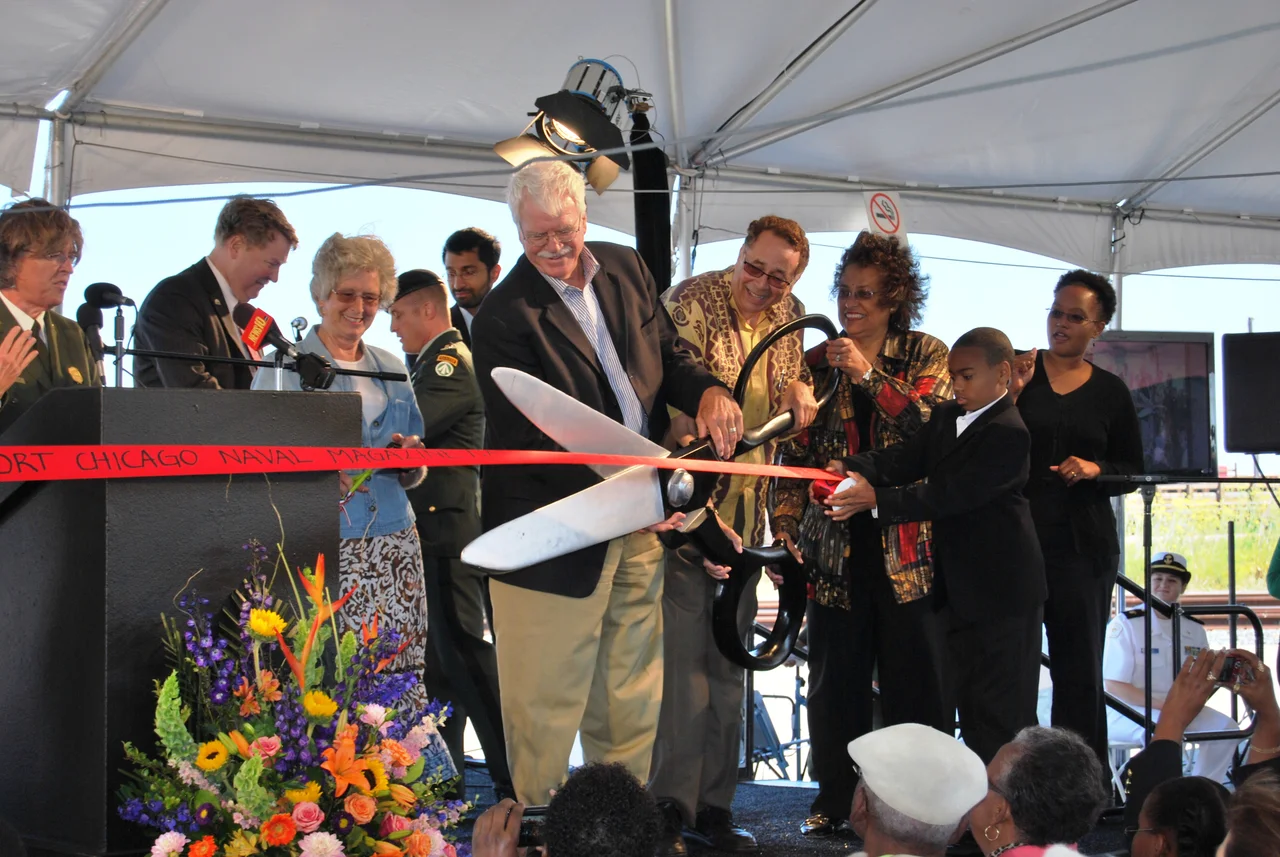
The Port Chicago Naval Magazine National Memorial was authorized by Congress in 1992 and dedicated in 1994, fifty years after the explosion. It sits on the grounds of the Military Ocean Terminal Concord, the successor facility to the wartime naval magazine, and is administered by the National Park Service. The memorial became the 392nd official unit of the National Park System on October 28, 2009. Access is limited to reserved guided tours -- the site remains within an active military installation -- but the memorial preserves the memory of the 320 who died and the broader struggle for equality that their deaths set in motion. The Port Chicago Committee has advocated for expanding the memorial to encompass 250 acres of the original waterfront, including surviving railroad revetments, boxcars from the 1940s, and a chapel whose stained-glass windows depict the wartime operations. For now, the memorial is quiet -- a place of grass and markers where the pier once stood, looking out over the bay where the ships were loaded and where they were destroyed.
From the Air
Located at 38.06N, 122.03W on the southern shore of Suisun Bay near Concord, California. The memorial sits within the Military Ocean Terminal Concord (MOTCO), a restricted military facility visible as a large waterfront compound east of the Benicia-Martinez Bridge. The site is identifiable by its pier area and the orderly layout of the former naval weapons station. The Suisun Bay Reserve Fleet anchorage is visible to the northwest. Nearby airports include Buchanan Field (KCCR) approximately 8nm south and Travis AFB (KSUU) 20nm northeast. The surrounding landscape is flat marshland transitioning to the brown hills of Contra Costa County.
Nearby Stories
- Rancho Nicasio 2.6 km away
- From Wartime Runways to Racing Legends 3.9 km away
- Ghost Ship Warehouse Fire 5.5 km away
- Altamont Free Concert 9.2 km away
- The Night Napa Burned 10 km away
- Isleton: The Half-Square-Mile Town That Made Perry Mason Famous 12 km away
- The Last Lakes in the Valley 14 km away
- The Farallon Islands: California's Forbidden Rock 29 km away