_July_2019.jpg)
Port St Mary Lifeboat Station
In 1894, a Birmingham property developer named James Stevens left his estate to the Royal National Lifeboat Institution. The sum was fifty thousand pounds, enough at the time to buy twenty lifeboats. It remains the largest single donation the RNLI has ever received from one individual. The very first of those twenty boats came to Port St Mary on the Isle of Man in 1896, a thirty-foot pulling-and-sailing lifeboat named James Stevens No.1, costing 463 pounds, and over the next twenty-one years she launched twenty-two times and is credited with saving fifty-five lives. The station's history is, in essence, this kind of long chain of named gifts, named boats, and named lives saved. People who never saw the Isle of Man paid for the boats that pulled Manx people out of the Irish Sea.
How the Station Came to Be
In April 1895 the Deputy Chief Inspector of Lifeboats submitted his report on the Isle of Man to the RNLI Committee of Management. A meeting on 13 June 1895 decided that Port Erin lifeboat station should close and a new station be established at Port St Mary instead. Port Erin in the end stayed open, but Port St Mary was duly opened in 1896 as the sixth lifeboat station on the island. (Castletown closed in 1922, leaving the five Manx stations that still exist today: Douglas, Peel, Ramsey, Port Erin, and here.) The choice of Port St Mary made sense. The village had a proper sheltered harbour, unlike Port Erin's exposed bay, and its fishing fleet meant a ready supply of trained boatmen. The boathouse went up at Lime Street, on the harbour. James Stevens No.1 arrived in 1896. The crew were already there.
From Oars to Engines
The RNLI's founder, Sir William Hillary, had argued for steam-powered lifeboats from the 1820s. It took over a hundred years for Port St Mary to get one. The first motor lifeboat, Sir Heath Harrison, arrived in 1936. By then the station had been pulling and sailing for forty years. The transition to engines transformed what a lifeboat could do. A pulling and sailing boat could only go where the wind and the oars allowed; an engined boat could punch out of the harbour into a south-westerly gale and reach a casualty miles offshore that the older boats would never have made. The station kept upgrading as the technology improved, through several generations of motor lifeboats, each named after a donor and each formally christened on the harbour with a brass band, exactly as the first one had been.
The Gough Ritchie Lifeboats
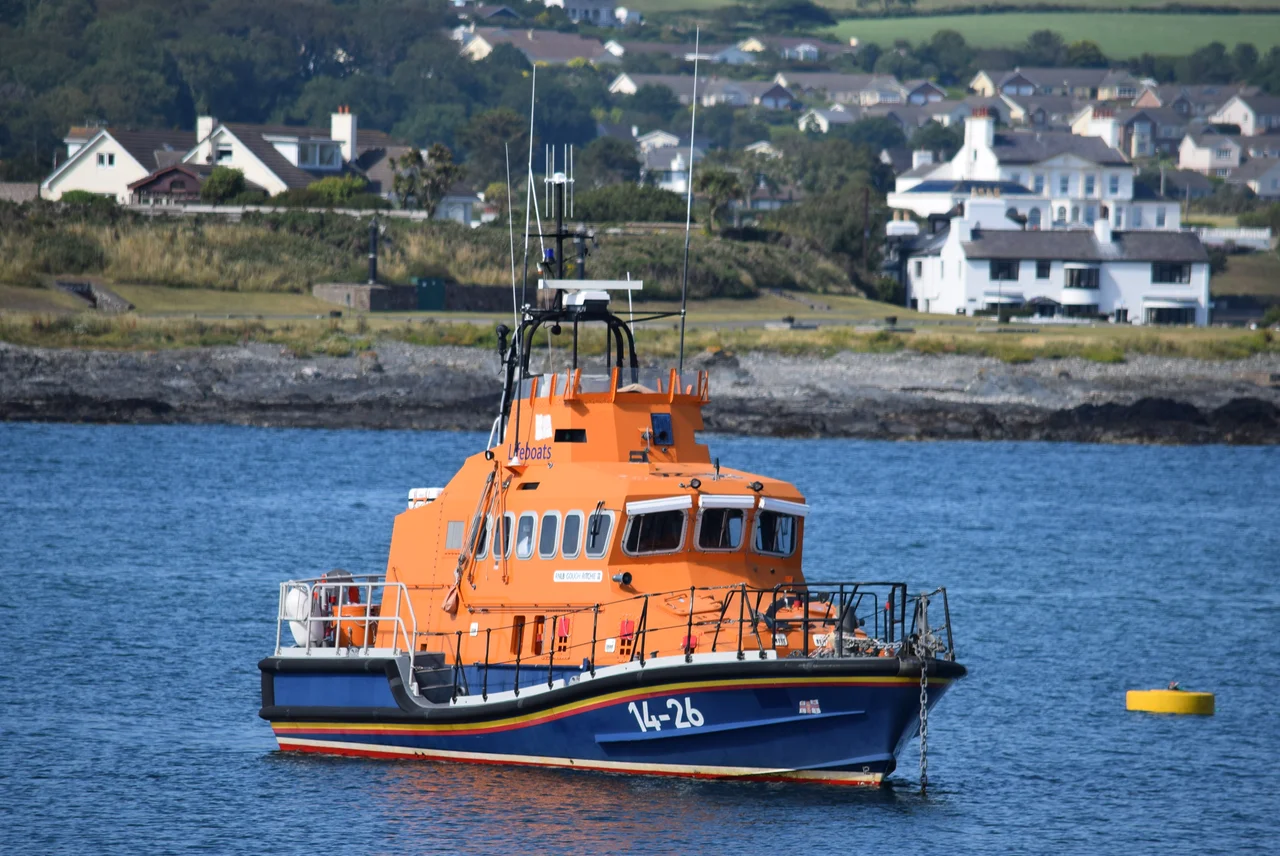
James and Ann Ritchie were keen seafarers and the family behind Heron and Brearley, the brewery that produces Okells, the Isle of Man's principal beer. In 1970, shortly before James' death, they funded a new lifeboat for Port St Mary. After James died, his widow Ann Ritchie (born Ann Gough) funded a second, and in 1976 the station took delivery of the 54-06 Gough Ritchie. When Ann Ritchie died in 1990 the residue of her estate became the Gough Ritchie Charitable Trust, with one third of its income going to the RNLI for use on the Isle of Man. In 1998 the trust funded a third lifeboat for Port St Mary, the 14-26 Gough Ritchie II, a Trent-class all-weather lifeboat, which served as the station's main boat for twenty-seven years until 2025. The Ritchies' generosity has supplied five lifeboats to stations across the Isle of Man. Five boats. Several decades of rescues.
The Night of 6 November 2021
In the early hours of 6 November 2021, a yacht in trouble off the south coast of the island called for help. Her propellers had fouled and she was being driven toward the rocks. Both the Port St Mary all-weather lifeboat and the inshore boat launched into challenging conditions. The all-weather boat, the Gough Ritchie II, could not get close enough to the yacht or tow her clear. Helm Richard Leigh and his crew on the inshore boat, working in the shelter the larger boat provided from the weather, were able to reach the yacht and take off her three crew, transferring them to safety on the Gough Ritchie II. For this service Richard Leigh was awarded the RNLI Bronze Medal in August 2022, the first medal for gallantry that the Port St Mary station has been awarded in its 126-year history. Three people came home. The medal is on display at the station.
Today and the New Boat
In spring 2025, the relief lifeboat 14-15 Henry Heys Duckworth (ON 1213) was placed on station, replacing the long-serving Gough Ritchie II. A small inshore lifeboat, Frank Martin (D-873), has been on station since 2023. Two boats, one harbour, an operating area that includes the treacherous water around the Calf of Man, the Sound, and the south-east coast as far as Langness Peninsula. From the air the station is the building immediately north of the harbour mouth, the all-weather boat visible at her mooring inside the breakwater on most days. Like every RNLI station, the crew are volunteers. They live on Lime Street, Bay View Road, Beach Road, the lanes around the harbour. They keep pagers next to the bed. On a bad night they get out of that bed and walk down to the boathouse. They have been doing it since 1896.
From the Air
Port St Mary Lifeboat Station sits at 54.070 degrees north, 4.735 degrees west, on Lime Street at the harbour of Port St Mary, on the south coast of the Isle of Man. Best viewed at 1,500 to 2,500 feet on a coastal pass, with the sheltered horseshoe-shaped harbour as the clearest landmark and the all-weather lifeboat usually visible on her mooring inside the breakwater. Nearest airport is Ronaldsway (ICAO: EGNS), about five miles to the north-east. The station's operating area covers the south of the Isle of Man, the Sound, and the waters around the Calf of Man and Kitterland; strong tidal flows in the Sound.
Nearby Stories
- RAF Jurby Head 14 km away
- German submarine U-246 16 km away
- German submarine U-1051 17 km away
- Kilclief Castle 18 km away
- Ardglass 31 km away
- St Bees Lighthouse 44 km away
- Trwyn Du Lighthouse 54 km away
- Seascale Lifeboat Station 61 km away