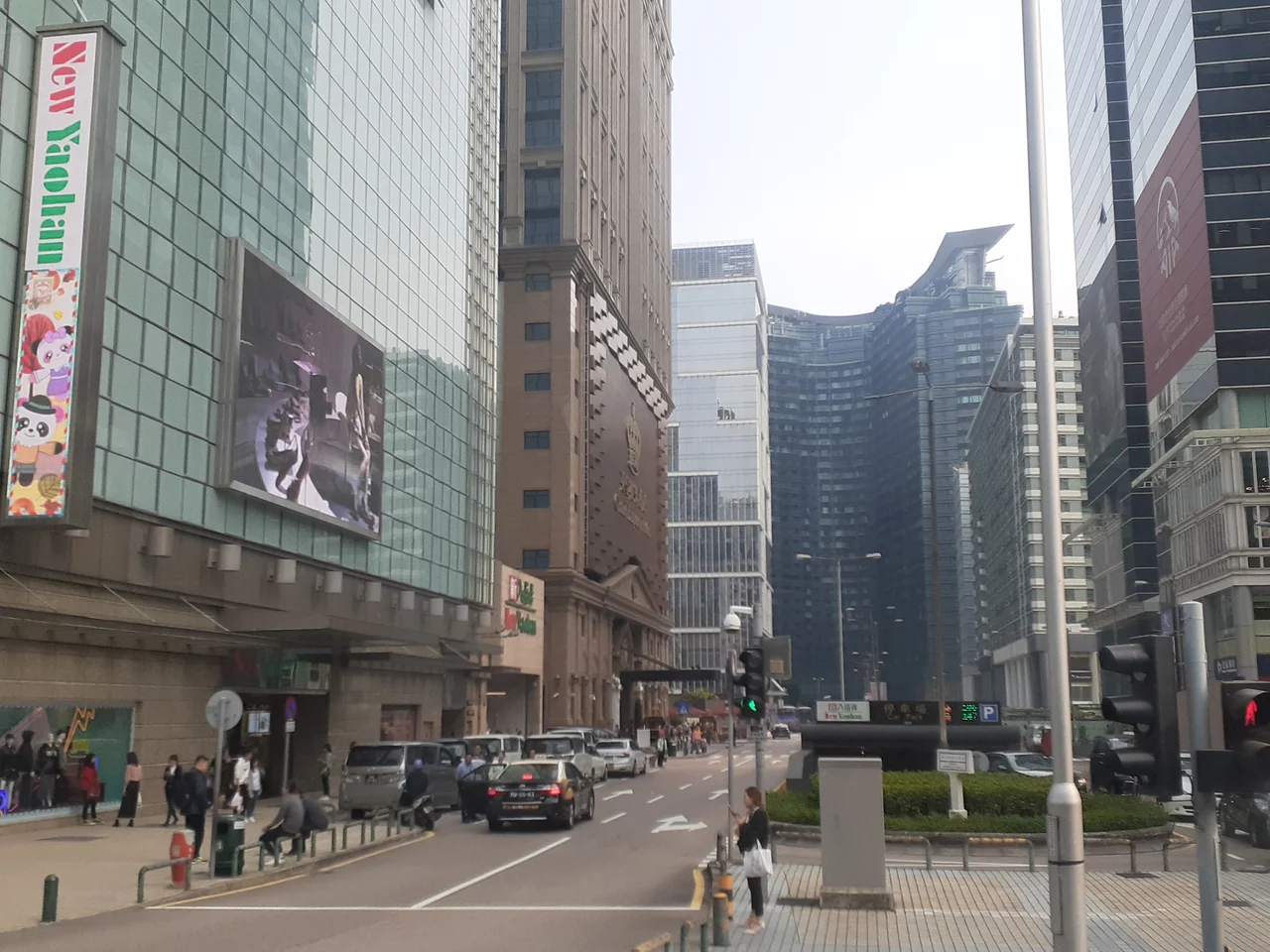

Praia Grande (Macau)
Artists couldn't stop painting it. Through the early nineteenth century, every painter who passed through Macau turned toward the same view: the gentle arc of Praia Grande Bay, its water bright and calm, the colonial buildings lining the shore in pastel rows, the hills rising behind. It was called, with some confidence, probably the most depicted view of nineteenth-century Macau. British painter George Chinnery lived in Macau for over two decades and returned to the bay again and again. French cartographers sketched it. American merchants described it in letters home. The bay was Macau's face to the world — and for a city that prided itself on elegance amid trade, the face mattered.
The Promenade That Defined a City
Praia Grande — the Great Beach — runs along the eastern shore of the Macau Peninsula, sheltered between two fortresses: the Fortress of St. Francis to the northeast and the Fortress of Bom Parto to the southwest. Within that protected arc, the bay served as the city's chief promenade for generations. The governor's palace stood here. Administrative offices lined the waterfront. Consulates looked out across the water toward the Pearl River Delta and the distant hills of Guangdong.
For wealthy Macanese families, the Praia Grande was their address of choice in the 1940s when the area became one of the main residential zones for the Macanese community. To have a house on the Praia was a social statement, a claim to belonging in this particular hybrid city. The avenue itself, broad and sea-breezy, offered the kind of colonial grandeur that Macau's merchants wanted to signal to visitors arriving by water: this place is civilized, prosperous, and worth stopping in.
What the Land Took
Land reclamation changed Macau before most people realized it was happening, and the Praia Grande was among the first casualties. In the 1930s, the eastern portion of the bay was filled in. The reclaimed ground became the site of Casino Lisboa, which when it opened in 1970 stood as the largest casino in Asia — a transformation that said everything about Macau's twentieth-century reinvention. The bay's graceful arc, which had held so much of the city's self-image, was replaced by concrete and capital.
The remainder of the bay followed in the 1990s, when the final sections were reclaimed to create the man-made Nam Van Lake. Today the lake exists as a kind of memorial to the original bay — a contained body of water where an open harbor once moved with tides and trade winds. A few colonial buildings survive along the surrounding streets, their facades somewhat stranded now, disconnected from the waterfront that gave them meaning. The landscape has been remade so thoroughly that even longtime residents sometimes struggle to picture what the Praia looked like when painters could not stop returning to it.
Painted, Photographed, Remembered
The visual record of Praia Grande is unusually rich. Paintings from 1825 through the 1880s capture the bay in different lights and seasons — from the north, from the south, from the doorway of a house on Penha Hill, from a merchant's garden. These images collectively constitute something like a biography of a place, tracking subtle changes in the buildings, the boats, the shoreline, across half a century.
John Thomson, the pioneering Scottish photographer, captured the streets near the Praia in 1870 in images that are among the earliest photographs of daily life in Macau. W. H. Capone's engraving of the bay in the nineteenth century was widely reproduced and helped cement the Praia Grande's reputation as Macau's signature view in European imagination. The irony is thick: all this documentation was accumulating precisely as the conditions that made the scene so paintable were beginning to erode.
Fireworks Over Nam Van
Each year, the site of the old bay earns a moment of spectacle. Nam Van Lake is now the setting for the annual Macau International Fireworks Display Contest, when pyrotechnic teams from dozens of countries fire their programs over the water. The reflections double the light, and crowds gather along the surrounding promenades — roughly where the colonial buildings once stood — to watch.
It is an apt reinvention. The Praia Grande was always about being seen: the grand view, the carefully maintained facade, the city presenting itself to visitors and to itself. The fireworks contest carries that tradition forward, even as almost everything else about the original place has changed. The water remains. The audience remains. The desire to make the bay beautiful, even artificially, persists.
From the Air
Praia Grande Bay sits on the eastern shore of the Macau Peninsula at 22.18°N, 113.55°E, directly facing the Pearl River Delta. From the air, the man-made Nam Van Lake is clearly visible as a rectangular contained body of water adjacent to the casino district. The peninsula's narrow profile — just a few kilometers across — makes the contrast between the historic hillside neighborhoods and the reclaimed lowlands legible from moderate altitude. Approach from the east across the delta for the classic view that nineteenth-century painters captured from sea level. Macau International Airport (ICAO: VMMC) is located on Taipa Island, approximately 3 km to the southeast. The Guia Lighthouse on Guia Hill, visible to the northeast, is a useful navigation landmark.
Nearby Stories
- 2024 Shenzhen Stabbing 0.8 km away
- Lantau Peak 1.5 km away
- Kweilin Incident 2.4 km away
- Taishan City 7 km away
- Wanshan Archipelago Campaign 38 km away
- Hong Kong 12 68 km away
- Battle of Nanpeng Island 82 km away
- Erhai Lake 1335 km away