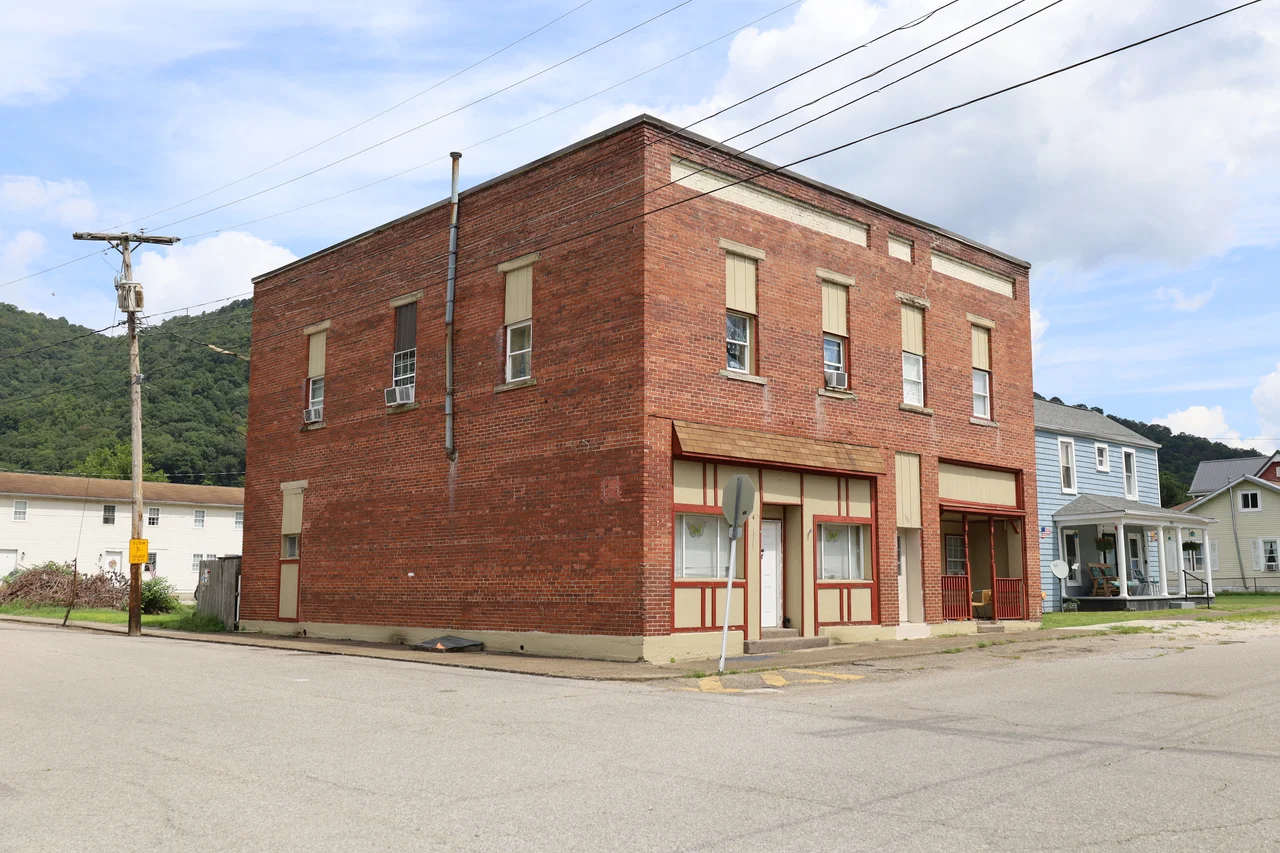

Pratt Historic District
Mother Jones was eighty-four years old when she was held under house arrest in this West Virginia coal town. The year was 1913, the year of the Paint Creek-Cabin Creek strike, and the woman the United States Senate would later call the most dangerous woman in America was confined to a small wooden building here in Pratt during the worst of the labor war. The building where she was held is gone now - the Mother Jones Prison was eventually delisted from the National Register - but the district around it survives, sixty-seven contributing buildings that trace the arc of a Kanawha River town from the antebellum era through the coal boom that gave it its name and its troubles.
From Saltworks to Coal Town
The oldest buildings in the Pratt Historic District date to the 1820s and 1830s - a reminder that this stretch of the Kanawha Valley was settled long before the coal companies arrived. The Samuel Hanna House, built somewhere between 1830 and 1840, has the simple massing of an early West Virginia farmhouse. The community grew slowly along the river as a salt-shipping point and trading stop. Then the railroads came up the valley, the coalfields opened upstream, and Pratt was renamed for Charles Pratt, the coal operator whose Charles Pratt Mining Company set up shop along the river. The mining company office was built around 1889, a modest brick building that still anchors the district as a quiet witness to who really called the shots.
A Town in Wood and Brick
The Pratt district is primarily residential, which is part of what makes it unusual. Most coal-town historic districts focus on the company store, the tipple, the operator's mansion. Pratt has those impulses too - the Boyer House from around 1910, the Weaver-Grose House from about 1905, the Perry-Holt House from 1896 - but it also keeps the layers of an ordinary American town. The Old Town Hall from 1875. The I.O.O.F. fraternal hall built in 1922 and 1923. A craftsman called Jim Shields Corner from around 1880. The James Trimble House. The Burke-Mooney House. The Cooperage. There is even a cemetery within the district. Together, these sixty-seven buildings sketch the way a small Appalachian community accumulated, decade by decade, the architecture of self-government and middle-class aspiration.
The Mother Jones Episode
Mary Harris Jones was Irish-born, widowed by yellow fever, hardened by the loss of all four of her children to the same epidemic, and by the age of forty had begun a second life as a labor organizer. She turned up wherever miners struck, dressed always in black, calling the workers her boys. In 1913, during the brutal Paint Creek-Cabin Creek strike just upriver from Pratt, the West Virginia governor ordered her arrest. A military tribunal tried her under martial law and sentenced her to twenty years. She served part of that time under a kind of house arrest in Pratt, in a building that for years afterward was known locally as the Mother Jones Prison. The building has since been removed from the National Register, but the story it carried is part of why the district matters.
Walking the District
Visitors who drive through Pratt today see a small West Virginia town on a curve of the Kanawha River, between Charleston and Montgomery, with the railroad still running along the bank. The Boyer House and the Old Town Hall, the Cooperage and the brick faces of the mining company office, hold their lines along streets that have not been redeveloped into anonymity. The Pratt Historic District was listed on the National Register of Historic Places in 1984, recognition of a place that managed to keep most of its working buildings standing through the decline of the coalfields. Read closely, with the labor history in mind, the streets feel less quiet than they look.
From the Air
Pratt sits at 38.21 N, 81.38 W, on the south bank of the Kanawha River in eastern Kanawha County, between Charleston and Montgomery. Recommended viewing altitude is 2,500 to 4,500 feet AGL. The Kanawha River and the parallel CSX rail line make the village easy to find; the historic district occupies the older part of town close to the riverbank. Nearest airport is Yeager Airport (KCRW) in Charleston, about 18 miles northwest. Late autumn and early spring offer the clearest air over the Kanawha Valley.
Nearby Stories
- Summersville, West Virginia 5.8 km away
- Westsylvania 13 km away
- Toyota Motor Manufacturing West Virginia 13 km away
- Upper Big Branch Mine Disaster 14 km away
- Logan County, West Virginia 16 km away
- Hobet Coal Mine 18 km away
- Robey Theatre 26 km away
- Greenbrier County, West Virginia 36 km away