
Puffin Island (County Kerry)
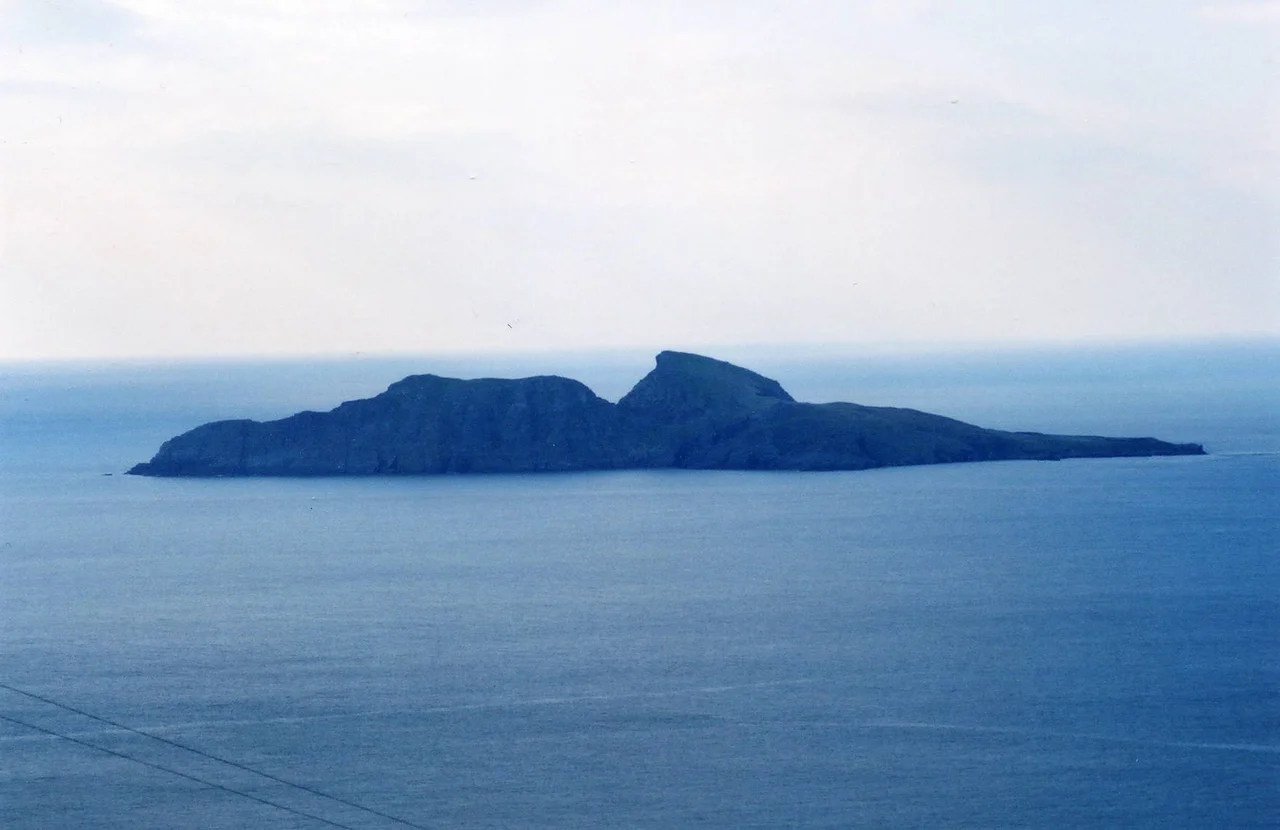
Inishfearglin is the old name - the island has worn it since long before tourists learned to call it Puffin Island. The newer name is honest about what you find there: in summer, the cliff faces and burrow-pocked slopes belong almost entirely to seabirds, and the namesake puffins are only the easiest of them to identify. A quarter-kilometer of cold Atlantic water separates the rock from the mainland of the Iveragh Peninsula. The island rises 213 meters out of the sea on the other side. It is a piece of County Kerry that, in any practical sense, the human population has handed back.
A Sound Worth Crossing
Puffin Sound is only about 250 meters across, which sounds modest until you stand on its shore and watch the tide rip through. The currents in the gap between the island and the mainland are fast and seriously disrespectful of small boats. Day trips run in calm weather from Valentia and from The Glen Pier, but the operators have learned to read the wind. The island itself is about 1.5 kilometers long and 0.7 wide - small enough to circumnavigate on foot in a day if the cliffs allowed, which they mostly do not. There are no jetties, no buildings, no easy landings. Visitors who go ashore generally do so for a single purpose: to see, at close range, what an Irish seabird colony looks like when it has been left alone.
The Colony in Summer
Puffin Island is a designated nature reserve and an Important Bird Area, and the summer breeding season is what those designations are protecting. Atlantic puffins burrow into the soft turf at the top of the slopes, laying single eggs underground and ferrying sand eels back to their chicks from the open ocean. They are not the loudest of the residents. Manx shearwaters - long-winged, dark-backed seabirds famous for nesting in burrows and flying thousands of miles a year - arrive at night and call to each other through the dark in a sound that earlier sailors mistook for ghosts. Storm petrels, fulmars, gulls, kittiwakes, guillemots, and razorbills add their own layers. By late summer the chicks have fledged and the cliffs go quiet again. The visitors are mostly seasonal, like everything else on this coast.
Older Inhabitants
The island has signs of ancient human habitation - not extensive, but enough to interest archaeologists. The sites are small and scattered, mostly traces of structures rather than complete buildings, suggesting use rather than continuous settlement. The pattern echoes other small islands along this stretch of the Atlantic: people came over, used what could be used - grazing, fishing, perhaps the eggs and meat of the seabirds themselves - and left. Skellig Michael, eight nautical miles further out, is the famous example of a small offshore rock that supported a permanent community for centuries; the people on Puffin Island, whoever they were, made a much quieter and less religiously documented use of theirs. By the time written records start to take notice of this coast, the island was already mostly birds.
The View From the Mainland
From the headlands of St. Finian's Bay and Valentia, Puffin Island looks like a single solid pyramid of rock, with cliffs falling sheer into the water on its seaward side. The summit, at 213 meters, qualifies it as a Marilyn - a hill with at least 150 meters of prominence on all sides. The mainland-facing flank slopes more gently, which is why the bird burrows concentrate there and why a small number of visitors can land in the right conditions. Valentia Island, considerably larger and inhabited, sits to the north. The Skelligs lie further west, visible from the same vantage points. Puffin Island is the middle term in that sequence - between the populated mainland and the famously isolated monastic rock, a piece of geography that quietly opted out of human use. The birds noticed before the law did. The protection followed.
From the Air
Located at 51.833°N, 10.417°W just off the western tip of the Iveragh Peninsula. Recommended viewing altitude 1,500-3,000 feet AGL; the island rises to 213 meters (700 ft) and is best framed against the open Atlantic. The narrow 250-meter Puffin Sound separates the island from the mainland and is a useful visual marker. Skellig Michael lies about 6 nm to the southwest; Valentia Island and its airfield are about 5 nm to the northeast. Nearest airport is Kerry (EIKY) about 36 nm northeast; a small grass strip exists on Valentia (EIVT). Stay well clear of the cliffs during seabird breeding season (April through August) - this is a designated Important Bird Area and low overflight is disruptive.
Nearby Stories
- Dunlough Castle 2.6 km away
- Beara Peninsula 4.2 km away
- Dunbeg Fort 8.4 km away
- Pouldergaderry Sinkhole 13 km away
- HMHS Llandovery Castle 40 km away
- The Laki Eruption: The Volcano That Changed World History 1404 km away
- The Northern Lights: The Sky Show That Vikings Thought Was Bridge to the Gods 1505 km away
- Sao Miguel 1906 km away