
Pumalín Douglas Tompkins National Park
When an American businessman started buying up Patagonian rainforest in the 1990s, Chileans were not sure whether to be grateful or alarmed. Some neighbors said he meant to clear the cattle and stock the land with American bison. Others whispered that the forest was destined to become a nuclear waste dump, or that a foreigner owning a strip of land from the Argentine border to the Pacific amounted to cutting the country in half. The man was Douglas Tompkins, who had made his fortune founding The North Face and co-founding the clothing brand Esprit, and what he actually intended was the opposite of exploitation. He wanted to protect one of the last temperate rainforests on Earth that still runs unbroken all the way to the sea, and then, eventually, to give it away.
A Mountaineer's Long Game
Tompkins had been coming to Patagonia since the early 1960s, drawn by its mountains and rivers, and he chose to act rather than merely admire. In 1991 he bought a large, semi-abandoned tract in the Reñihué River valley of Chile's Palena province, some 17,000 hectares of mostly primeval Valdivian rainforest, to keep it from being logged. He and his wife, Kris Tompkins, who had been the chief executive of the outdoor company Patagonia, moved to Reñihué to live there full time. From that base Doug began assembling something far larger, buying adjacent properties one willing seller at a time. Roughly 98 percent of what became the park was acquired from absentee landowners. Through his Conservation Land Trust he added around 280,000 hectares in nearly continuous parcels, and in August 2005 President Ricardo Lagos designated the holding a Nature Sanctuary, locking in its protection.
The Forest That Reaches the Ocean
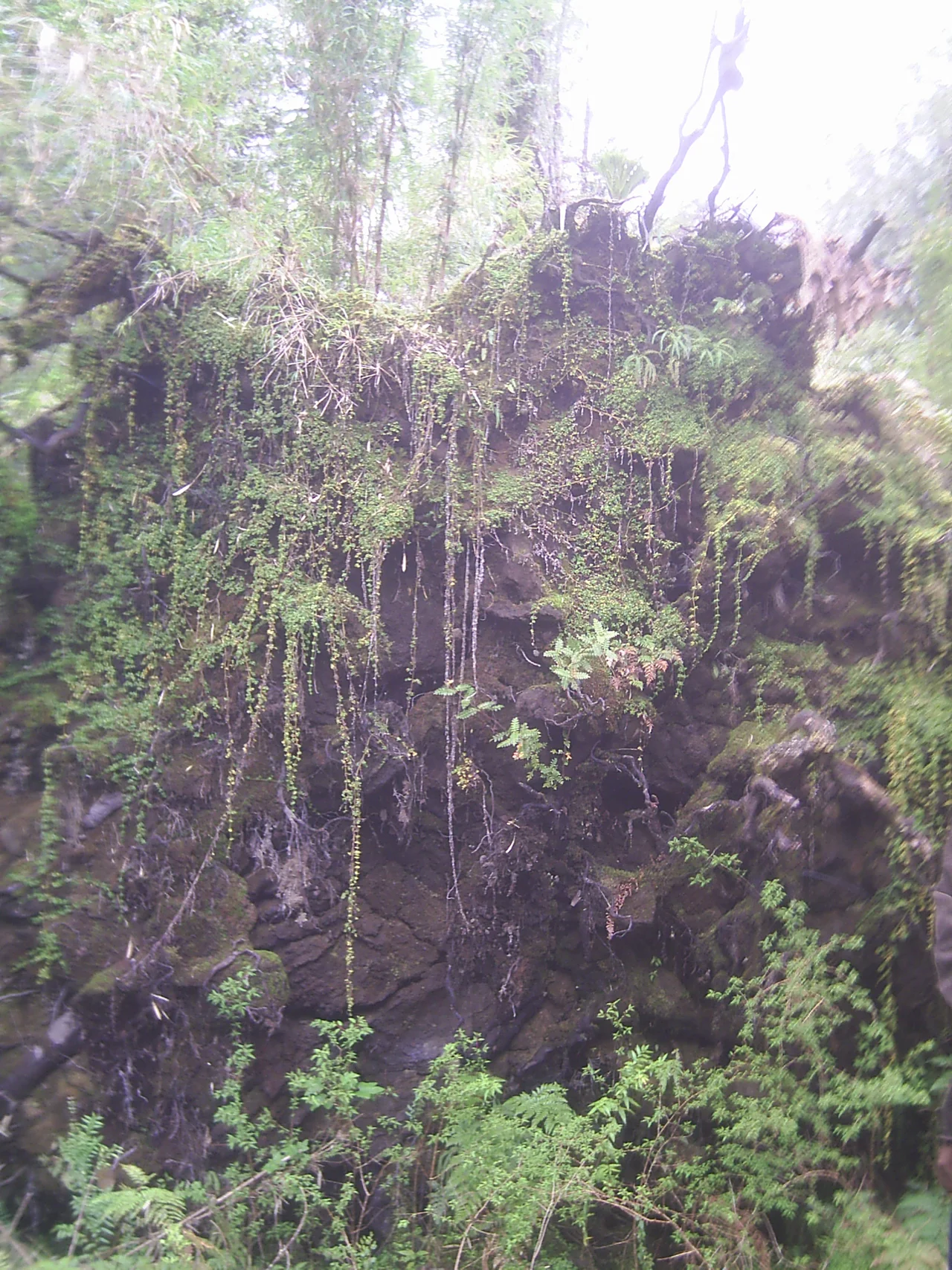
The land was worth the effort. The Valdivian temperate rainforest that blankets Pumalín is among the wettest forests on the planet, soaking up roughly 6,000 millimeters of rain a year along its coast, and unlike almost anywhere else, these original forests run unbroken all the way down to the Pacific. Chile does not have the animal variety of the Amazon, but its flora is extraordinary, dense with endemic species. Most precious of all are the alerce trees, the towering Fitzroya, a relative of the giant sequoia and one of the oldest living things on Earth, with individual trees standing for thousands of years. A quarter of the entire surviving population of these forest giants is protected inside Pumalín's boundaries. To walk among them is to stand in a forest that was old before the Spanish ever reached the Americas.
Winning the Neighbors
Conservation here was as much a social project as an ecological one. Large-scale private land buying for parks was familiar in the United States but new and unsettling in Chile, and the early suspicion ran deep. The Tompkinses set out to change that by including the people who lived around the park rather than walling them out. They built a ranger system staffed by non-uniformed local farmers, whose small organic operations, raising animals, making cheese, keeping bees, and producing wool crafts, doubled as ranger stations and visitor centers. The idea was to prove that a carefully matched agrarian economy and a protected wilderness could sustain each other. Year by year, as Pumalín's trails and campgrounds began drawing thousands of visitors and putting money into local hands, the suspicion gave way to confidence, and a foreigner's strange project became a source of regional pride.
The Largest Gift of Its Kind
Doug Tompkins did not live to see the final act; he died in a kayaking accident in 2015. But the plan he and Kris had built held. In 2017 the couple's foundation reached an accord with the Chilean state, and in 2018 Pumalín was formally combined with public land and donated to the nation, becoming Pumalín Douglas Tompkins National Park, named in honor of its founder. The 402,392-hectare park anchored a wider gift that ranks as the largest private land donation to a country in history. There was a footnote of vulnerability along the way. The nearby Chaitén volcano erupted in 2008, devastating the gateway town of El Amarillo, which the Tompkinses had recently helped beautify, and closing the park until it reopened in December 2010. The forest endured, and so did the gift. The American who was once accused of trying to split Chile in two had instead handed it one of its greatest parks.
From the Air
Pumalín Douglas Tompkins National Park spans the coast and mountains of Chile's Palena Province, centered around 42.58 degrees south, 72.50 degrees west, in the Los Lagos Region. The nearest airfields are Chaitén Airport (ICAO: SCTN) to the south and Puerto Montt's El Tepual Airport (ICAO: SCTE) to the north. From the air the park reads as deep fjords, the Reñihué Fjord among them, fringed by dense dark-green rainforest climbing into ice-capped peaks, with the Chaitén caldera at its southern edge. Rainfall is extreme and clouds are persistent; the clearest flying weather comes in summer, December through February, when ferries also run from Hornopirén to the park's hub at Caleta Gonzalo.
Nearby Stories
- Los Alerces National Park 25 km away
- Futaleufú River 42 km away
- Battle of Mocopulli 48 km away
- Churches of Chiloé 54 km away
- El Bolsón 63 km away
- Battle of Abtao 86 km away
- Parque Tantauco 94 km away
- Trevelin 95 km away